


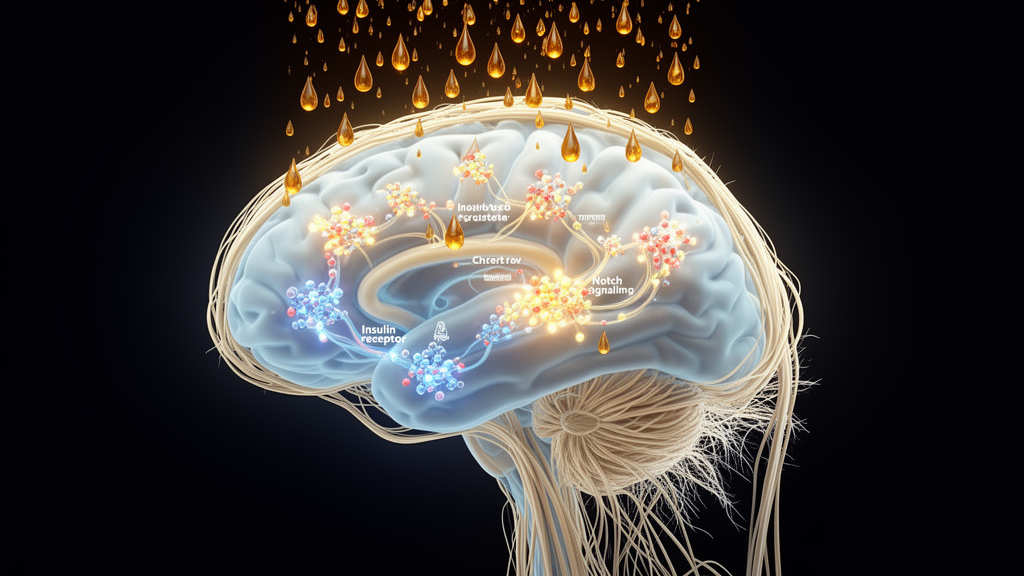
Chronic heavy drinking is well known to shrink the brain, but the molecular events that erode its white matter have remained frustratingly opaque. Now a team of researchers led by Suzanne M. de la Monte of Rhode Island Hospital and Brown University Health, together with Ming Tong and Greg Sutherland of the University of Sydney, has mapped the molecular and biochemical fingerprints of that damage directly in human brain tissue. Their study, published on 24 February 2026 in Advances in Drug and Alcohol Research, examined postmortem frontal lobe white matter from people with alcohol use disorder (AUD) and uncovered a striking pattern: oligodendrocytes—the cells that build and maintain myelin—show broad shifts in protein and gene expression, while the insulin and Notch signaling networks that normally support them are quietly switched down.
The research focused on the superior anterior frontal lobe, specifically Brodmann Area 8/9, a region consistently targeted in alcohol-related brain damage and central to executive function, planning, and attention. Fresh frozen tissue blocks from six donors with AUD and six with no history of substance use disorder were obtained from the New South Wales Brain Tissue Resource Centre in Sydney. The groups were carefully matched for age and sex, all male, with a mean age of roughly 57 years. What set them apart was lifetime alcohol exposure: the AUD group had consumed an average of about 2,784 kilograms of alcohol over their drinking careers, compared with just over 42 kilograms in the controls, and their mean brain weight was significantly lower, at 1,335 grams versus 1,505 grams.
Under the microscope, the differences were immediately visible. Histological sections stained with Luxol Fast Blue, which highlights myelin, showed intense and uniform staining in control tissue but variable pallor and vacuolation in the AUD samples—hallmarks of myelin loss. Small white matter vessels in the AUD cases also displayed thickened, fibrotic walls with barely detectable lumens, hinting at vascular remodeling. Complementary lipid analysis from earlier imaging mass spectrometry work revealed that sphingolipids, a class of myelin fats critical for cognition, were disproportionately depleted compared with phospholipids, confirming that the biochemical composition of myelin itself is altered in human AUD.
To probe the cellular story behind that damage, the team deployed an unusually sensitive toolkit. Duplex enzyme-linked immunosorbent assays measured protein levels of immature oligodendrocyte markers such as CNPase, proteolipid protein (PLP), and platelet-derived growth factor receptor alpha, alongside mature myelin proteins including myelin-associated glycoprotein (MAG), myelin oligodendrocyte glycoprotein (MOG), and myelin basic protein (MBP). Astrocyte markers—nestin, vimentin, and glial fibrillary acidic protein (GFAP)—rounded out the panel. Every measurement was normalized to the large acidic ribosomal protein RPLPO, a stable internal control, and each assay was run in triplicate on duplicate tissue cores from every case.
The results defied simple expectations. Rather than showing uniform depletion of myelin proteins, the AUD tissue exhibited significantly elevated levels of CNPase, PLP, MOG, and GFAP, with a statistical trend toward increased MBP. The same pattern appeared at the mRNA level: a custom multiplex RNA hybridization assay revealed significantly higher transcript abundance for CNPase, MBP, PLP, MOG, and GFAP in AUD samples, while CSPG4, KLK6, and KLK8 remained unchanged. The researchers interpret this broad upregulation as a compensatory response to myelin loss and possibly dysregulated oligodendrocyte function—the cells may be working harder, or malfunctioning, in ways that drive abnormal protein production even as the myelin sheaths around them deteriorate.
Beneath those surface changes, the deeper signaling architecture told a more troubling story. mRNA transcripts encoding upstream components of the insulin and insulin-like growth factor networks were significantly reduced in AUD white matter, including insulin itself, IGF2 receptor, and, at trend level, IGF1, IGF2, the insulin receptor, and insulin receptor substrate 1 (IRS1). Because insulin and IGF signaling through the Akt-mTOR pathway is essential for oligodendrocyte differentiation, myelin synthesis, and cell survival, this transcriptional shutdown strikes at the very machinery that keeps white matter intact. Notably, protein-level analysis of the Akt pathway itself showed no significant differences, likely because postmortem tissue poorly preserves protein phosphorylation states—a technical limitation the authors acknowledge candidly.
The Notch pathway, another critical regulator of oligodendrocyte development and myelin maintenance, was also compromised. Expression of aspartyl-asparaginyl-beta-hydroxylase (ASPH), an enzyme regulated by insulin/IGF signaling that activates Notch by hydroxylating specific EGF-like domains, was significantly reduced in AUD tissue. Downstream Notch targets followed suit: HEY1, ABCG2, CASR, and POLR2a were all significantly decreased, with HIF1α showing a trend-level reduction. This cascade matters because ASPH sits at the junction between insulin/IGF signaling and Notch activation—when insulin signaling falters, ASPH expression drops, Notch networks quiet down, and oligodendrocytes lose the instructions they need to build and sustain myelin. The same logic has been observed in CADASIL, a hereditary white matter disease driven by Notch3 mutations, which shares striking pathological overlap with alcohol-related brain damage.
Two other findings sharpened the picture. First, despite widespread assumptions that neuroinflammation drives alcohol-related brain damage, the 15 cytokines and chemokines measured showed remarkably few changes. The lone significant difference was a reduction in interleukin-10, an anti-inflammatory, neuroprotective cytokine, suggesting that chronic AUD may suppress rather than amplify inflammatory responses in white matter—a pattern consistent with prior reports that short-term or binge exposure provokes inflammation while chronic consumption tends toward immune suppression. Second, standard Alzheimer’s disease biomarkers, including total Tau, phospho-Tau, amyloid-beta 1-42, amyloid precursor protein, ubiquitin, and 4-hydroxynonenal, showed no significant differences between groups, indicating that at these middle ages, AD-type pathology does not appear to underlie the white matter degeneration seen in AUD.
Trophic factors added another layer of complexity. Hepatocyte growth factor and vascular endothelial growth factor, both critical for cell survival, repair, and vascular integrity, were significantly reduced in AUD white matter, while stem cell factor was elevated. Combined with the increased GFAP—a marker of reactive astrocytes that has been linked to blood-brain barrier disruption—these changes point to compromised vascular support and glial dysfunction as additional contributors to white matter vulnerability. The authors suggest that reduced HGF and VEGF may reflect adverse effects of chronic ethanol on cerebrovascular function, contrasting with evidence that low or moderate alcohol intake can be cerebroprotective.
Perhaps most intriguingly, a companion study of the same donor cohort examining the cerebellar vermis revealed that AUD’s molecular assault is not uniform across brain regions. While both frontal lobe and cerebellar white matter showed broad oligodendrocyte dysregulation and reduced HGF, the frontal lobe uniquely exhibited GFAP elevation, insulin/IGF pathway suppression, and inhibition of the Notch transcription factor HEY1, whereas the cerebellum showed inhibition of Akt and GSK-3β signaling and the Notch effector HES1 instead. This regional specificity implies that no single therapeutic target will suffice; effective strategies to prevent or reverse alcohol-related white matter degeneration will likely need to address multiple converging pathways simultaneously. The findings also open a potential diagnostic avenue: the distinct molecular signatures of white matter damage in AUD could eventually inform biomarker panels for identifying alcohol-related brain damage in living patients, moving the field beyond postmortem confirmation toward earlier intervention.
Subject of Research: Molecular mechanisms of white matter degeneration in human alcohol use disorder
Article Title: Molecular and biochemical correlates of frontal lobe white matter degeneration in humans with alcohol use disorder
Article References: de la Monte, S. M., Tong, M., & Sutherland, G. (2026). Molecular and biochemical correlates of frontal lobe white matter degeneration in humans with alcohol use disorder. Advances in Drug and Alcohol Research, 6, Article 15431. https://doi.org/10.3389/adar.2026.15431
Image Credits: AI Generated
Keywords: alcohol use disorder, white matter, oligodendrocytes, myelin, insulin signaling, Notch pathway, ASPH, frontal lobe, astrocytes, GFAP, alcohol-related brain damage, postmortem brain tissue
Cite Scienmag News
Cassandra Pierce. (October 16, 2026). Alcohol Rewires the Brain’s Insulin and Notch Signals to Strip Away White Matter. Scienmag. https://scienmag.com/alcohol-rewires-the-brains-insulin-and-notch-signals-to-strip-away-white-matter/
Cassandra Pierce. "Alcohol Rewires the Brain’s Insulin and Notch Signals to Strip Away White Matter." Scienmag, 16 October 2026, https://scienmag.com/alcohol-rewires-the-brains-insulin-and-notch-signals-to-strip-away-white-matter/. Accessed 16 October 2026.
Cassandra Pierce. "Alcohol Rewires the Brain’s Insulin and Notch Signals to Strip Away White Matter." Scienmag. October 16, 2026. https://scienmag.com/alcohol-rewires-the-brains-insulin-and-notch-signals-to-strip-away-white-matter/


