


Recent research has revealed an intriguing connection between indoor air quality and cardiovascular health, shedding light on a lesser-discussed yet critical health intervention. The study, published in the esteemed journal Journal of the American College of Cardiology, indicates that the use of portable high-efficiency particulate air (HEPA) purifiers at home can notably reduce systolic blood pressure (SBP) in adults who already exhibit elevated baseline readings. This finding carries profound implications, particularly for individuals residing in urban areas where air pollution is a persistent concern.
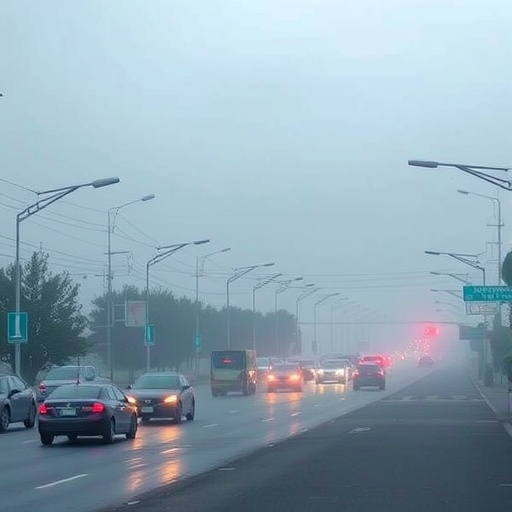
As urbanization accelerates and life in densely populated areas becomes increasingly common, air quality concerns take center stage. Particulate matter (PM), a significant contributor to air pollution, is intimately linked to cardiovascular disease (CVD). This study highlights that individuals living near highly-trafficked roadways are often subjected to PM emitted from sources such as vehicle exhaust, as well as wear from tires and brakes. The pervasive nature of these fine particles allows them to penetrate home environments, posing health risks and contributing to increased blood pressure, a known risk factor for heart disease.
Dr. Douglas Brugge, the lead researcher and a prominent figure in public health sciences at UConn Health, emphasizes the importance of addressing high blood pressure as one of the most modifiable risk factors for cardiovascular diseases. He notes that interventions as simple as in-home air filtration can substantially enhance the heart health of those at risk. With hypertension being a critical public health challenge, this research underscores an innovative, practical solution that can be swiftly implemented.
The study was designed as a randomized crossover trial, enrolling 154 adults who lived in proximity to highways. Participants were assigned to use either HEPA filtration or sham filtration—identical purifiers with the filter removed—for a month, followed by a washout period, and then the alternative treatment. Measurements of blood pressure along with relevant participant questionnaires were collected at the start and conclusion of each intervention period, enabling researchers to assess the effects of the air purifiers accurately.
Remarkably, the findings indicated that those with elevated systolic blood pressure, defined as readings greater than 120 mmHg, experienced an average reduction of 2.8 mmHg after utilizing HEPA filtration for one month. In stark contrast, those using sham filtration recorded a slight increase of 0.2 mmHg in systolic readings. Thus, when comparing the two conditions, there was a substantial 3.0 mmHg difference favoring the HEPA filtration, emphasizing the purifiers’ efficacy in improving blood pressure levels for a vulnerable demographic. Notably, the intervention did not exhibit a significant impact on diastolic blood pressure or among individuals whose initial readings were classified as normal.
Dr. Jonathan Newman, an associate professor at NYU Grossman School of Medicine, stresses the significance of the findings. He highlights the extensive evidence corroborating the deleterious health effects associated with exposure to PM2.5—even at levels considered acceptable by current U.S. standards. As experts in the medical field, it is their responsibility to guide public awareness regarding air quality and advocate for policies that can enhance air cleanliness and subsequently public health.
Harlan Krumholz, the editor-in-chief of JACC, acknowledges the potential for relatively modest enhancements in indoor air quality to induce meaningful improvements in blood pressure among individuals at risk. He notes that such interventions can serve as a preventative measure, enhancing cardiovascular health for people who may already be suffering from the effects of environmental pollution.
However, it is important to note the limitations of this study, particularly regarding its generalizability. The participant pool was predominantly comprised of individuals who were White and from higher-income backgrounds. Moreover, individuals utilizing blood-pressure medication were excluded from the study, and variations in the actual usage of the purifiers could have impacted results. Notably, the study did not account for specific seasonal variations that might influence indoor air quality, particularly during warmer summer months when pollution levels may fluctuate.
This research not only contributes to the existing body of evidence linking environmental factors to cardiovascular health but also emphasizes a proactive approach to mitigating risks. The findings indicate that individuals living in areas with poor air quality should consider incorporating solutions such as HEPA air purifiers into their daily lives to safeguard against elevated blood pressure and its associated health risks.
The study serves as a clarion call for further research and investment in public health initiatives aimed at reducing air pollution and its dire health implications. Healthcare professionals are urged to promote awareness and techniques to improve air quality, positioning HEPA filtration systems as accessible tools for maintaining healthy blood pressure levels among susceptible populations.
In a world increasingly recognizing the interconnectedness of environment and health, the potential of HEPA purifiers to positively influence cardiovascular health offers a practical and achievable pathway toward better heart health for many Americans. It reinforces the idea that what we breathe indoors can have profound implications for our bodies, extending beyond mere comfort to tangible health outcomes.
The intersection of air quality and health underscores the necessity for both individual action and policy change to address the challenges posed by environmental pollutants. As ongoing studies continue to unveil the expanding narrative connecting environmental health and personal well-being, the integration of sensible solutions like HEPA filtration can pave the way for enhanced public health strategies that prioritize cardiovascular care and disease prevention.
Keywords
Cite Scienmag News
Russell Cooper. (August 6, 2025). Air Purifiers Could Lower Heart Risks for Those Exposed to Traffic Pollution. Scienmag. https://scienmag.com/air-purifiers-could-lower-heart-risks-for-those-exposed-to-traffic-pollution/
Russell Cooper. "Air Purifiers Could Lower Heart Risks for Those Exposed to Traffic Pollution." Scienmag, 6 August 2025, https://scienmag.com/air-purifiers-could-lower-heart-risks-for-those-exposed-to-traffic-pollution/. Accessed 3 September 2026.
Russell Cooper. "Air Purifiers Could Lower Heart Risks for Those Exposed to Traffic Pollution." Scienmag. August 6, 2025. https://scienmag.com/air-purifiers-could-lower-heart-risks-for-those-exposed-to-traffic-pollution/


