


The research, published in BMC Nursing by authors Ahsen Demirhan Kayacik and Kevser Ilcioglu, evaluated this instructional technology through a single-center, parallel-group randomized controlled trial conducted at a public university in western Türkiye. The study was designed to address a recognized gap in the pedagogical literature, where empirical evidence concerning the integration of structured generative artificial intelligence into nursing education remains strictly limited.
The trial enrolled 76 third-year undergraduate nursing students who were randomly allocated in equal numbers to either an experimental intervention group of 38 participants or a control group of 38 participants. To document the trial parameters, the researchers registered the investigation retrospectively with ClinicalTrials.gov under identifier NCT07183202 on August 31, 2025.
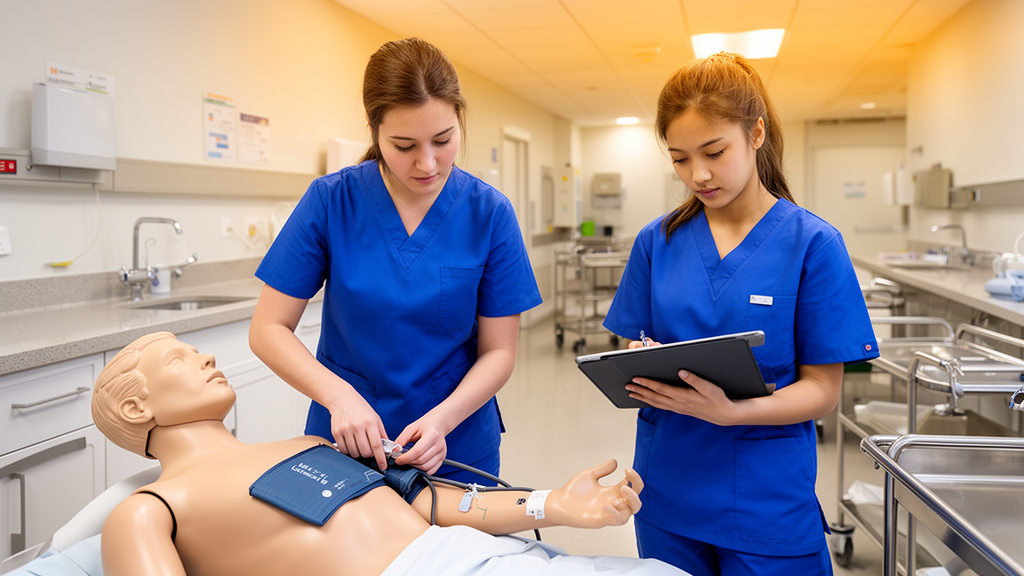
Participants assigned to the experimental intervention arm completed a multicomponent educational package built specifically around an ERAS gynecologic oncology case simulation. The instructional architecture combined generative artificial intelligence tools with structured clinical scenario progression, interactive case-based learning exercises, and artificial intelligence-generated visual materials. Throughout the simulation, students navigated evolving patient care scenarios while receiving immediate automated feedback to guide their clinical assessments and decision-making steps.
To establish an active comparator, the control group participated in an online case-based instructional session that addressed the exact same ERAS gynecologic oncology subject matter. Rather than interacting with generative artificial intelligence or automated simulation modules, control students attended a 35- to 40-minute educational session delivered directly by the study authors. This conventional session relied on an electronic PowerPoint presentation accompanied by open question-and-answer discussion, allowing students to review perioperative nursing principles through traditional instructor-led dialogue.
The study team specified two primary educational outcomes: ERAS nursing-care knowledge and total self-reported 21st-century skills. ERAS knowledge was measured using the study-specific ERAS Protocol Nursing Care Knowledge Test, while self-reported competencies were surveyed across multiple developmental categories, with individual skill dimensions analyzed as exploratory secondary outcomes. Both primary and secondary outcomes were measured immediately before and immediately after the educational activities took place. The resulting pre-intervention and post-intervention scores were subsequently evaluated using a two-by-two mixed-design analysis of variance (ANOVA) to assess differences over time between the intervention and control cohorts.
The statistical analysis revealed significant Time by Group interaction effects across both primary evaluation measures. For ERAS nursing-care knowledge, the mixed-design ANOVA demonstrated a significant interaction of F(1, 68) = 92.908 (p < .001) with a large effect size represented by a partial eta squared (η²) of 0.577. A statistically significant Time by Group interaction was likewise observed for total self-reported 21st-century skills (F(1, 68) = 33.005, p < .001, partial η² = 0.327). The intervention group exhibited a large immediate between-group advantage on the ERAS knowledge test, along with greater improvements across several self-reported skill dimensions. However, self-reported critical thinking and problem-solving scores decreased in both groups, showing a more substantial decline among students in the generative artificial intelligence cohort.
In their concluding assessment, the researchers emphasized that the positive outcomes must be attributed to the educational package as a whole rather than to the independent effect of generative artificial intelligence alone. The authors also underscored significant limitations of the trial, pointing out that both longer-term retention of ERAS knowledge and the actual transfer of these competencies to objective clinical performance in hospital settings remain to be established in future research.
Subject of Research: Generative AI-supported case simulation in nursing education
Article Title: Effect of a generative AI-supported ERAS case-simulation package on nursing students’ knowledge and self-reported 21st-century skills: a randomized controlled trial
Article References: Demirhan Kayacik, A., & Ilcioglu, K. (2026). Effect of a generative AI-supported ERAS case-simulation package on nursing students’ knowledge and self-reported 21st-century skills: a randomized controlled trial. BMC Nursing. https://doi.org/10.1186/s12912-026-05625-5
Image Credits: AI Generated
DOI: 10.1186/s12912-026-05625-5
Keywords: generative AI, nursing education, randomized controlled trial, ERAS protocol, gynecologic oncology care, case simulation, 21st-century skills, nursing students, clinical simulation, critical thinking, problem solving, educational technology, mixed-design ANOVA, immediate feedback, knowledge assessment, undergraduate nursing, scenario-based learning
Cite Scienmag News
Ophelia Keating. (November 11, 2026). AI Simulation Package Improves Nursing Students’ ERAS Knowledge in Randomized Trial. Scienmag. https://scienmag.com/ai-simulation-package-improves-nursing-students-eras-knowledge-in-randomized-trial/
Ophelia Keating. "AI Simulation Package Improves Nursing Students’ ERAS Knowledge in Randomized Trial." Scienmag, 11 November 2026, https://scienmag.com/ai-simulation-package-improves-nursing-students-eras-knowledge-in-randomized-trial/. Accessed 11 November 2026.
Ophelia Keating. "AI Simulation Package Improves Nursing Students’ ERAS Knowledge in Randomized Trial." Scienmag. November 11, 2026. https://scienmag.com/ai-simulation-package-improves-nursing-students-eras-knowledge-in-randomized-trial/




