


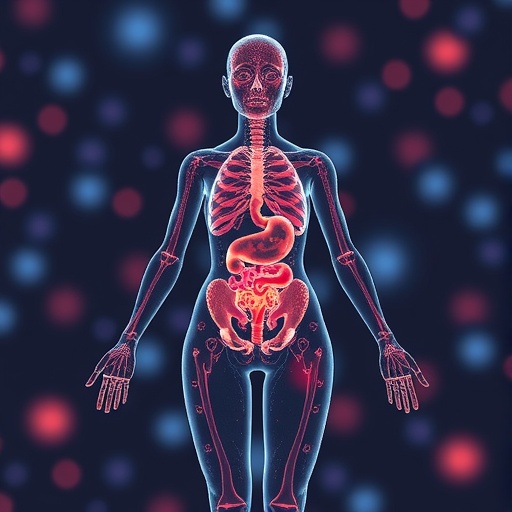
In a landmark study addressing a pervasive yet historically overlooked stage of women’s health, researchers at the Barcelona Supercomputing Center (BSC-CNS) have for the first time charted an extensive atlas revealing the complex, asynchronous aging patterns across multiple female reproductive organs. Published in the prestigious journal Nature Aging, this breakthrough work harnesses cutting-edge artificial intelligence and robust supercomputing resources to decode the intricate biological transformations occurring through menopause and beyond, fundamentally shifting our understanding of female reproductive system aging.
Menopause, a biological milestone affecting approximately half the global population, remains poorly understood in both biomedical research and clinical contexts despite its profound health implications. With an increasing global life expectancy, over a quarter of the world’s population now comprises women over the age of 50, underscoring the pressing need to dissect how the female reproductive system ages holistically—not just in relation to ovarian decline. These systemic changes extend far beyond reproductive functionality, implicating heightened vulnerability to cardiovascular, metabolic, neurological, and skeletal disorders.
The researchers embarked on an ambitious integrative analysis of 1,112 histological images and transcriptomic profiles from 659 tissue samples obtained from 304 women aged between 20 and 70 years. By studying seven critical reproductive organs—the uterus, ovary, vagina, cervix, breast, and Fallopian tubes—they successfully mapped the aging trajectory at unprecedented spatial and molecular resolution. This approach involved deep-learning algorithms capable of discerning subtle tissue morphological alterations and gene expression shifts associated with aging.
Utilizing MareNostrum 5, one of Europe’s most powerful supercomputers, the team deployed advanced multimodal data integration techniques. These leveraged convolutional neural networks to classify tissue images, combined with transcriptomic datasets capturing thousands of gene expression markers. This fusion of image-based and molecular data enabled the identification of organ-specific aging signatures and the subtleties of tissue heterogeneity within organs, painting a nuanced portrait of asynchronous aging.
Crucially, the findings reveal that aging progression within reproductive organs is neither uniform nor linear. The ovaries and vagina exhibit a gradual and progressive decline starting years before menopause, indicating early molecular remodeling. Contrastingly, the uterus undergoes rapid and pronounced changes sharply coinciding with menopausal transition, demonstrating a distinct aging dynamic. This differential aging suggests complexity in senescence timelines across the reproductive system that may inform personalized therapeutic strategies.
Moreover, tissue-specific disparities in aging were identified even within single organs. For instance, distinct layers such as the uterine mucosa and myometrium displayed varying sensitivities to menopausal hormonal fluctuations, underlining the intricate spatial heterogeneity of aging processes. Such insights provide vital clues to organ-specific pathophysiology and symptomatology associated with menopause and related diseases.
Marta Melé, the study’s director and head of the Transcriptomics and Functional Genomics group at BSC, emphasized the transformative implications of these results. She explained that menopause, long viewed narrowly as the cessation of ovarian reproductive capability, acts more broadly as a pivotal biological turning point. It instigates profound reorganization across organ systems in the female reproductive tract, orchestrated via complex genetic and molecular reprogramming events detailed in the study’s large-scale dataset.
In a particularly forward-looking aspect of the research, the team identified molecular biomarkers detectable in blood plasma that reflect the aging status of reproductive organs. Analyzing samples from over 21,000 women, they found that key gene expression signatures associated with tissue remodeling and senescence could be non-invasively monitored through circulating biomarkers. This innovation holds promise for early risk prediction of menopause-related complications such as pelvic floor disorders, enabling preemptive clinical intervention without the need for invasive biopsies.
Oleksandra Soldatkina, co-lead author and BSC researcher, highlighted the clinical potential embedded in these breakthroughs. She noted that the capacity to detect organ-specific aging markers in peripheral blood paves the way for developing novel diagnostic tools, providing a minimally invasive means to monitor reproductive health trajectories and inform personalized treatment in real-time clinical settings.
Given the demographic shift toward an aging global population, this study contributes fundamentally to medical sciences by filling critical gaps in female reproductive aging biology. It lays the groundwork for more nuanced approaches in women’s health, supporting tailored prevention strategies, diagnostic precision, and therapeutic interventions that consider the asynchronous and multifaceted nature of menopause-associated organ senescence.
This comprehensive multimodal analysis, bridging histology, genomics, and computational sciences, exemplifies the power of interdisciplinary research to unlock complex biological puzzles. It also heralds a paradigm shift away from reductive models of menopause towards integrated frameworks that appreciate organ-specific timelines—and ultimately promises to engender a more equitable medical understanding and treatment of aging in women.
The Barcelona team’s pioneering use of artificial intelligence and supercomputing infrastructure at MareNostrum 5 underscores the transformative potential of emerging technologies in unraveling the biology of aging. As life expectancy rises globally, their findings offer an essential scientific foundation to improve health outcomes during the postreproductive years, ensuring healthier aging trajectories for women worldwide.
News Publication Date: 29-Apr-2026
Web References: DOI: 10.1101/2
Keywords
Menopause, Aging populations, Reproductive system, Ovaries, Uterus, Artificial intelligence, Biomarkers, Computational biology
Cite Scienmag News
Denise Maddox. (April 29, 2026). AI Reveals How Menopause Molecularly Affects Different Organs Across the Female Body. Scienmag. https://scienmag.com/ai-reveals-how-menopause-molecularly-affects-different-organs-across-the-female-body/
Denise Maddox. "AI Reveals How Menopause Molecularly Affects Different Organs Across the Female Body." Scienmag, 29 April 2026, https://scienmag.com/ai-reveals-how-menopause-molecularly-affects-different-organs-across-the-female-body/. Accessed 3 September 2026.
Denise Maddox. "AI Reveals How Menopause Molecularly Affects Different Organs Across the Female Body." Scienmag. April 29, 2026. https://scienmag.com/ai-reveals-how-menopause-molecularly-affects-different-organs-across-the-female-body/


