


A new artificial intelligence (AI) tool that can help to select the most suitable treatment for cancer patients has been developed by researchers at The Australian National University (ANU).

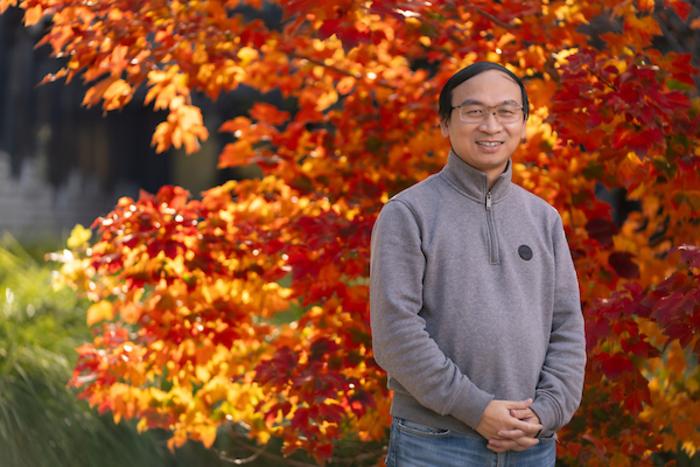
Credit: Credit: The Australian National University (ANU).
A new artificial intelligence (AI) tool that can help to select the most suitable treatment for cancer patients has been developed by researchers at The Australian National University (ANU).
DeepPT, developed in collaboration with scientists at the National Cancer Institute in America and pharmaceutical company Pangea Biomed, works by predicting a patient’s messenger RNA (mRNA) profile. This mRNA – essential for protein production – is also the key molecular information for personalised cancer medicine.
According to lead author Dr Danh-Tai Hoang from ANU, when combined with a second tool called ENLIGHT, DeepPT was found to successfully predict a patient’s response to cancer therapies across multiple types of cancer.
“We know that selecting a suitable treatment for cancer patients can be integral to patient outcomes,” Dr Hoang said.
“DeepPT was trained on over 5,500 patients across 16 prevalent cancer types, including breast, lung, head and neck, cervical and pancreatic cancers.
“We saw an improvement in patient response rate from 33.3 per cent without using our model to 46.5 per cent with using our model.”
DeepPT builds on previous work by the same ANU researchers to develop a tool to help classify brain tumours.
Both AI tools draw on microscopic pictures of patient tissue called histopathology images, also providing another key benefit for patients.
“This cuts down on delays in processing complex molecular data, which can take weeks,” Dr Hoang said.
“Any kind of delay obviously poses a real challenge when dealing with patients with high-grade tumours who might require immediate treatment.
“In contrast, histopathology images are routinely available, cost-effective and timely.”
The study has been published in Nature Cancer.
Journal
Nature Cancer
Method of Research
Computational simulation/modeling
Article Title
A deep-learning framework to predict cancer treatment response from histopathology images through imputed transcriptomics’
Article Publication Date
3-Jul-2024
COI Statement
D.-T.H., E.A.S., E.R., G.D., R.A. and T.B. are listed as inventors on a patent (application no. 63/349,829, United States, 2022) filed based on the methodology outlined in this study. G.D., D.S.B., E.E., T.B. and R.A. are employees of Pangea Biomed. E.R. is a cofounder of Medaware, Metabomed and Pangea Biomed (divested from the latter). E.R. serves as a nonpaid scientific consultant to Pangea Biomed under a collaboration agreement between Pangea Biomed and the NCI. The other authors declare no competing interests.
Cite Scienmag News
Nathaniel Bowman. (July 3, 2024). AI model to improve patient response to cancer therapy. Scienmag. https://scienmag.com/ai-model-to-improve-patient-response-to-cancer-therapy/
Nathaniel Bowman. "AI model to improve patient response to cancer therapy." Scienmag, 3 July 2024, https://scienmag.com/ai-model-to-improve-patient-response-to-cancer-therapy/. Accessed 3 September 2026.
Nathaniel Bowman. "AI model to improve patient response to cancer therapy." Scienmag. July 3, 2024. https://scienmag.com/ai-model-to-improve-patient-response-to-cancer-therapy/

