


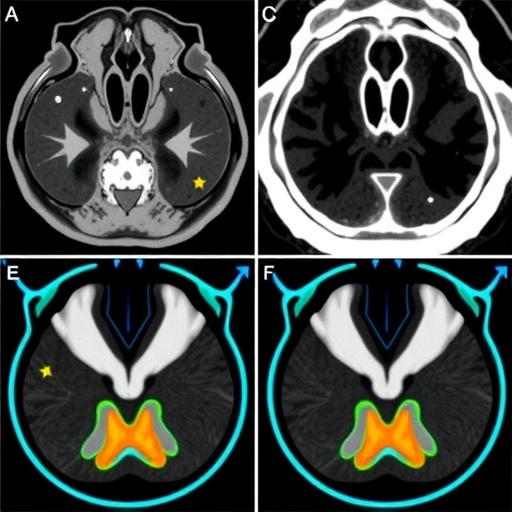
In a groundbreaking single-center cohort study, researchers have unveiled an artificial intelligence (AI)-driven framework capable of automating the segmentation of lymph nodes and the classification of imaging-based extranodal extension (iENE) using pretreatment computed tomography (CT) scans in patients with human papillomavirus (HPV)-associated oropharyngeal carcinoma. This innovation stands at the intersection of advanced medical imaging and machine learning, promising a radical shift in the diagnosis and prognostic assessment of head and neck cancers, especially those linked to HPV infections.
The study centers on oropharyngeal carcinoma, a malignant tumor originating from the oropharynx — the middle part of the throat, encompassing vital anatomical structures like the tonsils and base of the tongue. HPV-associated variants of this carcinoma have risen sharply in incidence over recent decades, bringing with them unique biological behaviors and treatment responses. Accurate evaluation of lymph node involvement, particularly the presence of extranodal extension where cancer spreads beyond the lymph node capsule, has historically posed a diagnostic challenge. Precise identification of iENE is paramount because its presence correlates strongly with poorer oncologic outcomes, informing the tailoring of therapies.
Leveraging AI algorithms trained on pretreatment CT images, this new pipeline performs automated lymph node segmentation, autonomously delineating lymphatic structures from surrounding tissues with high fidelity. The successful isolation of these nodes enables the subsequent running of sophisticated classification models to detect iENE—a marker typically requiring nuanced radiologic interpretation by specialists. This dual task automation thus has the potential to vastly reduce human burden while enhancing diagnostic consistency and objectivity.
Results from the study showed that AI-predicted iENE status possesses independent prognostic value, being significantly associated with adverse cancer outcomes irrespective of conventional clinical parameters. These findings underscore the clinical value embedded within medical images—information that AI can mine with precision beyond the reach of current routine assessments. As such, the pipeline emerges not merely as a tool for efficiency, but as a transformative agent capable of enriching patient stratification and guiding therapeutic decision-making.
Despite the promising advancements, the authors prudently highlight the necessity for external validation across diverse healthcare settings to confirm the generalizability of their model. Different institutions often operate varying imaging protocols and possess distinct patient demographics. Therefore, adapting and testing the AI pipeline beyond its initial single-center environment is critical before widespread clinical adoption, ensuring its robustness and mitigating biases that can arise from limited training datasets.
An equally important aspect involves the democratization of such advanced technologies. The AI system offers a potential solution to institutions lacking specialized imaging expertise, by delivering automated, standardized, and reliable iENE assessments. This could facilitate broader access to high-quality diagnostics, especially in resource-limited settings, and support clinicians in making informed therapeutic choices without necessitating expert radiologic input at every juncture.
The technical underpinnings of this AI-driven approach rest on state-of-the-art deep learning methodologies, including convolutional neural networks optimized for medical image processing. Integrating these architectures enables the model to capture complex spatial and textural features within imaging data—nuances critical to differentiating benign from malignant lymph node characteristics and detecting subtle extranodal invasions. Furthermore, the pipeline’s modular design ensures scalability and adaptability as new imaging modalities or enhanced data become available.
The implications of this research extend beyond HPV-related oropharyngeal carcinoma. Automated and precise assessment of lymph node status and extranodal extension is a challenge common to multiple cancer types where nodal staging governs prognosis and treatment, such as head and neck squamous cell carcinoma more broadly, breast cancer, and certain gastrointestinal malignancies. Hence, the AI framework’s translational potential may catalyze a paradigm shift across oncology disciplines.
Moreover, embedding such AI tools into clinical workflows offers opportunities for augmented radiology, where machine intelligence supplements clinicians rather than replaces them. By flagging high-risk features like iENE early in the diagnostic pathway, the technology can prompt timely multidisciplinary interventions, potentially improving survival rates and quality of life for patients. The integration of AI in medical imaging epitomizes precision medicine in action—tailoring care based on individualized tumor characteristics derived from comprehensive data analytics.
The study is slated for presentation at the upcoming ASTRO (American Society for Radiation Oncology) 2025 Annual Meeting, signifying its relevance to radiation oncology where nodal status influences treatment planning and dose escalation decisions. Prospective clinical trials could further evaluate the utility of AI-guided imaging biomarkers in optimizing therapeutic regimens, including surgical versus nonsurgical approaches, and in monitoring treatment response dynamically.
In sum, this pioneering work published in JAMA Otolaryngology–Head & Neck Surgery not only advances the field of medical imaging and AI integration but also highlights the crucial link between imaging phenotypes and oncologic outcomes. It charts the way toward more automated, standardized, and equitable cancer diagnostics while setting the stage for a future of AI-empowered clinical decision-making in oncology.
News Publication Date: Not provided.
Cite Scienmag News
Nathaniel Bowman. (September 30, 2025). AI Model Advances Imaging Detection of Extranodal Extension and Predicts Outcomes in HPV-Positive Oropharyngeal Cancer. Scienmag. https://scienmag.com/ai-model-advances-imaging-detection-of-extranodal-extension-and-predicts-outcomes-in-hpv-positive-oropharyngeal-cancer/
Nathaniel Bowman. "AI Model Advances Imaging Detection of Extranodal Extension and Predicts Outcomes in HPV-Positive Oropharyngeal Cancer." Scienmag, 30 September 2025, https://scienmag.com/ai-model-advances-imaging-detection-of-extranodal-extension-and-predicts-outcomes-in-hpv-positive-oropharyngeal-cancer/. Accessed 3 September 2026.
Nathaniel Bowman. "AI Model Advances Imaging Detection of Extranodal Extension and Predicts Outcomes in HPV-Positive Oropharyngeal Cancer." Scienmag. September 30, 2025. https://scienmag.com/ai-model-advances-imaging-detection-of-extranodal-extension-and-predicts-outcomes-in-hpv-positive-oropharyngeal-cancer/


