


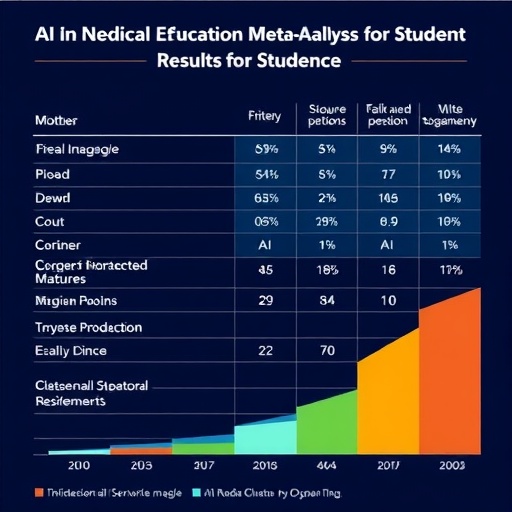
The integration of artificial intelligence (AI) into various sectoral operations has been a hallmark of the technological advancement of the 21st century. Notably, the field of education is witnessing a significant transformation due to AI’s capabilities, and its impact on medical education cannot be overstated. Recent studies reveal that AI-assisted educational approaches are emerging as powerful tools, particularly for undergraduate medical students in China. A comprehensive meta-analysis conducted by researchers, including Peng, Zhang, and Tu, sheds light on the effectiveness of these AI-enhanced learning models and presents promising implications for medical training.
In the realm of medical education, the sheer volume of information that students must absorb can be overwhelming. Traditional methods of learning, which primarily rely on lectures and textbooks, often struggle to engage students or cater to their individual learning paces. This is where AI technologies come into play, offering tailored educational experiences that can adapt to the unique learning styles and preferences of each student. The use of chatbots, intelligent tutoring systems, and learning analytics facilitates personalized education, ensuring that no student is left behind in their academic journey.
The findings of the meta-analysis indicate that students exposed to AI-assisted educational methods demonstrate enhanced engagement and comprehension when compared to their counterparts in traditional learning environments. AI tools can provide immediate feedback on assessments, enabling students to address gaps in their understanding promptly. Furthermore, the interactive nature of AI applications fosters a more immersive learning atmosphere, which has shown to boost students’ self-efficacy and motivation toward their studies in medicine.
Moreover, the potential for AI to facilitate collaborative learning is an area that has attracted considerable attention. AI-driven platforms allow students to work together on problem-solving tasks, leveraging the strengths of their peers in real-time. This collaborative energy not only enhances the learning experience but also simulates a real-world working environment where aspiring medical professionals must function cohesively as a team. The meta-analysis underscores the effectiveness of such collaborative tools, indicating a correlation between AI-assisted teamwork and improved clinical skills.
Another crucial aspect highlighted in the research is the role of AI in enhancing clinical decision-making skills among medical students. Through simulated interactions with AI-powered patient case scenarios, students can practice diagnosing and developing treatment plans in a risk-free environment. This hands-on approach encourages students to think critically and apply theoretical knowledge practically, bridging the gap between classroom instruction and clinical application.
The meta-analysis also touches upon the potential challenges associated with AI integration into medical education. While the advantages are compelling, concerns regarding data privacy and the ethical implications of AI in healthcare education remain prominent. Institutions must navigate these complexities thoughtfully as they integrate AI tools into their curricula. Ensuring that students are adequately educated about the ethical use of AI and data protection will be essential to foster a sense of responsibility among future medical professionals.
In the context of pedagogy, the research suggests that AI can help address the growing diversity in student backgrounds and learning styles. By providing differentiated instructional materials and learning pathways, AI tools have the potential to create inclusive educational environments that cater to various learner needs. The flexibility of AI in adapting to students’ individual learning trajectories signifies a foundational shift in how educational content is delivered, marking a progressive step toward equity in medical training.
The implications of AI-assisted medical education extend beyond merely improving student experiences; they promise a transformation in the overall healthcare delivery system. When medical professionals are trained using the latest AI technologies, they are better equipped to embrace technological advancements in their practice. This cultivates a generation of healthcare providers who can leverage AI for improved patient outcomes, thereby enhancing the quality of care delivered in medical settings.
Furthermore, the advent of AI-driven assessments and evaluations offers a new frontier in measuring student proficiency. Traditional evaluation methods can be subjective and may not accurately reflect student capabilities. AI systems, with their ability to analyze performance data across various metrics, can provide a more nuanced understanding of a student’s strengths and weaknesses. This data-driven approach to evaluation could revolutionize how institutions assess academic achievement in healthcare education.
Importantly, the meta-analysis reinforces the necessity for continuous research into the scalability and adaptability of AI systems in medical training. As educational landscapes evolve, AI must be rigorously tested and refined to ensure that it meets the diverse needs of students and aligns with the evolving demands of the healthcare industry. Developing robust frameworks for evaluating AI applications in medical education will be central to maximizing their benefits while minimizing potential risks.
In conclusion, the findings of the meta-analysis conducted by Peng, Zhang, and Tu pave the way for an exciting future in the realm of medical education. The compelling evidence supporting the effectiveness of AI-assisted learning models for Chinese undergraduate medical students highlights a transformative shift in how medical professionals are trained. The promising synthesis of technology and education is poised to enhance student engagement, improve clinical skills, and prepare healthcare providers for a future driven by technological innovation.
As we embrace this incredible shift, it is crucial for educational institutions, policymakers, and healthcare leaders to collaborate in harnessing the potential of AI while upholding ethical standards. By doing so, we can nurture an intelligent workforce capable of advancing the frontiers of medicine and improving patient care worldwide.
Peng, J., Zhang, H., Tu, X. et al. Effectiveness of AI-assisted medical education for Chinese undergraduate medical students: a meta-analysis. BMC Med Educ 25, 1207 (2025). https://doi.org/10.1186/s12909-025-07770-y
Cite Scienmag News
Courtney Benton. (August 27, 2025). AI in Medical Education: Meta-Analysis Results for Students. Scienmag. https://scienmag.com/ai-in-medical-education-meta-analysis-results-for-students/
Courtney Benton. "AI in Medical Education: Meta-Analysis Results for Students." Scienmag, 27 August 2025, https://scienmag.com/ai-in-medical-education-meta-analysis-results-for-students/. Accessed 3 September 2026.
Courtney Benton. "AI in Medical Education: Meta-Analysis Results for Students." Scienmag. August 27, 2025. https://scienmag.com/ai-in-medical-education-meta-analysis-results-for-students/


