


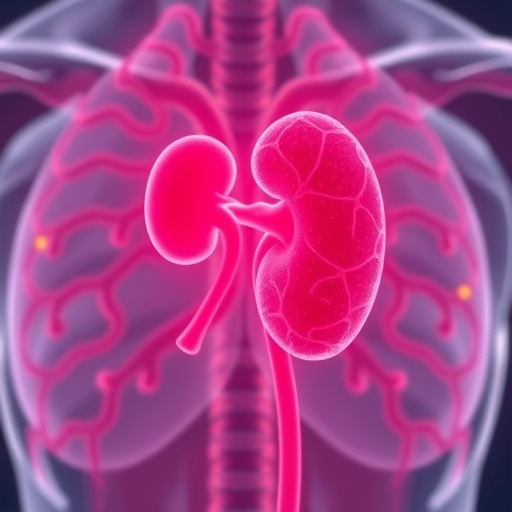
A groundbreaking collaboration between Rice University and Baylor College of Medicine (BCM) is set to radically transform the way acute kidney injury (AKI) is predicted and managed in patients undergoing heart surgery. Funded by a substantial grant of nearly $2.5 million from the National Institutes of Health, this initiative seeks to harness the power of artificial intelligence to alert clinicians to early signs of kidney distress, thereby granting them precious time for intervention before irreversible damage occurs. This innovative project merges the statistical prowess and machine learning capabilities of Rice with BCM’s clinical expertise and vast data resources, representing a remarkable synergy in tackling a significant medical complication.
Acute kidney injury is a prevalent and serious concern following cardiac surgery, affecting nearly one in five patients and resulting in a fivefold increase in mortality rates along with a substantial tripling of hospital costs. Currently, the identification of AKI typically relies on late indicators such as decreased urine output or elevated serum creatinine levels, which often arise after the optimal window for effective treatment has passed. The project led by Meng Li, an associate professor of statistics at Rice University, aims to change this narrative by applying ensemble machine learning techniques to predict AKI much earlier than current methodologies allow.
The Rice-Baylor initiative is designed to leverage the wealth of real-world data harvested from the electronic medical records of over 9,000 cardiac surgery patients. This database comprises approximately 68 million data points, including vital signs, lab results, and medication histories, all meticulously updated every minute. The project aims to develop sophisticated machine learning models that can sift through and analyze this intricate data tapestry, identifying patterns and correlations that may have previously gone unnoticed by even the most experienced clinicians. This pioneering approach seeks not only to predict AKI earlier but also to provide tailored recommendations for interventions that could significantly mitigate risks for individual patients.
One of the project’s key innovations lies in its commitment to interpretability and transparency. Given that trust in AI applications is a significant barrier to clinical implementation, the research team prioritizes creating understandable digital biomarkers that elucidate which factors influence each prediction. By employing advanced feature engineering techniques combined with symbolic regression, the goal is to develop a simple bedside scoring system that clinicians can readily grasp and employ in high-stakes decision-making scenarios.
Moreover, the team is poised to address a common challenge faced by AI tools in healthcare: their tendency to perform well in controlled laboratory settings but falter in real-world clinical environments. To combat this, the project has established a robust clinical deployment infrastructure that will facilitate the regular streaming of electronic medical record data at fifteen-minute intervals. This continuous influx of information will allow the ensemble machine learning models to generate rolling risk profiles in real-time, recommending potential actions in alignment with the clinical context. Such dynamic integration will enable healthcare providers to make informed decisions based on the latest available data.
Another significant aspect of this initiative is its dual focus on advancing clinical AI while simultaneously cultivating the next generation of researchers equipped to navigate both data science and biomedicine. The project offers a unique interdisciplinary training environment, where prospective researchers, including statistical PhD students and clinical research fellows, can thrive. This emphasis on development aims to produce professionals fluent in the languages of both domains, fostering innovative thinking and collaborative problem-solving in the face of complex medical challenges.
As the collaboration progresses over the next four years, measurable outcomes will be paramount. The team intends to conduct extensive real-world validation of the machine learning-enabled clinical decision support tool, ensuring its accuracy and alignment with clinicians’ actions. Tracking concordance between AI recommendations and clinician decisions will yield insights into the practical impacts of the tool on the rates of acute kidney injury, providing valuable feedback for further refinements and potential adoption across healthcare settings.
The implications of this research extend far beyond the immediate context of heart surgery and kidney injury. By applying machine learning techniques to dynamic and high-dimensional clinical data, the Rice-Baylor project holds promise for substantially improving patient care across a broad spectrum of medical disciplines. As the field of AI in medicine evolves, the methods developed through this initiative may serve as a blueprint for devising trustworthy AI systems capable of delivering real-time, actionable insights that resonate across various healthcare scenarios.
In a landscape where effective AI solutions have often stumbled at the point of patient care, the Rice-Baylor collaboration stands as a beacon of hope. With its dedicated approach to interpretability, real-world testing, and interdisciplinary training, this project represents a paradigm shift in the intersection of AI and medicine, setting the stage for transformative advances that could ultimately enhance patient outcomes on a global scale. By honing in on early detection and personalized interventions, the initiative underscores the potential for AI to augment clinical decision-making in ways that are both impactful and sustainable, heralding a new era in patient management and healthcare delivery.
As the research evolves, it promises not only to advance the field of acute kidney injury management but also to inspire further innovations in predictive modeling and clinical decision support systems. The depth of collaboration between statisticians, data scientists, and clinicians exemplifies a shift toward integrating artificial intelligence in a way that is both scientifically rigorous and deeply attuned to the nuances of patient care, thereby maximizing its efficacy in real-world applications.
Ultimately, the Rice-Baylor collaboration represents a bold step forward in confronting one of healthcare’s pressing challenges with innovative, data-driven solutions. The potential for these advancements to create a ripple effect throughout the field of medicine is immense, as they pave the way for more sophisticated analytical tools and methodologies that can adapt to the complexities of real-world clinical environments.
Keywords
Artificial Intelligence, Machine Learning, Acute Kidney Injury, Cardiac Surgery, Clinical Decision Support, Real-World Data, Predictive Modeling, Ensemble Learning, Interdisciplinary Research
Cite Scienmag News
Ophelia Keating. (October 30, 2025). AI-Driven Alerts Could Reduce Kidney Complications Following Cardiac Surgery. Scienmag. https://scienmag.com/ai-driven-alerts-could-reduce-kidney-complications-following-cardiac-surgery/
Ophelia Keating. "AI-Driven Alerts Could Reduce Kidney Complications Following Cardiac Surgery." Scienmag, 30 October 2025, https://scienmag.com/ai-driven-alerts-could-reduce-kidney-complications-following-cardiac-surgery/. Accessed 4 September 2026.
Ophelia Keating. "AI-Driven Alerts Could Reduce Kidney Complications Following Cardiac Surgery." Scienmag. October 30, 2025. https://scienmag.com/ai-driven-alerts-could-reduce-kidney-complications-following-cardiac-surgery/


