

Saturday, August 8, 2026
Science
No Result
View All Result
  • Login
  • HOME
  • SCIENCE NEWS
  • CONTACT US
  • HOME
  • SCIENCE NEWS
  • CONTACT US
No Result
View All Result
Scienmag
No Result
View All Result
Home Science News Biology

AI designs functional CRISPR-like nucleases surpassing natural models

July 16, 2026
in Biology
Reading Time: 2 mins read
0
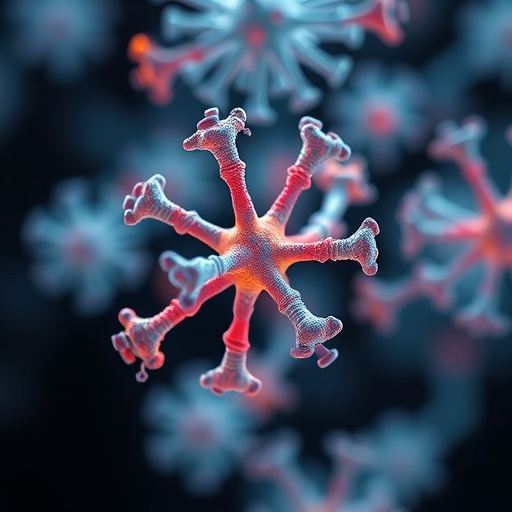
AI designs functional CRISPR-like nucleases surpassing natural models

AI designs functional CRISPR-like nucleases surpassing natural models

65
SHARES
587
VIEWS
Share on FacebookShare on Twitter
ADVERTISEMENT

Artificial intelligence is beginning to redesign the molecular machinery that powers genome editing. A new Science report describes how researchers created synthetic, RNA-guided nucleases that rival—or outperform—natural enzymes. The work extends the CRISPR toolbox by showing that structure-guided protein design can yield genome-editing proteins with substantially different sequences while preserving function.

CRISPR-Cas systems work by pairing an RNA guide with a DNA target and then using a nuclease domain to cut. Most widely used technologies rely on natural Cas proteins shaped by evolution. But whether AI can generate functional equivalents with novel sequence features, rather than near replicas of known enzymes, has been a difficult question.

Petr Skopintsev and colleagues tackled that challenge using a strategy built around ESM Inverse Folding (ESM-IF1). Instead of allowing the model to drift toward sequences close to training references, the team introduced evolution-informed residue constraints designed to keep key functional elements in place while still permitting large sequence divergence.

Their starting point was TnpB, a minimal CRISPR-Cas12-like nuclease. The researchers designed new variants they call SynTnpBs, which are engineered to remain RNA-guided and catalytically active despite being non-natural. This “minimal nuclease” context is especially important because multi-domain architectures can be fragile—small changes can destroy activity.

After design, the synthetic nucleases were screened across bacterial cells, plant cells, and human cells. Many of the AI-generated enzymes retained or exceeded the performance of the natural TnpB across these distinct environments, supporting the idea that the designs were not merely theoretical but biochemically robust.

To understand how these divergent proteins work, the authors turned to cryo-electron microscopy (cryo-EM). They determined structures for the most divergent SynTnpB variants, providing the first experimentally resolved pictures of AI-designed RNA-guided nucleases.

Across multiple conformations, cryo-EM revealed new stabilizing interactions at the RNA-DNA interface. Rather than matching the natural enzyme’s exact contact patterns, the engineered nucleases appear to solve the same recognition problem through alternative molecular geometry—an outcome consistent with the promise of protein design guided by structure.

Together, the study demonstrates a practical path for creating active genome-editing enzymes that do not simply imitate nature’s sequences. By combining inverse folding with evolution-informed constraints and validating function in real cellular systems, the work suggests that AI-driven design can generate new classes of editing tools.

Subject of Research: AI-designed RNA-guided nucleases for CRISPR-based genome editing
Article Title: Structure and evolution-guided design of minimal RNA-guided nucleases
News Publication Date: 16-Jul-2026
Web References: http://dx.doi.org/10.1126/science.aed6123
References: 10.1126/science.aed6123
Image Credits: Not provided

Keywords: artificial intelligence, protein design, CRISPR, Cas12-like nuclease, ESM Inverse Folding, ESM-IF1, RNA-DNA interface, cryo-EM, genome editing, TnpB, SynTnpBs

Tags: advanced CRISPR toolbox expansionAI outperforming natural enzymesAI-designed CRISPR-like nucleasesartificial intelligence in molecular biologyevolution-informed residue constraintsminimal CRISPR-Cas12-like nucleasesnovel sequence features in genome editingprogrammable nucleases with enhanced functionalityRNA-guided nuclease developmentstructure-guided protein engineeringsynthetic genome editing toolssynthetic TnpB variants
Share26Tweet16
Previous Post

Separating Human Projection from Machine Cognition Is Key to LLM Understanding

Next Post

Boston University Calls for Public Health Leadership to Build Trustworthy Health AI

Related Posts

New wheat gene Sdd1 offers resource for improving plant architecture
Biology

New wheat gene Sdd1 offers resource for improving plant architecture

August 8, 2026
C/EBPγ Links Cancer Plasticity, DNA Repair, and Therapy Resistance in Lung Adenocarcinoma
Biology

C/EBPγ Links Cancer Plasticity, DNA Repair, and Therapy Resistance in Lung Adenocarcinoma

August 8, 2026
Antenna-like cell structure helps turtles sense warmth that determines sex
Biology

Antenna-like cell structure helps turtles sense warmth that determines sex

August 8, 2026
USC Launches Center Investigating Sex Differences in Aging
Biology

USC Launches Center Investigating Sex Differences in Aging

August 8, 2026
Mosquitoes target specific blood types—and yours may not be among them
Biology

Mosquitoes target specific blood types—and yours may not be among them

August 7, 2026
Eli Lilly’s Ruth Gimeno to present at 13th ARDD meeting in Boston
Biology

Eli Lilly’s Ruth Gimeno to present at 13th ARDD meeting in Boston

August 7, 2026
Next Post
Boston University Calls for Public Health Leadership to Build Trustworthy Health AI

Boston University Calls for Public Health Leadership to Build Trustworthy Health AI

  • Mothers who receive childcare support from maternal grandparents show more

    Mothers who receive childcare support from maternal grandparents show more parental warmth, finds NTU Singapore study

    27656 shares
    Share 11059 Tweet 6912
  • University of Seville Breaks 120-Year-Old Mystery, Revises a Key Einstein Concept

    1061 shares
    Share 424 Tweet 265
  • Bee body mass, pathogens and local climate influence heat tolerance

    682 shares
    Share 273 Tweet 171
  • Researchers record first-ever images and data of a shark experiencing a boat strike

    546 shares
    Share 218 Tweet 137
  • Groundbreaking Clinical Trial Reveals Lubiprostone Enhances Kidney Function

    531 shares
    Share 212 Tweet 133
Science

Embark on a thrilling journey of discovery with Scienmag.com—your ultimate source for cutting-edge breakthroughs. Immerse yourself in a world where curiosity knows no limits and tomorrow’s possibilities become today’s reality!

RECENT NEWS

  • Which Alternative Heavy-Duty Truck Technologies Are Most Cost-Competitive in Real-World Use?
  • Lifestyle, Genetic Risk for Severe Mental Illness Linked to New Physical Diseases
  • Neutrophil-Released S100A8/A9 Activates Reparative Macrophages, Delaying Denervated Muscle Atrophy
  • Lancet Obesity Definition Differs From Other Diagnostic Criteria for Adults

Categories

  • Agriculture
  • Anthropology
  • Archaeology
  • Athmospheric
  • Biology
  • Biotechnology
  • Blog
  • Bussines
  • Cancer
  • Chemistry
  • Climate
  • Earth Science
  • Editorial Policy
  • Marine
  • Mathematics
  • Medicine
  • Pediatry
  • Policy
  • Psychology & Psychiatry
  • Science Education
  • Social Science
  • Space
  • Technology and Engineering

Subscribe to Blog via Email

Success! An email was just sent to confirm your subscription. Please find the email now and click 'Confirm Follow' to start subscribing.

Join 5,149 other subscribers

© 2025 Scienmag - Science Magazine

Welcome Back!

Login to your account below

Forgotten Password?

Retrieve your password

Please enter your username or email address to reset your password.

Log In
No Result
View All Result
  • HOME
  • SCIENCE NEWS
  • CONTACT US

© 2025 Scienmag - Science Magazine
