

Wednesday, April 29, 2026
Science
No Result
View All Result
  • Login
  • HOME
  • SCIENCE NEWS
  • CONTACT US
  • HOME
  • SCIENCE NEWS
  • CONTACT US
No Result
View All Result
Scienmag
No Result
View All Result
Home Science News Agriculture

AI Cracks Plant DNA Code: Language Models Poised to Revolutionize Genomics and Agriculture

June 1, 2025
in Agriculture
Reading Time: 2 mins read
0
Figure.3
67
SHARES
606
VIEWS
Share on FacebookShare on Twitter
ADVERTISEMENT

In a groundbreaking advancement at the nexus of artificial intelligence and plant biology, a new study spearheaded by Meiling Zou, Haiwei Chai, and Zhiqiang Xia from Hainan University heralds a transformative era in plant genomics research. By harnessing the power of large language models (LLMs)—AI architectures originally designed for human language processing—scientists are now unveiling the intricate lexicon embedded in plant genomes. This pioneering work, published in the journal Tropical Plants, details how these AI-driven models decode the complex language of genetic sequences to unlock unprecedented biological insights and propel agricultural innovation.

Historically, the domain of plant genomics has stumbled over the colossal complexity intrinsic to plant DNA. Vast, variable, and often poorly annotated datasets pose significant challenges for traditional machine learning techniques, which require large volumes of high-quality labeled data. Unlike human languages, which are rich in structured grammar and semantics, genomic sequences represent a fundamentally different modality of biological information—strings of nucleotides whose regulatory and functional elements reflect sophisticated hierarchical patterns. The recent study confronts this challenge by reimagining genome sequences as a language-like system, thus enabling large language models to process and predict genetic functions with remarkable accuracy.

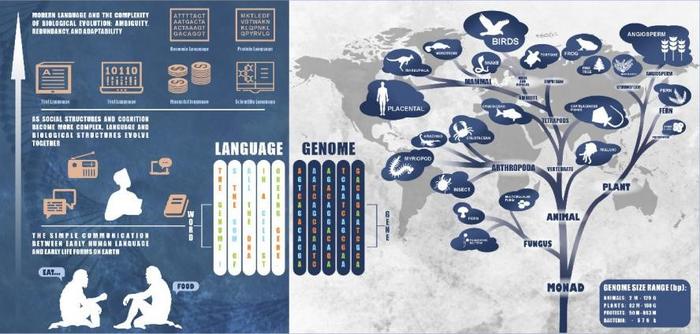
The crux of this research lies in recognizing the striking structural parallels between natural language and genomic codes. DNA can be conceptualized as a sequence of “words” composed of nucleotide letters—adenine, thymine, cytosine, and guanine—that combine to form meaningful “sentences” or motifs regulating gene expression and cellular function. By training LLMs on massive datasets of plant genomic sequences, the researchers have demonstrated that these models can learn to identify complex features such as promoters, enhancers, and other regulatory elements that orchestrate gene activity across various tissues and developmental stages.

The study explores the performance of multiple LLM architectures specifically tailored for plant genomic analysis. Encoder-only models, exemplified by DNABERT, focus on interpreting input sequences to extract meaningful representations. Decoder-only models like DNAGPT facilitate generative tasks, predicting downstream sequence patterns or functional annotations. Additionally, encoder-decoder hybrids such as ENBED enable bidirectional understanding and prediction, enhancing model versatility. The researchers employed a rigorous methodology involving initial pre-training on expansive raw genomic data, followed by fine-tuning

Tags: agricultural innovation through AIAI in genomicschallenges in plant genomicsgenetic sequence analysisgenomic information processinglanguage models in agriculturelarge language models in biologymachine learning for plant researchplant biology advancementsplant DNA decodingtransformative AI applicationsunlocking plant genetic insights
Share27Tweet17
Previous Post

AI Unraveling Plant DNA: Language Models Poised to Revolutionize Genomics and Agriculture

Next Post

Magnetic Soft Robot Innovates Intelligent Bladder Control

Related Posts

Reevaluating Staple Food Crops: Balancing Human Nutrition, Climate Impact, and Sustainability — Agriculture
Agriculture

Reevaluating Staple Food Crops: Balancing Human Nutrition, Climate Impact, and Sustainability

April 28, 2026
Illinois Researchers Identify Chick Sex and Predict Mortality in Chicken Eggs Pre-Hatching — Agriculture
Agriculture

Illinois Researchers Identify Chick Sex and Predict Mortality in Chicken Eggs Pre-Hatching

April 28, 2026
CRISPR/CAS Genome Editing Advances High-Quality Cotton Development, New Crop Journal Study Reveals — Agriculture
Agriculture

CRISPR/CAS Genome Editing Advances High-Quality Cotton Development, New Crop Journal Study Reveals

April 28, 2026
New Study Finds Soil, Rather Than Fertilizer, Drives Nitrogen Gas Emissions in Rice Paddies — Agriculture
Agriculture

New Study Finds Soil, Rather Than Fertilizer, Drives Nitrogen Gas Emissions in Rice Paddies

April 28, 2026
Radioactive Imaging Uncovers Hidden Food Networks in Ant Colonies — Agriculture
Agriculture

Radioactive Imaging Uncovers Hidden Food Networks in Ant Colonies

April 28, 2026
Agriculture

Tracking Insects Using Radar Technology

April 28, 2026
Next Post
Magnetic Soft Robot Innovates Intelligent Bladder Control

Magnetic Soft Robot Innovates Intelligent Bladder Control

  • Mothers who receive childcare support from maternal grandparents show more parental warmth, finds NTU Singapore study

    Mothers who receive childcare support from maternal grandparents show more parental warmth, finds NTU Singapore study

    27638 shares
    Share 11052 Tweet 6907
  • University of Seville Breaks 120-Year-Old Mystery, Revises a Key Einstein Concept

    1041 shares
    Share 416 Tweet 260
  • Bee body mass, pathogens and local climate influence heat tolerance

    677 shares
    Share 271 Tweet 169
  • Researchers record first-ever images and data of a shark experiencing a boat strike

    539 shares
    Share 216 Tweet 135
  • Groundbreaking Clinical Trial Reveals Lubiprostone Enhances Kidney Function

    526 shares
    Share 210 Tweet 132
Science

Embark on a thrilling journey of discovery with Scienmag.com—your ultimate source for cutting-edge breakthroughs. Immerse yourself in a world where curiosity knows no limits and tomorrow’s possibilities become today’s reality!

RECENT NEWS

  • Remote Ischaemic Postconditioning Enhances Hypothermia for Encephalopathy
  • Desert Dust Warms Atmosphere Twice Climate Estimates
  • Unmet Daily Living Needs in Older Adults’ Homes
  • Key Principles for Trusting Artificial Intelligence

Categories

  • Agriculture
  • Anthropology
  • Archaeology
  • Athmospheric
  • Biology
  • Biotechnology
  • Blog
  • Bussines
  • Cancer
  • Chemistry
  • Climate
  • Earth Science
  • Editorial Policy
  • Marine
  • Mathematics
  • Medicine
  • Pediatry
  • Policy
  • Psychology & Psychiatry
  • Science Education
  • Social Science
  • Space
  • Technology and Engineering

Subscribe to Blog via Email

Enter your email address to subscribe to this blog and receive notifications of new posts by email.

Join 5,145 other subscribers

© 2025 Scienmag - Science Magazine

Welcome Back!

Login to your account below

Forgotten Password?

Retrieve your password

Please enter your username or email address to reset your password.

Log In
No Result
View All Result
  • HOME
  • SCIENCE NEWS
  • CONTACT US

© 2025 Scienmag - Science Magazine

Discover more from Science

Subscribe now to keep reading and get access to the full archive.

Continue reading
