


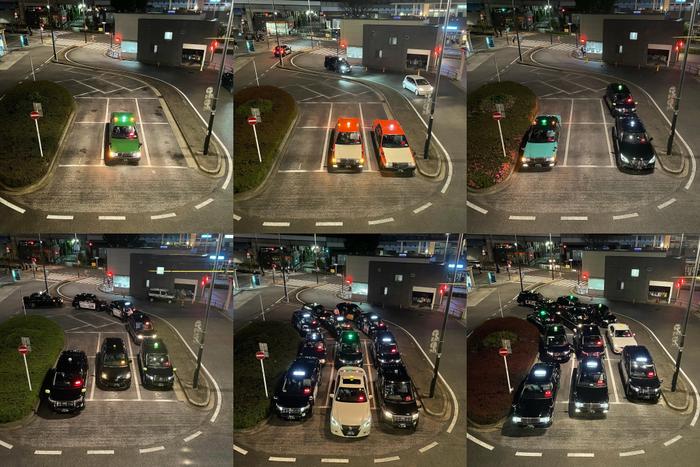
In recent years, artificial intelligence (AI) has predominantly been viewed through the lens of its capacity to enhance productivity, especially favoring workers with high technical skills. However, groundbreaking research emerging from the University of Tokyo challenges this prevailing narrative. This new study focuses on taxi drivers in Yokohama, Japan, and reveals that AI demand forecasting technology notably boosts the productivity of less-experienced drivers. This development not only offers a fresh perspective on AI’s role in the workforce but also suggests a potential narrowing of the long-standing skills gap that has characterized many industries for decades.
Traditionally, discussions around AI’s impact tend to emphasize how automation and machine learning disproportionately benefit skilled professionals, such as software engineers or financial analysts. Yet, the Yokohama taxi driver study highlights a different reality where AI tools can provide substantive assistance to those with lower skill levels. By employing an AI-powered app that forecasts customer demand and recommends optimal routes, less-skilled taxi drivers reduce the time spent cruising without passengers. This improvement translates into roughly a 7% increase in productivity for these drivers, compared to only marginal gains observed among their highly skilled counterparts.
The AI Navi app utilized in the study works by analyzing extensive datasets to predict where demand for taxis is likely to surge. This prediction enables drivers to position themselves strategically, thereby minimizing idle periods. Crucially, the app is not linked to autonomous driving capabilities but serves as a decision-support system. The app’s guidance acts as a form of augmented intelligence, compensating for the lack of experience or localized knowledge that less-skilled drivers might have. In essence, the technology serves as digital scaffolding that lifts the performance of novices closer to that of experts.
A pivotal methodological innovation of this research lies in its ability to isolate the AI app’s effect from confounding factors such as local demand fluctuations or geographical differences. The researchers leveraged the stochastic nature of taxi ride terminations—where drivers’ next starting points are essentially randomized based on their previous ride’s drop-off location—to approximate a natural experiment. This randomization mirrors the structure of clinical trials, allowing the team to infer causal effects of AI adoption on driver productivity without bias.
The phenomenon observed underscores a broader socio-technical shift where AI acts as a ‘deskilling’ technology, meaning it reduces the premium on prior expertise by automating skill-intensive tasks. Professor Yasutora Watanabe from the University of Tokyo’s Graduate School of Public Policy articulates this as a reversal of the typical technological trend that has historically advantaged highly skilled workers, thereby exacerbating income inequality. Instead, AI in this context diminishes the relative edge of experts by empowering the less-skilled workforce segment.
This narrowing of the skills gap holds profound implications beyond the confines of taxi driving. Professor Hitoshi Shigeoka suggests that professions involving routine tasks or pattern recognition could witness similar transformations. For example, paralegals who process legal documents or medical professionals who analyze diagnostic images might experience enhanced performance due to AI tools that compensate for varied levels of domain expertise. Such democratization of productivity gains might contribute significantly to reducing income disparity and improving job quality for many traditionally undervalued workers.
Despite these promising findings, the study also reveals a curious behavioral puzzle. A significant number of low-skilled taxi drivers chose not to use the AI app at all, despite clear evidence that their productivity would benefit considerably. The researchers attribute this reluctance to psychological and social factors, including resistance to adopting unfamiliar technologies or a lack of confidence in automated guidance systems. Overcoming these behavioral barriers is essential to fully realizing the egalitarian potential of AI augmentation.
The study’s authors advocate for targeted interventions by employers and policymakers to encourage wider adoption of beneficial AI technologies among less-skilled workers. Such efforts might include tailored training programs that build complementary human skills, such as advanced communication and interpersonal capabilities, which cannot be easily replicated by AI. This complementary approach may redefine workforce skills in a future where routine tasks are increasingly automated while human-centric traits gain prominence.
Interestingly, this study subtly suggests a paradigm shift in hiring practices. As AI takes over specific skill sets like demand forecasting, employers might begin prioritizing candidates with attributes AI struggles to emulate—empathy, creativity, and social intelligence, for instance. This shift would challenge traditional notions of expertise and proficiency, realigning labor demands and potentially improving worker satisfaction and engagement.
The rigorous quantitative approach behind the study involved a large-scale statistical analysis of real-world operational data from taxi drivers in Yokohama. By carefully disentangling complex causal relationships and controlling for external variability, the research offers robust evidence that democratized AI tools can effectively complement human workers. This methodological rigor enhances confidence in applying these insights to broader economic and labor market discussions.
Overall, this investigation into AI and taxi driver productivity illuminates a nuanced interaction between technology and human skill. It challenges the polarized view that AI solely benefits the highly skilled while sidelining others, revealing instead a more equitable potential. As AI systems become ever more ubiquitous, understanding how to distribute their benefits appropriately will be crucial for fostering inclusive economic growth.
The study also invites further interdisciplinary research spanning economics, public policy, and human-computer interaction to explore the mechanisms that underpin AI adoption and its varied impacts across skill levels. By developing a comprehensive understanding of these dynamics, stakeholders can better harness AI’s power to design fairer, more effective labor markets.
In conclusion, the University of Tokyo’s research stands as a significant contribution to the evolving discourse on AI’s social implications. It not only uncovers unexpected productivity gains among less-skilled workers but also points toward a future where technology enshrines inclusivity rather than division. This paradigm deserves keen attention from scholars, practitioners, and policymakers alike as the world grapples with the fast-paced automation of work.
News Publication Date: 9-Jun-2025
Web References: http://dx.doi.org/10.1287/mnsc.2023.01631
References: Kyogo Kanazawa, Daiji Kawaguchi, Hitoshi Shigeoka, Yasutora Watanabe. “AI, Skill, and Productivity: The Case of Taxi Drivers”, Management Science, 2025.
Cite Scienmag News
Courtney Benton. (June 10, 2025). AI Bridges the Productivity Gap. Scienmag. https://scienmag.com/ai-bridges-the-productivity-gap/
Courtney Benton. "AI Bridges the Productivity Gap." Scienmag, 10 June 2025, https://scienmag.com/ai-bridges-the-productivity-gap/. Accessed 3 September 2026.
Courtney Benton. "AI Bridges the Productivity Gap." Scienmag. June 10, 2025. https://scienmag.com/ai-bridges-the-productivity-gap/


