


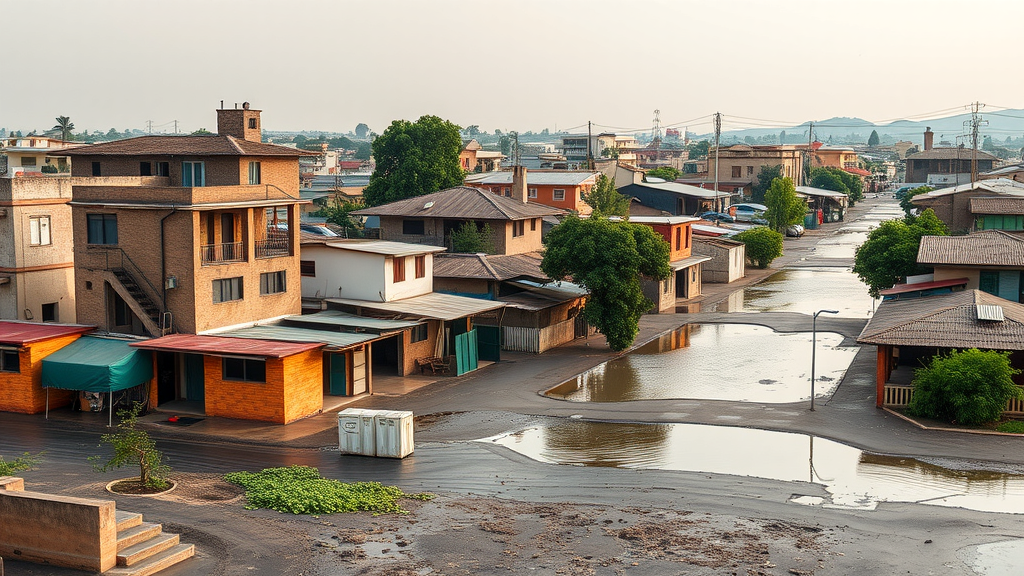
African cities are confronting a sharp escalation in hydrometeorological extremes, with floods, droughts, heatwaves and violent storms arriving more frequently and with greater intensity than at any point in recent memory. New research published in npj Urban Sustainability argues that this growing exposure is not a distant threat but a present-day emergency, and that the window for effective adaptation is narrowing rapidly. The study, led by an international team of urban climate scientists, synthesizes evidence on how extreme weather is reshaping life in African urban centers and issues a pointed call for adaptation strategies that match the scale and speed of the hazard.
The core finding is stark: the frequency of hydrometeorological extremes in African cities is rising, driven by the combined forces of climate change and rapid, often unplanned urbanization. Climate change is intensifying the water cycle, producing heavier downpours when rain arrives and longer, hotter dry spells when it does not. At the same time, African cities are among the fastest growing in the world, with populations expanding into floodplains, wetlands and steep slopes that were once avoided precisely because of their vulnerability. The result is a dangerous collision between more frequent hazards and more people and assets placed directly in harm’s way.
From a technical standpoint, the mechanisms behind this escalation are well understood. Warmer atmospheric temperatures allow the air to hold more moisture, following the Clausius-Clapeyron relationship, which means that when convective storms trigger, they can release substantially more rainfall in shorter periods. In tropical and subtropical African cities, much of the annual precipitation falls in intense convective events, so this thermodynamic amplification translates directly into flash flood risk. Conversely, shifting rainfall regimes and rising evaporative demand extend dry seasons, deplete reservoirs and stress groundwater systems, deepening drought conditions that cascade into food and water insecurity for urban populations dependent on fragile supply chains.
Urbanization compounds these climatic drivers in ways that are particularly severe in African contexts. Impermeable surfaces, informal settlements with inadequate drainage, and the loss of natural buffers such as wetlands and urban forests all reduce the capacity of city landscapes to absorb and convey water. Many African cities rely on drainage infrastructure designed decades ago, or never designed at all, for rainfall intensities that are now routinely exceeded. When extreme rain falls on such landscapes, runoff concentrates quickly, overwhelms channels and inundates low-lying neighborhoods, which are disproportionately occupied by low-income households with limited capacity to prepare, respond or recover.
The research emphasizes that the impacts are deeply unequal. Informal settlements, which house a large and growing share of urban Africans, typically lack formal drainage, secure tenure, insurance and reliable early warning. Residents of these areas face recurring property loss, waterborne disease outbreaks following floods, and chronic water scarcity during droughts. Women, children, the elderly and those working in the informal economy bear a disproportionate share of the burden. The study stresses that hydrometeorological extremes are therefore not only a physical science problem but a question of social justice, and that adaptation policies which ignore this distributional reality risk reinforcing the very vulnerabilities they aim to reduce.
Despite the escalating risk, the authors find that adaptation in African cities remains fragmented, underfunded and often reactive. Responses tend to follow disasters rather than anticipate them, with resources mobilized after lives have already been lost. Formal adaptation planning exists in many countries, frequently in the form of National Adaptation Plans submitted under the United Nations Framework Convention on Climate Change, but implementation at the city scale lags far behind. Municipal governments, which are on the front line of flood defense, drainage maintenance and emergency response, often lack the technical capacity, data, mandates and budgets to translate national commitments into local action.
A central argument of the paper is that effective adaptation must be grounded in better information. Many African cities operate with sparse hydrological and meteorological observation networks, short historical records and limited downscaled climate projections, making it difficult to quantify risk or design infrastructure to appropriate standards. The authors call for expanded investment in observation systems, early warning services and open climate data, alongside the use of modern modeling tools that can capture the small-scale convective storms and urban flooding processes most relevant to city decision-makers. Improved risk mapping, they argue, is a prerequisite for prioritizing investments and protecting the most exposed communities first.
The study also highlights the potential of combining engineered and nature-based solutions. Upgraded drainage, flood barriers and resilient water supply systems remain essential, but restoring wetlands, protecting urban green space, adopting permeable surfaces and implementing sustainable urban drainage can reduce flood peaks, cool overheated neighborhoods and recharge aquifers simultaneously. Such approaches are often cheaper to maintain than hard infrastructure and deliver co-benefits for health, biodiversity and livelihoods. Equally important, the authors point to the value of integrating local and indigenous knowledge with scientific assessment, and of involving residents of informal settlements directly in the design and governance of adaptation measures, since community-led initiatives have repeatedly proven more durable than top-down interventions.
Finance emerges as a persistent bottleneck. African cities receive only a small fraction of global climate finance, and what does arrive is often channeled through national governments with limited reach to municipal level. The paper argues that closing the adaptation gap will require new funding mechanisms that flow directly to cities, support for municipal creditworthiness, and blending of public, private and international resources. It also warns that the cost of inaction is rising: every year without effective adaptation increases future losses, damages and displacement, making delayed investment far more expensive than timely prevention.
Ultimately, the research delivers both a warning and a roadmap. The warning is that hydrometeorological extremes will continue to intensify across African cities, threatening lives, livelihoods and hard-won development gains if current trajectories persist. The roadmap is a comprehensive adaptation agenda: invest in data and early warning, upgrade and diversify infrastructure, embrace nature-based solutions, embed equity in planning, strengthen municipal institutions and unlock sustained finance. The authors conclude that with decisive action, African cities can transform mounting climate risk into an opportunity to build safer, fairer and more sustainable urban futures, but that this transformation must begin now, before the next extreme arrives.
Subject of Research: Rising hydrometeorological extremes in African cities and the need for effective urban climate adaptation
Article Title: Growing occurrence of hydrometeorological extremes in African cities and the urge for effective adaptation
Article References: Salhi, A., Pérez-Cutillas, P., & Heggy, E. (2026). Growing occurrence of hydrometeorological extremes in African cities and the urge for effective adaptation. npj Urban Sustainability. https://doi.org/10.1038/s42949-026-00475-1
Image Credits: AI Generated
DOI: 10.1038/s42949-026-00475-1
Keywords: hydrometeorological extremes, African cities, urban flooding, drought, climate adaptation, urbanization, informal settlements, early warning systems, nature-based solutions, climate finance, urban sustainability, Growing
Cite Scienmag News
Gavin Prescott. (September 20, 2026). African Cities Face Rising Floods and Droughts as Adaptation Lags Behind. Scienmag. https://scienmag.com/african-cities-face-rising-floods-and-droughts-as-adaptation-lags-behind/
Gavin Prescott. "African Cities Face Rising Floods and Droughts as Adaptation Lags Behind." Scienmag, 20 September 2026, https://scienmag.com/african-cities-face-rising-floods-and-droughts-as-adaptation-lags-behind/. Accessed 5 October 2026.
Gavin Prescott. "African Cities Face Rising Floods and Droughts as Adaptation Lags Behind." Scienmag. September 20, 2026. https://scienmag.com/african-cities-face-rising-floods-and-droughts-as-adaptation-lags-behind/


