


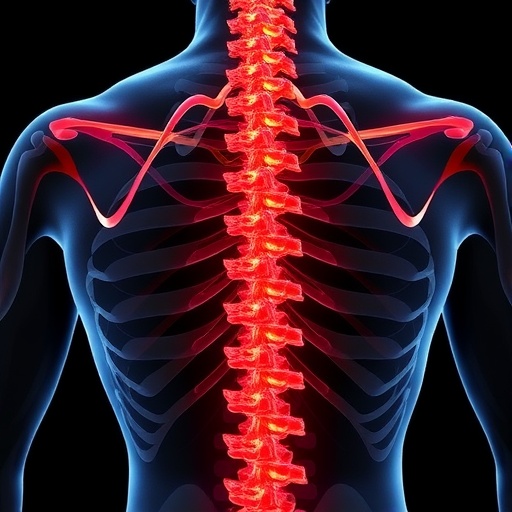
In a groundbreaking advancement in the field of regenerative medicine, researchers are delving into the therapeutic potentials of functional bioinks tailored for spinal cord injury applications. The advent of 3D bioprinting technology stands at the forefront of this research, offering an innovative approach to the reconstruction of damaged spinal tissues. Spinal cord injuries, often resulting from traumatic incidents, pose significant challenges in recovery and rehabilitation, leading scientists to explore bioengineering solutions that can potentially restore neurological function.
The study, authored by Yücer, Sarac, Özarslan, et al., dives deep into the properties and applications of functional bioinks specifically designed to mimic the natural extracellular matrix of spinal cord tissues. By utilizing advanced bioprinting techniques, the research aims to create scaffolds that not only support cellular growth but also promote the regeneration of neuronal connections essential for motor and sensory recovery. This approach is a departure from traditional methods, making it a pivotal point in spinal cord injury treatment.
One of the key focal points of the research is understanding the composition of functional bioinks. The authors meticulously discuss the integration of biocompatible materials that enhance cell adhesion and proliferation. These bioinks are formulated with a mixture of natural and synthetic polymers, such as gelatin and alginate, enabling them to provide the necessary biochemical cues for spinal cord regeneration. The manipulation of material properties, including viscosity and gelation behavior, plays a crucial role in ensuring that the bioprinted scaffolds can accurately replicate the complex architecture of spinal tissues.
Moreover, the research outlines innovative techniques utilized in 3D bioprinting, including nozzle-based extrusion and laser-assisted printing. These methods enable precise layer-by-layer deposition of bioinks, facilitating the construction of intricate 3D structures that can closely emulate the native spinal cord architecture. The optimization of these printing techniques is crucial, as it affects not just the structural integrity of the scaffolds, but also their biological efficacy in promoting cell survival and growth.
Another significant aspect of the study is its emphasis on the incorporation of growth factors and signaling molecules within the bioink formulations. These bioactive agents play an essential role in modulating cellular behavior and facilitating the healing process following spinal cord injury. The researchers are evaluating various combinations of neurotrophic factors, which could enhance neuronal survival and regeneration when embedded in the bioprinted scaffolds. Such strategies could lead to improved recovery outcomes for patients suffering from spinal cord damage.
As they continue their research, the authors explore various in vitro and in vivo models to assess the effectiveness of the bioprinted scaffolds. The initial results are promising, showcasing improved cellular infiltration and overall tissue regeneration compared to traditional scaffolding techniques. These evaluations are critical in establishing the clinical relevance of their findings and could pave the way for future translational studies aimed at human applications.
The social implications of this research are profound, especially given the rising incidence of spinal cord injuries due to accidents and sports-related events. The successful implementation of 3D bioprinted scaffolds could revolutionize treatment methodologies, offering hope to countless individuals facing lifelong disabilities. By bridging the gap between biology and technology, this study seeks to inspire further innovations in the field of bioengineering.
The research also highlights the interdisciplinary collaboration among scientists, engineers, and medical professionals, underscoring the collective effort required to address the complexities of spinal cord injury treatment. The seamless integration of theoretical knowledge and practical applications serves as a model for future research initiatives aimed at tackling various biomedical challenges.
In addition, the researchers address potential hurdles in the path toward clinical application of their findings. Regulatory approvals, manufacturing scalability, and long-term safety assessments are vital considerations that must be factored into the development of new therapeutic products. This foresight indicates the authors’ commitment not only to scientific discovery but also to the ethical responsibilities inherent in biomedical innovation.
As the study progresses, the authors remain optimistic about the potential for their 3D bioprinted scaffolds to integrate seamlessly with native spinal cord tissues, potentially leading to functional recovery. Their research could stimulate further interest in functional bioinks, inspiring more studies to optimize material properties and enhance biological functionalities.
The potential applications of this research extend beyond spinal cord injuries, as the principles of functional bioinks and 3D bioprinting can be harnessed for other tissue engineering endeavors. Future investigations could lead to advancements in treating conditions such as peripheral nerve injuries or even broader applications in regenerative medicine, underscoring the versatility of these innovative technologies.
As the world watches these developments unfold, the hope is that such scientific breakthroughs will translate into real-world solutions. The promise of functional bioinks and 3D bioprinting presents a paradigm shift in the treatment of spinal cord injuries, showcasing both the challenges and triumphs faced as researchers strive towards healing the delicate architecture of the human body.
This pioneering work by Yücer and colleagues embodies the spirit of innovation and the relentless pursuit of knowledge that defines modern research. As the science community eagerly anticipates their subsequent findings, there is a palpable sense of excitement regarding the future of spinal cord injury therapies, fueled by the advances in bioengineering technologies.
Overall, the integration of functional bioinks and sophisticated bioprinting methodologies heralds a new era in regenerative medicine, marking significant progress in the quest for effective interventions for spinal cord injuries.
Cite Scienmag News
Cassandra Pierce. (November 14, 2025). Advancing Spinal Cord Healing with Bioink and 3D Printing. Scienmag. https://scienmag.com/advancing-spinal-cord-healing-with-bioink-and-3d-printing/
Cassandra Pierce. "Advancing Spinal Cord Healing with Bioink and 3D Printing." Scienmag, 14 November 2025, https://scienmag.com/advancing-spinal-cord-healing-with-bioink-and-3d-printing/. Accessed 3 September 2026.
Cassandra Pierce. "Advancing Spinal Cord Healing with Bioink and 3D Printing." Scienmag. November 14, 2025. https://scienmag.com/advancing-spinal-cord-healing-with-bioink-and-3d-printing/


