


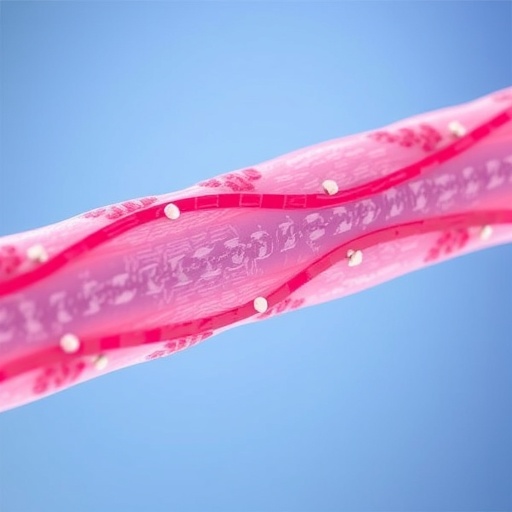
In a groundbreaking study, researchers have made significant advancements in the clinical development of tissue-engineered vascular grafts (TEVG), paving the way for potential paradigms in the treatment of vascular diseases and injuries. The exploration of artificial blood vessels is not merely an academic endeavor; it embodies a hopeful leap towards the future of transplant surgery, where synthetic constructs could replace damaged or diseased blood vessels.
The traditional methods of vascular reconstruction have limitations, including the availability of donor organs and the risk of rejection. This cutting-edge research aims to mitigate such issues by employing advanced tissue engineering techniques. It is essential to understand how these techniques can create biocompatible materials that mimic the properties of natural blood vessels. The complexities involved in engineering functional blood vessels are immense, and the integration of biological materials with synthetic polymers is an area of intense focus which the study has illuminated.
Researchers began by outlining the challenges inherent in creating blood vessels that can withstand physiological conditions. Blood vessels must endure high pressure, while also allowing for the dynamic flow of blood and facilitating nutrient exchange. This necessitates not only a robust structural integrity of the grafts but also the complete functionality of endothelial layers, which are crucial for maintaining hemodynamic balance and preventing thrombosis. The multidimensional nature of these challenges is what makes TEVGs such a fascinating area of exploration.
The study delved into various strategies that have been utilized to fabricate TEVGs. One promising approach involves the combination of stem cells with scaffold materials, allowing for the in situ formation of vascular cells. This technique aims to recreate the natural cellular architecture found in primary blood vessels, leading to grafts that are more likely to integrate seamlessly into the host vascular system. The potential for stem cell-derived endothelial cells to reduce rejection rates and enhance patency rates post-surgery forms a core part of the research’s findings.
To measure the effectiveness of the TEVGs, the researchers conducted both in vitro and in vivo experiments. In vitro tests evaluated how well the grafts could support cell growth and survival. Following promising results, the next phase involved implantation of the engineered vessels in animal models. This provided invaluable information regarding biocompatibility, as well as insights into how the grafts performed under conditions mimicking human physiology.
Continuously monitoring the engrafted vessels’ performance raised the question of how these artificial constructs interact with the surrounding biological environment. The bioactive properties of the grafts, including their ability to secrete biochemical signals that promote healing and integration within the host system, proved crucial in establishing their efficacy. Initial animal studies indicated that when these TEVGs were subjected to pulsatile blood flow, they developed properties akin to natural arteries.
One particular focus of the research was the need for long-term studies to ascertain the durability and viability of TEVGs. The researchers understood that robustness over time is essential for patient safety and health post-transplant. Their preliminary data collected over extended periods showed promising trends in graft elasticity and patency, suggesting that patients receiving TEVGs might experience significantly improved outcomes compared to those using traditional grafting procedures.
Safety, however, was another essential element of the study. The researchers conducted a comprehensive review of potential complications that could arise due to the use of synthetic materials. They acknowledged the risks of thrombosis, inflammation, and infection, underscoring the importance of careful design and material selection. By employing bioengineered substances that promote healing and minimize inflammatory responses, the team is hopeful that these grafts will ultimately lead to enhanced clinical outcomes.
Community engagement and collaboration with clinical practitioners were highlighted as critical components of this research. The study’s authors emphasized the importance of translating findings from the laboratory to clinical settings, where healthcare professionals can provide feedback on the practical challenges faced when integrating TEVGs into surgical procedures. This collaboration fosters a vital dialogue, ensuring that research is patient-centered and aligns with real-world medical needs.
Moreover, the economic implications tied to the development of TEVGs show promise for the healthcare industry as a whole. With an aging population and rising prevalence of vascular diseases, the financial burden on healthcare systems could rise substantially. By developing cost-effective solutions such as TEVGs that could potentially reduce the need for complex surgeries and long-term care, there is optimism about creating a more sustainable healthcare environment.
The future of artificial blood vessels is not only rooted in the advancements of science and technology but is also a testament to human ingenuity and resilience in the face of medical challenges. As this study underscores, the intersection of biology and engineering holds immense potential and could transform how cardiovascular diseases are treated, ultimately extending lives and enhancing quality of life for countless patients.
To conclude, the clinical development of TEVGs represents a crucial step toward filling a significant gap in current medical practices related to vascular repair and restoration. As the research continues to evolve, the hope is that these artificial constructs will redefine the boundaries of what’s possible in regenerative medicine, with real-world applications that can soon touch patients around the globe.
Itoh, M., Kamohara, K., Node, K. et al. Artificial blood vessels-clinical development of TEVG.
J Artif Organs 28, 308–316 (2025). https://doi.org/10.1007/s10047-025-01508-9
Cite Scienmag News
Ophelia Keating. (August 29, 2025). Advancements in Tissue-Engineered Vascular Grafts. Scienmag. https://scienmag.com/advancements-in-tissue-engineered-vascular-grafts/
Ophelia Keating. "Advancements in Tissue-Engineered Vascular Grafts." Scienmag, 29 August 2025, https://scienmag.com/advancements-in-tissue-engineered-vascular-grafts/. Accessed 3 September 2026.
Ophelia Keating. "Advancements in Tissue-Engineered Vascular Grafts." Scienmag. August 29, 2025. https://scienmag.com/advancements-in-tissue-engineered-vascular-grafts/


