

Tuesday, July 28, 2026
Science
No Result
View All Result
  • Login
  • HOME
  • SCIENCE NEWS
  • CONTACT US
  • HOME
  • SCIENCE NEWS
  • CONTACT US
No Result
View All Result
Scienmag
No Result
View All Result
Home Science News Chemistry

Advanced Simulations Reveal New Insights Into Proton Transport in Water

July 28, 2026
in Chemistry
Reading Time: 2 mins read
0
Advanced Simulations Reveal New Insights Into Proton Transport in Water

Advanced Simulations Reveal New Insights Into Proton Transport in Water

65
SHARES
587
VIEWS
Share on FacebookShare on Twitter
ADVERTISEMENT

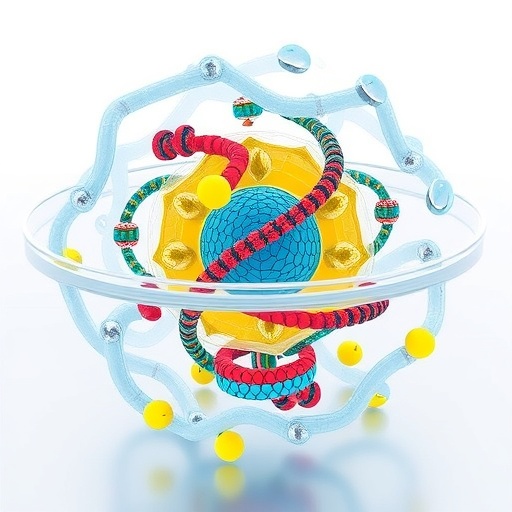
International quantum simulations are giving a rare, full-resolution view of how a hydrated proton moves through water. Led by researchers at Heidelberg University’s Institute for Physical Chemistry, the study tracks proton “hopping” not as a simple drift, but as a rapid transfer between neighboring water molecules. The team’s approach targets one of the hardest problems in molecular science: the coupled, ultrafast dynamics that define proton transport in liquid water.

When an acid dissolves, the proton does not stay attached to just one water molecule. Instead, it shuttles through a hydrogen-bond network, a process historically known as the Grotthuss mechanism. This behavior underlies key properties such as water’s acidity and also influences technologies ranging from battery energy storage to signal transmission in biology.

For decades, scientists have relied on two idealized pictures of hydrated protons: the Zundel and Eigen cations. In the Zundel description, the excess proton is shared between two water molecules; in the Eigen picture, it forms a hydronium-like core bonded to additional waters. But infrared spectroscopy hints at a more complex intermediate state—more dynamic than either idealization.

To resolve that missing middle, the researchers simulated an extended Zundel complex containing six water molecules. They systematically removed molecules to drive the system from a symmetric Zundel configuration toward an asymmetric Eigen-like structure. Throughout this transition, the study follows the proton’s quantum motion together with the surrounding waters in detail.

A central advance is the computation of the full infrared spectrum. The team identifies 51 interlocking vibrational modes that collectively shape the proton’s characteristic infrared “fingerprint.” By propagating all these degrees of freedom at once, the simulations reproduce experimental measurements across the entire spectral range.

Accuracy in the underlying atomic forces proved decisive. Rather than using common approximations, the researchers employed an artificial neural network trained on high-level quantum-chemical data in Bochum. The resulting machine-learning potential enables parameter-free quantum dynamics, capturing subtle interactions that strongly affect proton transfer pathways.

The findings emphasize a unifying principle: the local geometry—and particularly local asymmetries—of the surrounding water controls the proton’s hopping signatures. In other words, the infrared response is not only a property of the proton, but a readout of how nearby waters choreograph the transfer process.

The project involved collaborators from Cambridge (UK) and Université Bourgogne Europe in Dijon (France). Funding was provided by the German Research Foundation and the Royal Society. The results appear in Nature Chemistry, marking a step toward predictive, molecule-level understanding of proton transport in aqueous environments.

Subject of Research: Hydrated proton dynamics in water (proton hopping and infrared spectrum)
Article Title: Deciphering the infrared spectrum of the hydrated proton using full-dimensional quantum dynamics
News Publication Date: 27-Jul-2026
Web References: http://dx.doi.org/10.1038/s41557-026-02209-3
References: Nature Chemistry (published article)
Image Credits: © David Mendive-Tapia

Keywords

Proton transport; Grotthuss mechanism; hydrated proton; quantum dynamics; infrared spectroscopy; Zundel and Eigen; machine-learning potential; vibrational spectrum; neural network; water asymmetry

Tags: advanced water simulation techniquesGrotthuss mechanismhydrated proton dynamicshydrogen bond network in watermolecular-level water acidityproton conduction in biological systemsProton transport in waterquantum molecular simulationssimulations of proton transfer pathwaysultrafast proton transferwater proton hoppingZundel and Eigen cations
Share26Tweet16
Previous Post

Primary Care Doctors Compare Tradeoffs Between Salaried Employment and Private Practice

Next Post

Study uncovers how blood cancers evade BTK-targeted therapies

Related Posts

Self-Adaptive Cu–Co Catalyst Rebuilds Itself to Turn Nitrate into Green Ammonia
Chemistry

Self-Adaptive Cu–Co Catalyst Rebuilds Itself to Turn Nitrate into Green Ammonia

July 28, 2026
Solvent-bridged electrolytes enable high-energy lithium-ion batteries in extreme conditions
Chemistry

Solvent-bridged electrolytes enable high-energy lithium-ion batteries in extreme conditions

July 28, 2026
Ultrafast Discovery of a Photoinduced Hidden State in Metal-Organic Frameworks
Chemistry

Ultrafast Discovery of a Photoinduced Hidden State in Metal-Organic Frameworks

July 28, 2026
Researchers Find Natural Substitute for Artificial Food Dyes
Chemistry

Researchers Find Natural Substitute for Artificial Food Dyes

July 28, 2026
Smart Hydrogel Speeds Wound Healing by Adapting to Tissue Changes
Chemistry

Smart Hydrogel Speeds Wound Healing by Adapting to Tissue Changes

July 27, 2026
University of Tennessee Establishes Governor’s Chair in Nuclear Medicine
Chemistry

University of Tennessee Establishes Governor’s Chair in Nuclear Medicine

July 27, 2026
Next Post
Study uncovers how blood cancers evade BTK-targeted therapies

Study uncovers how blood cancers evade BTK-targeted therapies

  • Mothers who receive childcare support from maternal grandparents show more

    Mothers who receive childcare support from maternal grandparents show more parental warmth, finds NTU Singapore study

    27656 shares
    Share 11059 Tweet 6912
  • University of Seville Breaks 120-Year-Old Mystery, Revises a Key Einstein Concept

    1061 shares
    Share 424 Tweet 265
  • Bee body mass, pathogens and local climate influence heat tolerance

    682 shares
    Share 273 Tweet 171
  • Researchers record first-ever images and data of a shark experiencing a boat strike

    546 shares
    Share 218 Tweet 137
  • Groundbreaking Clinical Trial Reveals Lubiprostone Enhances Kidney Function

    531 shares
    Share 212 Tweet 133
Science

Embark on a thrilling journey of discovery with Scienmag.com—your ultimate source for cutting-edge breakthroughs. Immerse yourself in a world where curiosity knows no limits and tomorrow’s possibilities become today’s reality!

RECENT NEWS

  • Nagoya Institute Scientists Identify Molecular Basis of Red-Green Color Vision
  • Vector-Based Olfactory Navigation Strategy Revealed in Drosophila Flies
  • Long COVID and ME/CFS Alter Skeletal Muscle Properties Differently Than Bed Rest
  • Tracing Mantle Plume Influence on Ni-Cu-PGE Sulfide Ore Formation

Categories

  • Agriculture
  • Anthropology
  • Archaeology
  • Athmospheric
  • Biology
  • Biotechnology
  • Blog
  • Bussines
  • Cancer
  • Chemistry
  • Climate
  • Earth Science
  • Editorial Policy
  • Marine
  • Mathematics
  • Medicine
  • Pediatry
  • Policy
  • Psychology & Psychiatry
  • Science Education
  • Social Science
  • Space
  • Technology and Engineering

Subscribe to Blog via Email

Enter your email address to subscribe to this blog and receive notifications of new posts by email.

Join 5,146 other subscribers

© 2025 Scienmag - Science Magazine

Welcome Back!

Login to your account below

Forgotten Password?

Retrieve your password

Please enter your username or email address to reset your password.

Log In
No Result
View All Result
  • HOME
  • SCIENCE NEWS
  • CONTACT US

© 2025 Scienmag - Science Magazine

Discover more from Science

Subscribe now to keep reading and get access to the full archive.

Continue reading
