

Monday, October 26, 2026
Science
No Result
View All Result
  • Login
  • HOME
  • SCIENCE NEWS
  • CONTACT US
  • HOME
  • SCIENCE NEWS
  • CONTACT US
No Result
View All Result
Scienmag
No Result
View All Result
Home Science News Technology and Engineering

Adaptive Sliding Reduces Press Power for Metal Deformation

October 26, 2026
in Technology and Engineering
Denise Maddox
By Denise Maddox Scienmag Editorial Profile - Mechanical Engineering
Reading Time: 2 mins read
0
Adaptive Sliding Reduces Press Power for Metal Deformation

Adaptive Sliding Reduces Press Power for Metal Deformation

65
SHARES
587
VIEWS
Share on FacebookShare on Twitter
ADVERTISEMENT

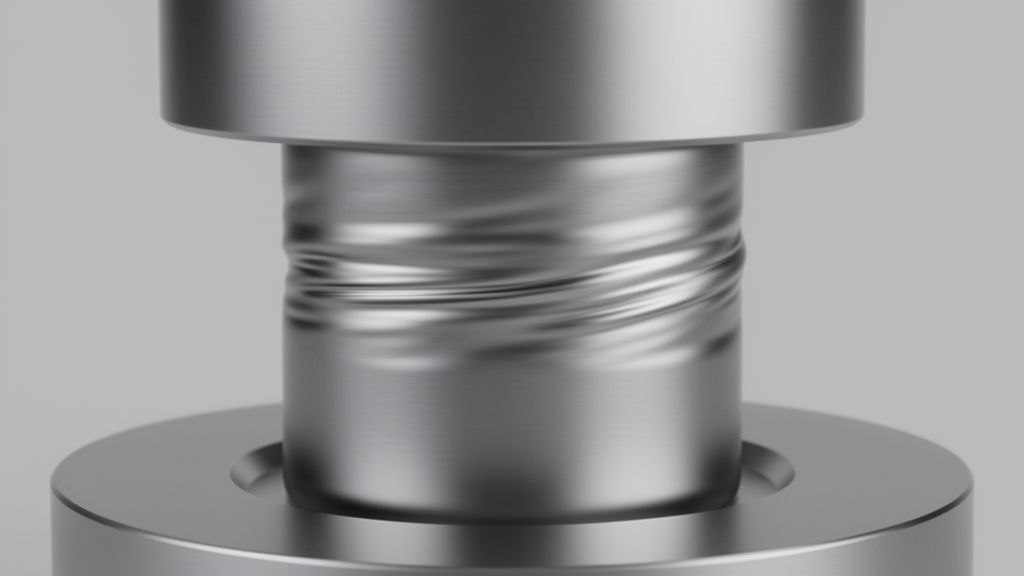
Researchers have proposed a new principle for severe plastic deformation (SPD) that renders such processes adaptive. Published in the Journal of Materials Science, the study introduces a mechanism where contact pressure is not produced by external loading of the workpiece. Instead, the pressure develops as a reaction from the tool itself, governed by its wedge-type geometry.

This shift in mechanical design aims to simplify the equipment required for high-intensity metal processing while maintaining the necessary conditions for plastic deformation. The core innovation lies in the automatic self-regulation of the deformation mode. The new adaptive approach eliminates the need for complex bidirectional loading systems.

By relying on the tool's geometry to dictate the pressure response, the process substantially reduces the power requirements of the equipment. This self-regulating nature makes the technology more energy-efficient and simplifies machine design, enabling straightforward scaling of the process. To validate this concept, the research team examined high pressure sliding as a practical example of the adaptive principle.

The study combined theoretical analysis, finite-element modeling, and experimental validation to assess the feasibility of the method. Theoretical models predicted that the pressure would automatically maintain the level required for plastic deformation. Experimental tests were conducted using copper samples to verify the theoretical and simulated outcomes.

The researchers subjected the copper to the adaptive high pressure sliding process and analyzed the resulting microstructure using electron backscatter diffraction (EBSD). The EBSD analysis confirmed the formation of an ultrafine-grained microstructure. Specifically, the copper exhibited equiaxed submicron grains, a hallmark of successful severe plastic deformation.

The reduction in equipment power requirements is a significant advantage of this adaptive approach. This efficiency opens the door to more straightforward scaling of the process, allowing for the production of larger volumes of ultrafine-grained materials without a proportional increase in energy consumption or equipment complexity. The study highlights the potential of adaptive SPD for the efficient deformation of thin-walled metallic materials.

Furthermore, the adaptive process serves as a promising preliminary processing stage prior to forming. The findings suggest that adaptive severe plastic deformation offers new possibilities for materials engineering. The successful validation on copper samples demonstrates the practical viability of the approach.

This research represents a step forward in the development of energy-efficient and scalable methods for creating high-performance materials.

Subject of Research: Adaptive high pressure sliding for scalable severe plastic deformation

Article Title: Adaptive high pressure sliding: toward scalable severe plastic deformation with reduced press capacity

Article References: Beygelzimer, Y., Davydenko, O., Bagliuk, G., Kyryliuk, S., Maj, M., Musial, S., & Estrin, Y. (2026). Adaptive high pressure sliding: toward scalable severe plastic deformation with reduced press capacity. Journal of Materials Science. https://doi.org/10.1007/s10853-026-13975-3

Image Credits: AI Generated

DOI: 10.1007/s10853-026-13975-3

Keywords: severe plastic deformation, adaptive processing, high pressure sliding, ultrafine-grained microstructure, copper, materials science, metal processing, finite-element modeling, EBSD analysis, wedge-type geometry, Adaptive, high

Cite Scienmag News

Denise Maddox. (October 26, 2026). Adaptive Sliding Reduces Press Power for Metal Deformation. Scienmag. https://scienmag.com/adaptive-sliding-reduces-press-power-for-metal-deformation/

Denise Maddox. "Adaptive Sliding Reduces Press Power for Metal Deformation." Scienmag, 26 October 2026, https://scienmag.com/adaptive-sliding-reduces-press-power-for-metal-deformation/. Accessed 26 October 2026.

Denise Maddox. "Adaptive Sliding Reduces Press Power for Metal Deformation." Scienmag. October 26, 2026. https://scienmag.com/adaptive-sliding-reduces-press-power-for-metal-deformation/


Tags: adaptiveadaptive processingadaptive sliding metal deformationautomatic pressure regulation in manufacturingcopperEBSD analysisenergy-efficient metal deformation techniquesexperimental validation of adaptive slidingfinite element modelingfinite-element modeling of adaptive processeshighhigh pressure slidinghigh-pressure sliding for metal deformationinnovative equipment design for plastic deformationmaterials sciencemetal processingpressure reduction in metal formingscalable metal processing methodsself-regulating deformation processsevere plastic deformationsevere plastic deformation mechanismultrafine-grained microstructurewedge-type geometrywedge-type tool geometry in metalworking
Share26Tweet16
Previous Post

Testican-2: from glomerular activity to circulating biomarker

Next Post

Obligations and Confidence Track Differently in Postgraduate English Learning

Related Posts

Roads on the Brink: Mapping Compound Earthquake and Landslide Vulnerability in Ethiopia’s Rift
Technology and Engineering

Roads on the Brink: Mapping Compound Earthquake and Landslide Vulnerability in Ethiopia’s Rift

October 26, 2026
Hydrogen combustion retrofitted into an existing aircraft APU: thermodynamic feasibility
Science News

Hydrogen combustion retrofitted into an existing aircraft APU: thermodynamic feasibility

October 26, 2026
Platelet-Rich Plasma in Collagen Tubes Restores Nerve Function in Difficult Cases
Science News

Platelet-Rich Plasma in Collagen Tubes Restores Nerve Function in Difficult Cases

October 26, 2026
Energy, Not Just Force, Is the Key to Safer Human-Robot Contact Under ISO Guidelines
Science News

Energy, Not Just Force, Is the Key to Safer Human-Robot Contact Under ISO Guidelines

October 26, 2026
Explainable AI learns to spot the hidden patterns of a Rembrandt
Technology and Engineering

Explainable AI learns to spot the hidden patterns of a Rembrandt

October 26, 2026
Routine pathology slides can quantify tumour collagen like SHG microscopy
Medicine

Routine pathology slides can quantify tumour collagen like SHG microscopy

October 26, 2026
Next Post
Obligations and Confidence Track Differently in Postgraduate English Learning

Obligations and Confidence Track Differently in Postgraduate English Learning

  • Mothers who receive childcare support from maternal grandparents show more optimized

    Mothers who receive childcare support from maternal grandparents show more parental warmth, finds NTU Singapore study

    27656 shares
    Share 11059 Tweet 6912
  • University of Seville Breaks 120-Year-Old Mystery, Revises a Key Einstein Concept

    1061 shares
    Share 424 Tweet 265
  • Bee body mass, pathogens and local climate influence heat tolerance

    682 shares
    Share 273 Tweet 171
  • Researchers record first-ever images and data of a shark experiencing a boat strike

    546 shares
    Share 218 Tweet 137
  • Groundbreaking Clinical Trial Reveals Lubiprostone Enhances Kidney Function

    531 shares
    Share 212 Tweet 133
Science

Embark on a thrilling journey of discovery with Scienmag.com—your ultimate source for cutting-edge breakthroughs. Immerse yourself in a world where curiosity knows no limits and tomorrow’s possibilities become today’s reality!

RECENT NEWS

  • Rare Spinal Cord Malformations Documented in Piedmontese Calves
  • Morning Cortisol Levels Track Anxiety and Core Depression Symptoms in First-Episode Patients
  • Hypertension History Shows No Significant Link to Aneurysm Recurrence After Coiling
  • Roads on the Brink: Mapping Compound Earthquake and Landslide Vulnerability in Ethiopia’s Rift

Categories

  • Agriculture
  • Anthropology
  • Archaeology
  • Athmospheric
  • Biology
  • Biotechnology
  • Blog
  • Bussines
  • Cancer
  • Chemistry
  • Climate
  • Earth Science
  • Editorial Policy
  • Marine
  • Mathematics
  • Medicine
  • Pediatry
  • Policy
  • Psychology & Psychiatry
  • Science Education
  • Science News
  • Social Science
  • Space
  • Technology and Engineering

Subscribe to Blog via Email

Enter your email address to subscribe to this blog and receive notifications of new posts by email.

Join 5,151 other subscribers

© 2025 Scienmag - Science Magazine

Welcome Back!

Login to your account below

Forgotten Password?

Retrieve your password

Please enter your username or email address to reset your password.

Log In
No Result
View All Result
  • HOME
  • SCIENCE NEWS
  • CONTACT US

© 2025 Scienmag - Science Magazine

Discover more from Science

Subscribe now to keep reading and get access to the full archive.

Continue reading