


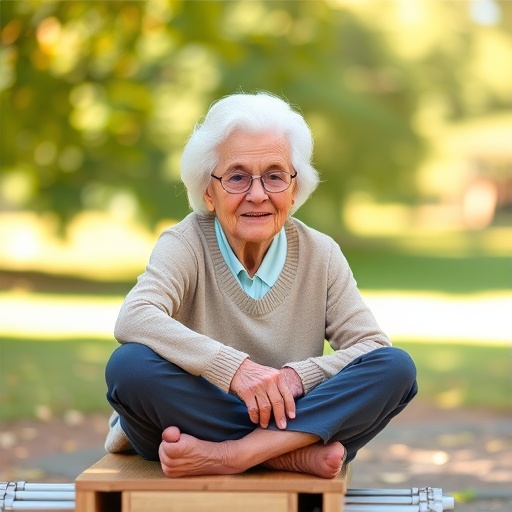
As the global population ages at an unprecedented rate, the imperative to understand the multifaceted concept of active ageing takes on renewed urgency. Groundbreaking research emerging from Saudi Arabia sheds light on the critical correlation between awareness of active ageing and the overall quality of life experienced by older adults in medical settings. This novel study, conducted in a tertiary care environment, unveils the intricate linkages that inform how awareness, or the lack thereof, profoundly influences the lived realities of the elderly demographic.
Active ageing, a holistic approach to aging that integrates physical health, social participation, mental well-being, and security, is gaining traction as a vital paradigm in public health discourse. Unlike traditional views that center aging merely as a decline in function, active ageing advocates for sustained engagement, autonomy, and societal contribution well into the later years of life. This fresh perspective underpins policies and interventions designed to enhance not merely life expectancy but life quality for aging populations worldwide.
The Saudi Arabian study pioneers the investigation of this construct within the context of a healthcare setting traditionally understudied for psychosocial aging factors. By focusing on older adults attending tertiary care facilities, the researchers address a population already navigating complex health challenges, thereby accentuating the necessity of awareness as a modifiable factor in fostering improved outcomes. This research confirms that older patients who possess a clearer understanding of active ageing principles report markedly higher quality of life indices.
Methodologically, the study employed a cross-sectional design, encompassing a robust sample size representative of the elderly Saudi population seeking tertiary medical care. Participants were evaluated using comprehensive assessment tools designed to gauge awareness levels of active ageing alongside standardized quality of life measures. This dual-pronged approach allowed for a nuanced analysis, tracing correlational pathways and identifying key predictors of enhanced well-being among this vulnerable cohort.
Technically, the incorporation of validated psychometric instruments enabled the researchers to achieve precise quantification of variables that are often abstract and multifactorial. The integration of these measurements with socio-demographic data facilitated multivariate modeling to isolate the specific impact of active ageing awareness from confounding factors such as chronic illness burden, socioeconomic status, and educational background. This rigorous analytical framework strengthens the veracity of the study’s conclusions and sets a benchmark for future investigations in gerontological research.
One of the pivotal findings of the study reveals that awareness of active ageing concepts serves not only as an informational asset but as an empowering catalyst that fosters proactive health behaviors, greater social connectivity, and mental resilience. These dimensions directly feed into quality of life outcomes, underscoring the role of education and communication strategies in geriatric healthcare. This insight calls for an urgent reevaluation of current patient engagement models in tertiary care facilities to integrate comprehensive active ageing education.
The implications of this research extend beyond the confines of clinical settings, resonating with broader societal structures involved in eldercare. Policymakers stand to benefit from these insights by tailoring national aging strategies that prioritize awareness campaigns as foundational elements. Health systems must recalibrate service delivery to incorporate multidimensional programming that nurtures informed aging populations capable of managing their well-being with autonomy and dignity.
Additionally, the study’s context within Saudi Arabia, a nation undergoing rapid demographic shifts and healthcare transformation, provides a culturally nuanced backdrop that enriches the global aging literature. The interplay between traditional values, family dynamics, and emerging healthcare infrastructure presents unique challenges and opportunities for active ageing advocacy. This regional specificity expands the understanding of active ageing as a culturally embedded phenomenon requiring locally adapted intervention frameworks.
From a technological standpoint, the study recommends leveraging digital health platforms and telemedicine to disseminate active ageing information efficiently, especially considering the increasing smartphone penetration amongst older adults in Saudi Arabia. These innovations hold the promise of overcoming barriers to access, whether geographical, educational, or physical, and can augment traditional face-to-face healthcare interactions with continuous, personalized support systems.
Moreover, the mental health dimension emerges as a critical axis in the active ageing equation. The psychological benefits associated with heightened awareness, including reduced feelings of isolation and anxiety, align with global findings that mental wellness profoundly shapes aging trajectories. The study advocates for integrated mental health services within geriatric tertiary care, emphasizing psychosocial support alongside medical treatment to achieve holistic care outcomes.
Importantly, the authors highlight the necessity for interdisciplinary collaboration in implementing active ageing initiatives. Healthcare professionals, social workers, community leaders, and policymakers must converge to create synergistic environments where older adults are not passive recipients of care but active agents in their well-being journeys. This paradigm shift demands comprehensive training, resource allocation, and institutional commitment to foster sustainable frameworks for active ageing promotion.
The study’s timing is particularly significant, coinciding with the global acceleration of longevity and the attendant complexities such demographic trends entail. As nations grapple with the economic and social ramifications of an aging populace, evidence-based approaches such as those provided by this Saudi Arabian research contribute indispensable knowledge to the optimization of aging experiences worldwide. The findings reinforce active ageing as an essential countermeasure to the pervasive narrative of decline often associated with old age.
Looking forward, the study calls for longitudinal research to establish causal pathways and evaluate the long-term impact of active ageing awareness interventions. While cross-sectional data offer critical snapshots, understanding the dynamic processes of behavioral change, health evolution, and societal participation over time will provide robust evidence for policy formulation and program development. This trajectory of inquiry promises to refine strategies for enhancing quality of life among older populations further.
In conclusion, the Saudi Arabian study presents a compelling narrative that marries epidemiological rigor with practical relevance, highlighting awareness of active ageing as a pivotal determinant in older adults’ quality of life. Its innovative approach, cultural contextualization, and policy implications position it as a landmark contribution in the gerontological field. As the world irrevocably ages, such research illuminates pathways toward not just longer but better lives for older adults globally.
Cite Scienmag News
Beatrice Stafford. (June 21, 2026). Active Ageing Awareness Linked to Older Adults’ Quality of Life. Scienmag. https://scienmag.com/active-ageing-awareness-linked-to-older-adults-quality-of-life/
Beatrice Stafford. "Active Ageing Awareness Linked to Older Adults’ Quality of Life." Scienmag, 21 June 2026, https://scienmag.com/active-ageing-awareness-linked-to-older-adults-quality-of-life/. Accessed 3 September 2026.
Beatrice Stafford. "Active Ageing Awareness Linked to Older Adults’ Quality of Life." Scienmag. June 21, 2026. https://scienmag.com/active-ageing-awareness-linked-to-older-adults-quality-of-life/


