


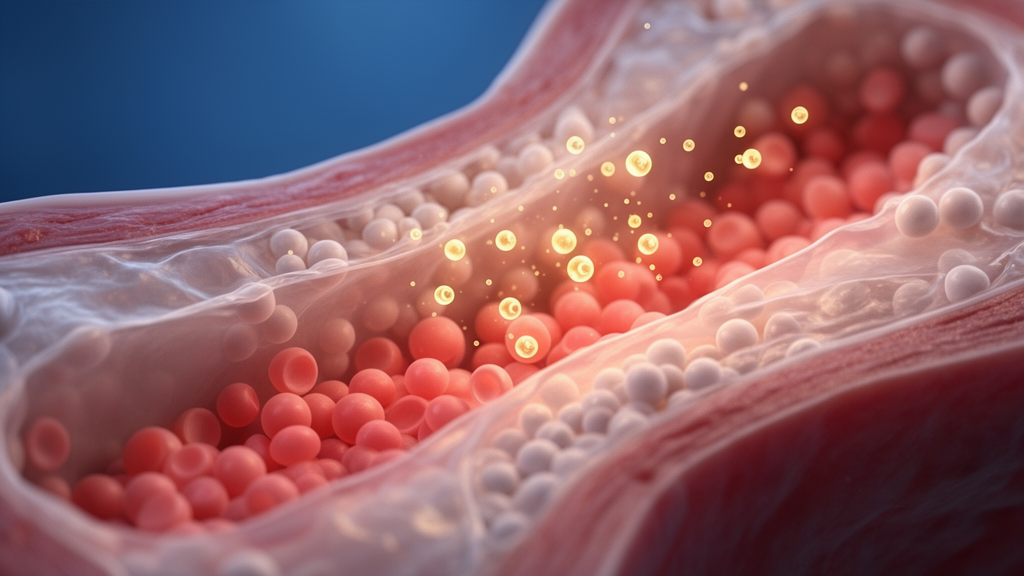
Blood stem cells are among the rarest and most powerful cells in the human body. Nestled in the bone marrow in vanishingly small numbers, these cells carry the lifelong responsibility of generating every red blood cell, every platelet, and every immune cell that keeps the circulation running and the body defended against infection. Because of this remarkable regenerative capacity, hematopoietic stem cells have become the cornerstone of modern treatments for blood disorders, from leukemia and inherited immune deficiencies to a growing list of conditions now targeted by gene therapy. Yet a persistent problem has limited how well these therapies work: the very act of preparing stem cells for transplantation can erode the properties that make them therapeutic in the first place.
Researchers at the Institute for Regenerative Medicine at the University of Zurich, working together with colleagues at the University of California, Santa Cruz, have now identified a way to protect these fragile cells during laboratory processing. Their study, published in EMBO Molecular Medicine, focuses on a signaling molecule with an unexpected dual identity. Activated protein C, a protease best known for its role in regulating blood coagulation and dampening inflammation, turns out to act on human blood stem cells in a way that preserves their stemness rather than depleting it. The finding points to a simple, time-efficient intervention that could meaningfully improve the outcomes of stem cell transplantation and gene therapy.
The challenge the team set out to address is rooted in the biology of the cells themselves. Hematopoietic stem cells exist mostly in a state of deep rest, a condition biologists call quiescence. In this state, the cells divide rarely and resist the temptation to differentiate into specialized blood cells. Quiescence is not idleness; it is a protective program that shields the cells from the wear and tear of continuous division and preserves their long-term capacity to rebuild the blood system. When stem cells are harvested from a patient or donor and then manipulated in the laboratory for gene therapy, they are exposed to culture conditions, viral vectors, and inflammatory cues that can push them out of quiescence. Once activated, they begin dividing and differentiating, and with each step away from the resting state they lose some of the regenerative potential that the transplant depends on.
To find a remedy, the Zurich team investigated how signaling through a specific cell surface receptor influences human blood stem cells. The receptor in question, protease-activated receptor 1, or PAR1, is a well-studied sensor of proteolytic activity in the blood. What makes PAR1 scientifically intriguing is that it can be switched on by different proteases with dramatically different consequences. Thrombin, the central enzyme of the coagulation cascade, activates PAR1 and is classically associated with pro-inflammatory and differentiation-promoting signals. Activated protein C also engages PAR1, but it is known from vascular biology to trigger a distinctly protective, cytoprotective program in endothelial cells. The researchers asked whether this same dichotomy would hold true in the context of hematopoietic stem and progenitor cells.
The answer, according to first author Simon Pöllmann of the Institute for Regenerative Medicine, was a clear demonstration that the identity of the activating protease matters enormously. Although both molecules activate the same receptor, PAR1, they produce very different outcomes, he explained. Treatment with activated protein C helped the blood stem cells remain in a resting, protected state. In practical terms, the aPC-treated cells divided less frequently, were less likely to differentiate prematurely into specialized blood cells, and retained the defining characteristics that stem cells need in order to function over the long term. Thrombin, by contrast, drove the cells toward greater differentiation, a shift that diminishes their stem cell potential and, by extension, the durability of any transplant built from them.
This receptor-level insight reframes how scientists think about manipulating stem cells ex vivo. PAR1 is not simply an on-off switch; it is a molecular platform whose output depends on which protease is bound to it. Activated protein C appears to bias the signaling machinery toward survival and quiescence, while thrombin biases it toward activation and lineage commitment. For laboratory protocols that expose stem cells to stress, the implication is that the protease environment surrounding the cells can be tuned to favor preservation over depletion. That kind of tuning could be integrated into existing gene therapy workflows, where cells must spend time outside the body while being corrected and expanded.
The most striking practical result of the study was how little exposure was needed to make a difference. Treating the human blood stem cells with activated protein C for just one hour was sufficient to improve their transplantability. The team tested this in an animal model by transplanting the treated cells into mice. The aPC-treated cells produced more human blood cells in the recipient animals and showed a better capacity to sustain blood formation even after repeated transplantation, a demanding test that probes the long-term self-renewal reserve of the graft. Sustained engraftment across serial transplants is one of the most rigorous indicators that a stem cell population has retained genuine, durable stem function rather than a short-lived burst of activity.
Beyond improving engraftment, the treatment also shielded the cells from a common hazard of laboratory handling: inflammatory signaling. Inflammation is a well-known antagonist of stem cell quiescence. Inflammatory signals that circulate during illness or that arise during cell processing can rouse stem cells from their resting state, driving them into cycle and pushing them toward differentiation. The study showed that activated protein C protected the stem cells from being activated by these inflammatory cues, effectively buffering the cells against the environmental pressures that would normally erode their potential. This protective effect is particularly relevant for gene therapy, where cells from patients with inflammatory blood disorders may already be primed toward activation before they ever reach the laboratory.
Last author Ute Modlich, professor in the Gene and Cell Therapy Division at the Institute for Regenerative Medicine, emphasized the translational significance of the engraftment data. The treated cells produced more human blood cells and displayed a better capacity to sustain blood formation even after repeated transplantation, she explained, underscoring that the benefit was not merely a laboratory artifact but a functional improvement in the property that matters most to patients: the ability of the graft to reconstitute a working blood system and keep it running. For conditions that depend on a small number of successfully engrafted, gene-corrected stem cells, even a modest improvement in preservation could translate into a substantially higher chance of therapeutic success.
The study, conducted as a randomized controlled research effort with animal models as the primary experimental subject, was a collaboration between the University of Zurich and the University of California, Santa Cruz, with contributions from Marcel Rommel and Camilla Forsberg on the American side. Taken together, the results establish signaling through activated protein C as a promising strategy for preserving the quality and regenerative capacity of human blood stem cells during the vulnerable window between harvest and transplantation. The researchers believe that, in the long term, this approach could improve the success of stem cell transplantations and gene therapies for a range of blood disorders, delivering a real benefit to patients whose treatments currently fall short of their full potential. As gene therapy continues to expand across hematological medicine, protecting the stem cells at the heart of these procedures may prove to be one of the most consequential advances of the coming years, and a one-hour treatment with a molecule the body already knows how to make is an appealingly simple place to start.
Subject of Research: The role of activated protein C signaling through PAR1 in preserving hematopoietic stem cell quiescence and improving transplantation
Article Title: Alternative signaling pathway improves transplantation of blood stem cells
Article References: Alternative signaling pathway improves transplantation of blood stem cells. (n.d.). Original publication
Image Credits: AI Generated
DOI: Not provided
Keywords: blood stem cells, activated protein C, PAR1, thrombin, quiescence, gene therapy, bone marrow transplantation, hematopoiesis, engraftment, University of Zurich, EMBO Molecular Medicine, regenerative medicine
Cite Scienmag News
Ophelia Keating. (October 8, 2026). Activated Protein C Keeps Blood Stem Cells Resting and Boosts Transplant Success. Scienmag. https://scienmag.com/activated-protein-c-keeps-blood-stem-cells-resting-and-boosts-transplant-success/
Ophelia Keating. "Activated Protein C Keeps Blood Stem Cells Resting and Boosts Transplant Success." Scienmag, 8 October 2026, https://scienmag.com/activated-protein-c-keeps-blood-stem-cells-resting-and-boosts-transplant-success/. Accessed 8 October 2026.
Ophelia Keating. "Activated Protein C Keeps Blood Stem Cells Resting and Boosts Transplant Success." Scienmag. October 8, 2026. https://scienmag.com/activated-protein-c-keeps-blood-stem-cells-resting-and-boosts-transplant-success/


