


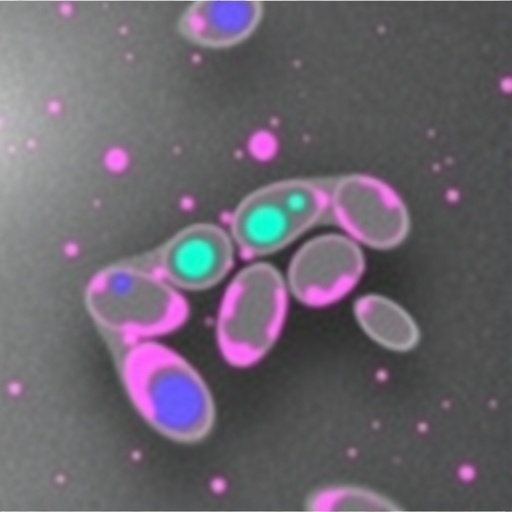
A groundbreaking study recently published in Nature Communications sheds new light on the molecular underpinnings of vitiligo, a complex autoimmune disorder characterized by progressive depigmentation of the skin. This disorder, affecting millions worldwide, has long puzzled researchers due to its multifaceted etiology and the elusive nature of effective therapeutic interventions. The work by Yang, F., Yang, L., Lai, S., and colleagues introduces a paradigm-shifting discovery implicating aberrant laminin signaling as a central driver of melanocyte dedifferentiation, thereby opening new avenues for targeted treatments aimed at halting or reversing vitiligo’s characteristic skin damage.
At the core of this research lies the intricate interplay between epidermal architecture and melanocyte biology. Melanocytes, the pigment-producing cells in the skin and hair follicles, are responsible for synthesizing melanin, the biopolymer that imparts color and protects against ultraviolet radiation. Under normal conditions, these cells exist in a differentiated state, tightly integrated within the basal layer of the epidermis and anchored by extracellular matrix proteins, including the laminin family. Laminins constitute a key component of the basement membrane, orchestrating cellular adhesion, migration, and differentiation through specific receptor-mediated signaling pathways.
The study identifies that in vitiligo, alterations in laminin signaling pathways precipitate a loss of melanocyte identity and function—a process termed dedifferentiation. This aberrant signaling disrupts the normally stable interaction between melanocytes and their niche, leading cells to revert to a more primitive, less specialized state incapable of proper melanin synthesis. The researchers delineate how perturbations in the laminin-integrin axis compromise downstream cellular signaling cascades, notably those involving focal adhesion kinase (FAK) and mitogen-activated protein kinases (MAPKs), culminating in the repression of melanogenic genes.
Employing a combination of state-of-the-art molecular biology techniques, including single-cell RNA sequencing, CRISPR-Cas9 gene editing, and advanced imaging modalities, the team was able to map the dynamic changes in melanocyte phenotype at an unprecedented resolution. Their analysis revealed that vitiligo melanocytes show a marked reduction in expression of key differentiation markers such as MITF (Microphthalmia-associated transcription factor), coupled with an upregulation of stemness-related genes, thereby corroborating the dedifferentiation hypothesis.
One of the most compelling aspects of the study is the identification of laminin signaling as a “tractable therapeutic target.” Traditionally, vitiligo treatment strategies have focused on immunosuppression or symptomatic repigmentation. However, these approaches often yield inconsistent results and numerous side effects. By contrast, modulating the extracellular matrix interactions and restoring appropriate laminin receptor function promises a more direct and potentially curative approach. The investigators demonstrated that pharmacological agents capable of correcting the aberrant laminin signaling cascade successfully promoted melanocyte redifferentiation and repigmentation in ex vivo human skin models and murine vitiligo models.
This discovery has far-reaching implications not only for vitiligo but also for understanding fundamental mechanisms of cellular plasticity in autoimmune contexts. The phenomenon of dedifferentiation has been extensively studied in cancer biology and regenerative medicine, but its role in autoimmune-driven tissue degeneration is just beginning to be appreciated. The study positions the extracellular matrix as a critical regulatory hub whose integrity and signaling fidelity are essential for maintaining cellular identity under inflammatory stress.
Further, the research team explored the crosstalk between immune cells and the altered extracellular environment in vitiligo lesional skin. Chronic inflammation characteristic of the disease milieu exacerbates laminin pathway disruptions, creating a vicious cycle where immune-mediated damage drives further melanocyte dedifferentiation. Therapeutic interventions targeting laminin signaling could therefore not only restore melanocyte function but also mitigate inflammatory feedback loops, providing a dual benefit.
Technological advancements utilized in this project represent a new frontier in dermatological research. Single-cell transcriptomics enabled the precise dissection of cell states within heterogeneous skin samples, revealing rare subpopulations of dedifferentiated melanocytes that would be otherwise masked in bulk analyses. CRISPR-mediated manipulation of laminin receptors in cultured melanocytes allowed functional validation of the pathway’s role, confirming cause-and-effect relationships that were previously speculative.
Moreover, the spatial mapping of laminin isoforms in healthy versus vitiligo skin uncovered regional differences in basement membrane composition, further influencing melanocyte behavior. These findings underscore the importance of microenvironmental context in disease pathology and highlight how alterations at the molecular matrix level translate into cell fate changes.
The translational potential of this research is significant. Targeted drugs that modulate laminin interactions could complement existing therapies, improving efficacy and minimizing adverse effects. The identification of biomarkers associated with melanocyte dedifferentiation also opens the door to earlier diagnosis and personalized treatment regimens, moving away from one-size-fits-all strategies.
Future research directions include clinical trials to test laminin pathway modulators in human patients and exploration of similar mechanisms in other pigmentary disorders and autoimmune skin diseases. Investigating how environmental factors such as UV exposure and oxidative stress influence laminin signaling may also provide additional insights into disease triggers and progression.
In conclusion, the seminal work by Yang and colleagues represents a milestone in vitiligo research. By illuminating how aberrant laminin signaling drives melanocyte dedifferentiation, they have unraveled a critical pathogenic mechanism and identified a promising therapeutic target. This breakthrough not only enhances our understanding of skin biology and autoimmune pathology but also heralds a new era of precision medicine for vitiligo sufferers worldwide. The potential for reversing depigmentation and restoring skin integrity through modulation of extracellular matrix signaling offers renewed hope for patients and clinicians alike.
Cite Scienmag News
Ophelia Keating. (April 17, 2026). Aberrant Laminin Signaling Reveals Vitiligo Treatment Target. Scienmag. https://scienmag.com/aberrant-laminin-signaling-reveals-vitiligo-treatment-target/
Ophelia Keating. "Aberrant Laminin Signaling Reveals Vitiligo Treatment Target." Scienmag, 17 April 2026, https://scienmag.com/aberrant-laminin-signaling-reveals-vitiligo-treatment-target/. Accessed 3 September 2026.
Ophelia Keating. "Aberrant Laminin Signaling Reveals Vitiligo Treatment Target." Scienmag. April 17, 2026. https://scienmag.com/aberrant-laminin-signaling-reveals-vitiligo-treatment-target/


