

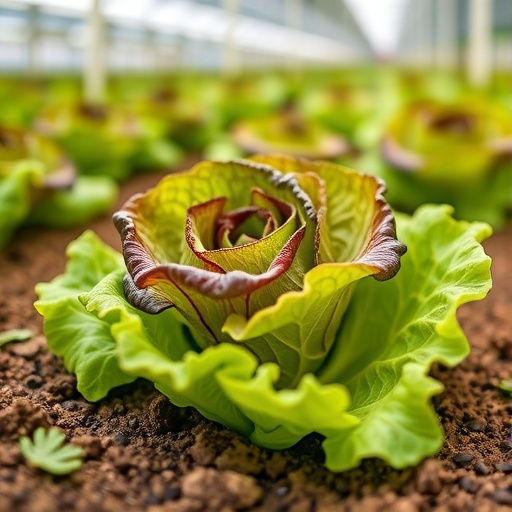
In recent years, the challenge of enhancing soil fertility while promoting sustainable agricultural practices has taken center stage in global agricultural discussions. A groundbreaking study from Ghana contributes significantly to this discourse, highlighting an innovative approach that utilizes recycled abattoir blood waste as a means to enrich soil quality and increase crop yield, particularly for lettuce. This research not only demonstrates a viable method for waste management but also emphasizes the symbiotic relationship between environmental stewardship and agricultural productivity.
The study was conducted by a formidable team of researchers, including Iddriss, Hanyabui, and Frimpong, who meticulously evaluated the effects of abattoir blood waste on tropical soils with low nutrient profiles. Their work is crucial considering the unique challenges faced in such regions, where soil degradation and nutrient deficiency have led to lower agricultural outputs. By repurposing what would otherwise be considered waste material, the study effectively introduces a resource-efficient practice that aligns with sustainable development goals.
Recycling organic waste into usable nutrients for crops is a hallmark of regenerative agriculture. The researchers aimed to investigate not just the suitability of abattoir blood waste as a fertilizer but also its impact on soil health and plant growth dynamics. Over the course of the study, various concentrations of recycled blood waste were applied to different plot sizes, and the results were remarkable. The findings revealed that not only did the addition of the waste enhance the nutrient profile of the soil, but it also improved its physical attributes, leading to better water retention and aeration.
In tropical regions, where nutrient depletion is a common issue, finding effective solutions requires a blend of innovation and traditional practices. The University of Ghana’s research team embraced this challenge, applying a methodical approach in their experimental design. They assessed the chemical composition of the abattoir blood waste, which is rich in nitrogen, phosphorus, and potassium—three essential nutrients for plant growth. Understanding the biochemical properties of the waste is fundamental to maximizing its effectiveness when integrated into soil.
Soil health is a critical component of agricultural productivity, and the researchers employed various measurement techniques to gauge the enhancements in soil quality post-application of recycled blood waste. Key indicators such as organic matter content, pH levels, and microbial activity were monitored. The results indicated a marked increase in soil organic matter, which is essential for improving soil structure and fertility. This finding reinforces the idea that organic waste recycling can rejuvenate degraded lands and support ecological balance.
The experimental methodology included randomized block designs that allowed the researchers to obtain statistically significant results. By incorporating controls that reflected conventional farming practices, the team could compare the efficacy of recycled abattoir blood against standard fertilizers. The results were illuminating—lettuce plants grown on plots treated with blood waste surpassed those treated with synthetic fertilizers in terms of growth rate, leaf size, and overall yield.
Lettuce, known for its quick growth cycle and high market demand, serves as an ideal crop to evaluate the benefits of nutrient amendments. The researchers noted that lettuce plants receiving recycled blood waste exhibited enhanced chlorophyll production, leading to richer green coloration—an indication of vigor and health. This correlated positively with the increasing consumer preference for organically grown produce, making the findings particularly relevant in today’s health-conscious market.
Moreover, the use of recycled abattoir blood waste as an amendment offers a dual advantage. It not only facilitates soil improvement but also provides an effective waste management solution to the poultry and livestock industries, which often struggle with the disposal of organic waste. This new perspective on waste management could potentially lead to a paradigm shift in how agricultural waste is perceived and utilized, positioning it as a value-added resource rather than a burden.
Additionally, the study highlights the positive implications for food security. With increasing global populations and rising food demands, enhancing crop yields through sustainable practices is more critical than ever. The application of recycled organic matter can significantly contribute to food production systems, particularly in regions where soil fertility is a limiting factor. By educating local farmers about the benefits of employing organic waste in their farming practices, the research team aims to promote self-sufficiency and improved livelihoods in rural communities.
Furthermore, the implications of this research extend beyond Ghana’s borders. Similar agricultural conditions are found in various tropical regions worldwide, suggesting that the findings could be adapted and applied in various contexts. The potential for scaling these practices globally is immense, paving the way for further research and implementation strategies that prioritize sustainability and environmental health.
Awareness—of both the benefits of agricultural practices utilizing organic waste and the threats posed by conventional methods—is key to driving change in how agricultural systems operate. Increased knowledge of the potential of recycled abattoir blood waste can inspire farmers and industry stakeholders to adopt more responsible practices geared toward sustainability. This aligns with an overarching trend, as consumers increasingly demand transparency and sustainability in food production, further encouraging farmers’ transition towards organic methods.
Impacts of such innovative agricultural practices resonate deeply throughout ecosystems, enhancing biodiversity, soil microbiome health, and overall ecosystem resilience against climate change. By closing nutrient loops and reducing reliance on chemical fertilizers, not only is crop productivity enhanced, but precious natural resources are conserved, preserving the integrity of the environment for future generations. This holistic approach fosters an ecosystem in which agriculture and nature coexist synergistically, ensuring food security and environmental health are maintained.
In conclusion, the Ghanaian study stands as a testament to the transformative potential of integrating recycled organic materials into agricultural practices. Iddriss, Hanyabui, and Frimpong’s work underscores how the future of agriculture can be shaped through sustainable innovations that respect ecological boundaries while fostering productivity. This research not only provides practical solutions for enhancing soil fertility and crop yield in low nutrient tropical soils but serves as a pivotal moment in advancing global discussions on sustainable agriculture within the context of a rapidly changing world.
Subject of Research: Enhancing soil fertility and lettuce yield using recycled abattoir blood waste in tropical soils.
Article Title: Recycled abattoir blood waste enhances soil fertility and lettuce yield in low nutrient tropical soils of Ghana.
Article References:
Iddriss, A.R.M., Hanyabui, E., Frimpong, K.A. et al. Recycled abattoir blood waste enhances soil fertility and lettuce yield in low nutrient tropical soils of Ghana.
Discov Agric 4, 2 (2026). https://doi.org/10.1007/s44279-025-00423-0
Image Credits: AI Generated
DOI: https://doi.org/10.1007/s44279-025-00423-0
Keywords: Sustainable agriculture, soil fertility, organic waste recycling, lettuce yield, nutrient management.


