A new study in SN Social Sciences examines how a mid-nineteenth-century European refugee perceived Ottoman society, focusing on women and coffeehouses as described in his travel account. The research, published on 20 October 2026, analyzes “Von Orsova bis Kiutahia”, a work by Joseph Hutter, a soldier who sought asylum in the Ottoman Empire after the Hungarian War of Independence of 1848. The study was conducted by Banu Yilmaz and Muhammed Enes Karacoşkun.
The primary focus of the research is on Hutter’s observations of Ottoman women and coffeehouses in Shumen and its surroundings. Methodologically, the authors adopted a qualitative analysis, examining Hutter’s subjective claims comparatively alongside archival documents from the period and the existing literature. Rather than simply describing the traveler’s narratives, the study situates them within an analytical framework drawing on Orientalism, refugee psychology, and Intergroup Contact Theory.
A central element of the analysis is a critical evaluation of Hutter’s prejudiced attitude toward Ottoman women. The authors compare his account with historical documents pointing to women’s presence in the public sphere after the Tanzimat reforms, educational reforms, and women’s participation in working life. According to the findings reported in the study, Ottoman women were able to apply to courts by utilizing complaint mechanisms, a picture the authors present as contrasting with the traveler’s portrayal.
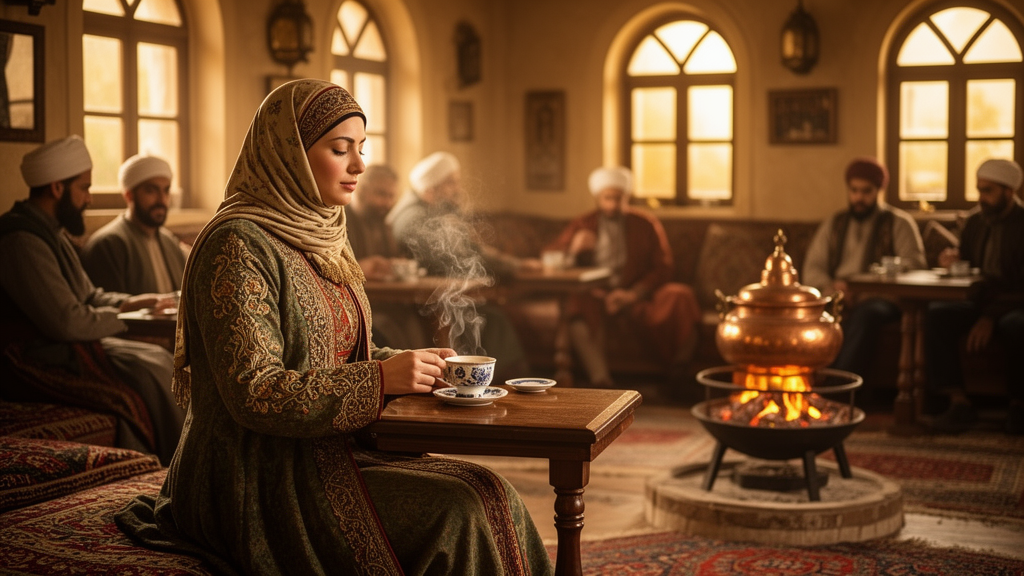
Coffeehouses, known as kahvehane, form the second pillar of the study. The findings indicate that these establishments functioned as community schools that fostered social integration and enabled interaction among members of different social groups. In this reading, the coffeehouse emerges not merely as a site of leisure but as a social institution connecting diverse groups within Ottoman society.
One of the principal conclusions of the study concerns the transformation of the traveler himself. The authors report that Hutter’s initially distant attitude gradually changed into sympathy over time through the intergroup contact experience in coffeehouses. This shift is interpreted through the lens of Intergroup Contact Theory, which the study uses to frame the refugee’s evolving relationship with the society around him.
By offering a perspective based on the narrative of a refugee, the authors state that the study seeks to fill an academic gap in the literature. The combination of a refugee soldier’s eyewitness account, archival documents, and contact theory provides, in their view, a distinctive angle on mid-nineteenth-century Ottoman social structure as seen through foreign eyes.
Subject of Research: A qualitative historical analysis of a European refugee's account of Ottoman women and coffeehouses in nineteenth-century Shumen
Article Title: Women and coffeehouses (Kahvehane) in the East through the eyes of a European refugee: an intergroup contact experience
Article References: Yilmaz, B., & Karacoşkun, M. E. (2026). Women and coffeehouses (Kahvehane) in the East through the eyes of a European refugee: an intergroup contact experience. SN Social Sciences, 6(11), Article 565. https://doi.org/10.1007/s43545-026-01872-0
Image Credits: AI Generated
DOI: 10.1007/s43545-026-01872-0
Keywords: Ottoman Empire, coffeehouses, kahvehane, Joseph Hutter, Intergroup Contact Theory, Orientalism, refugee psychology, Tanzimat reforms, Shumen, nineteenth century, women's history, travel writing
Cite Scienmag News
Courtney Benton. (October 28, 2026). A Refugee Soldier’s Gaze: Ottoman Women and Coffeehouses Reassessed. Scienmag. https://scienmag.com/a-refugee-soldiers-gaze-ottoman-women-and-coffeehouses-reassessed/
Courtney Benton. "A Refugee Soldier’s Gaze: Ottoman Women and Coffeehouses Reassessed." Scienmag, 28 October 2026, https://scienmag.com/a-refugee-soldiers-gaze-ottoman-women-and-coffeehouses-reassessed/. Accessed 28 October 2026.
Courtney Benton. "A Refugee Soldier’s Gaze: Ottoman Women and Coffeehouses Reassessed." Scienmag. October 28, 2026. https://scienmag.com/a-refugee-soldiers-gaze-ottoman-women-and-coffeehouses-reassessed/