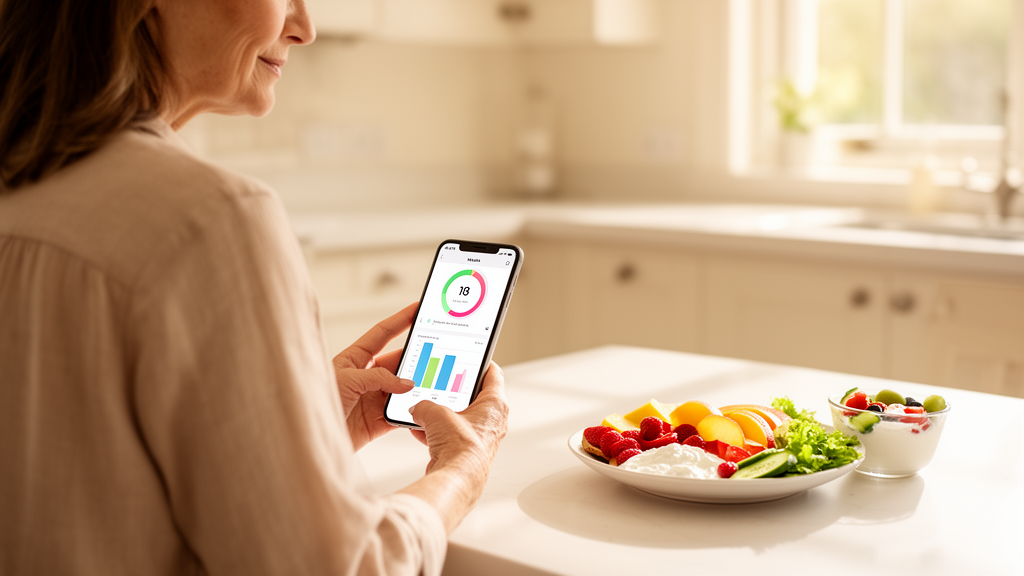
Yet a new viewpoint published in the Journal of Medical Internet Research argues that the drugs themselves solve only half of the problem. Written by Geoff Cook, chief executive officer of the behavior change company Noom, the paper contends that GLP-1 pharmacotherapy powerfully suppresses biological appetite but does not, by itself, install the daily routines a patient needs once the medication stops.
The paper, titled “Digital Behavioral Infrastructure for Glucagon-Like Peptide-1 Pharmacotherapy: Viewpoint on Persistence, Tolerability, and Postcessation Durability,” proposes what Cook calls a digital behavioral infrastructure: a theory-driven layer of companion apps and structured support designed to run alongside the prescription. The central premise is that the period when the medication is working at full strength represents a rare and perishable opportunity. By quieting the constant food cravings that patients describe as “food noise,” GLP-1 drugs free up cognitive bandwidth that was previously consumed by appetite, and the paper argues that this freed capacity should be deliberately harnessed to build durable eating and exercise habits before the pharmacological effect fades.
Cook frames this reasoning as the “habit window hypothesis.” The idea is that GLP-1 therapy opens a pharmacologically defined interval during which behavior change is easier to initiate and sustain, because the biological drive to eat is temporarily lowered. Once treatment ends and appetite cues return toward baseline, the individual faces the same environmental and psychological pressures as before, but now without the metabolic assistance. If sustainable routines have not been established during the window, the paper suggests, weight regain follows. The author is explicit that this remains a hypothesis rather than an established mechanism, and the paper calls for prospective, randomized trials to test it properly.
To give the framework scientific grounding, the viewpoint maps two well-validated theories of behavior change onto the specific problems of GLP-1 therapy. Cook argues that these two lenses, applied together, can drive medication persistence, mitigate side effects, and support durable weight loss in ways that unstructured advice cannot.
The paper organizes the practical challenges of GLP-1 therapy into three hurdles, each of which digital companion programs can address with targeted features. Personalized digital reminders can help patients stay consistent with their dosing. The second is tolerability. The third is postcessation durability, the risk that weight returns once treatment stops. Structured skill-building during the treatment period is proposed as the countermeasure, giving users sustainable eating and exercise routines before biological appetite cues return to baseline.
Cook also proposes that GLP-1 therapy combined with behavioral support may benefit from what behavioral scientists call the “Fresh Start” effect, the tendency of people to adopt new behaviors more readily at temporal landmarks such as the beginning of a treatment course. As with the habit window itself, this is presented as a proposed mechanism to be tested rather than a demonstrated result.
The author is careful to distinguish between what is established and what is speculative. The paper therefore stresses that prospective, randomized controlled trials are needed to fully test the habit window framework and to determine which specific features drive persistence, tolerability, and postcessation durability. Cook states that Noom will support the research program outlined in the paper with randomized controlled trials addressing the problems, mechanisms, and interventions it raises.
The commercial context of the argument deserves attention. Cook is the chief executive officer of Noom, a company that sells digital behavior change programs and a GLP-1 companion product, and the paper’s conflict of interest statement notes that he may hold equity or other financial interests in the company. The viewpoint also states that the features it recommends are not merely theoretical: Cook says they are part of the Noom app today, and that the company’s GLP-1 Companion was built to exploit what psychologists describe as fast and slow thinking, or system 1 and system 2 cognition.
The stakes of the persistence problem are considerable.
Whether the framework holds up is now an empirical question. For now, the viewpoint’s contribution is conceptual: it names the gap between what GLP-1 drugs do and what patients need, proposes a mechanism for closing it, and specifies the features and theories that future randomized studies should evaluate. The next step, as the paper makes clear, belongs to the trialists.
Subject of Research: A viewpoint proposing digital behavioral infrastructure and a habit window hypothesis to address GLP-1 medication persistence and postcessation weight regain
Article Title: Beyond the prescription: How GLP-1 companion digital programs address persistence to medication and postcessation weight regain
Article References: Beyond the prescription: How GLP-1 companion digital programs address persistence to medication and postcessation weight regain. Original publication (Bibliographic details unavailable.)
Image Credits: AI Generated
DOI: Not provided
Keywords: GLP-1 medications, weight management, digital behavioral infrastructure, habit window hypothesis, medication persistence, postcessation weight regain, behavior change, social cognitive theory, behavioral economics, food noise, randomized controlled trials, Journal of Medical Internet Research
Cite Scienmag News
Courtney Benton. (October 28, 2026). Digital behavioral coaching could extend GLP-1 weight loss beyond the prescription, viewpoint argues. Scienmag. https://scienmag.com/digital-behavioral-coaching-could-extend-glp-1-weight-loss-beyond-the-prescription-viewpoint-argues/
Courtney Benton. "Digital behavioral coaching could extend GLP-1 weight loss beyond the prescription, viewpoint argues." Scienmag, 28 October 2026, https://scienmag.com/digital-behavioral-coaching-could-extend-glp-1-weight-loss-beyond-the-prescription-viewpoint-argues/. Accessed 28 October 2026.
Courtney Benton. "Digital behavioral coaching could extend GLP-1 weight loss beyond the prescription, viewpoint argues." Scienmag. October 28, 2026. https://scienmag.com/digital-behavioral-coaching-could-extend-glp-1-weight-loss-beyond-the-prescription-viewpoint-argues/