


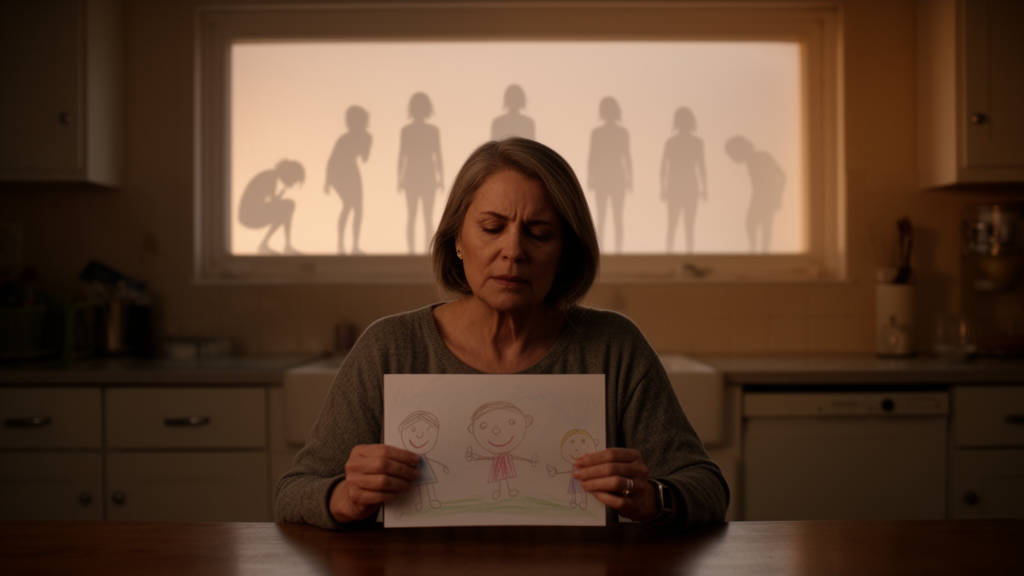
Caregivers of children with autism spectrum disorder described psychological experiences that moved through seven recurring phases in a qualitative study of 22 primary caregivers in southeastern China. The study’s abstract reports that caregivers’ narratives contained more negative than positive emotional expressions overall, while identifying denial, despair, confusion, self-blame, acceptance, active coping and hope as recurring stages in their psychological journeys.
Researchers recruited participants from rehabilitation centers and special education schools in southeastern China and used life-story interviews to explore how emotional experiences and psychological adaptation evolved over time. The interview corpus comprised approximately 360,000 Chinese characters. Investigators analyzed the material with life-story tone analysis, thematic analysis and grounded theory, while emotional word frequency analysis assessed the overall tone of the narratives.
The study’s proposed Four-Ring Model identified four domains associated with caregivers’ mental health: the family support system, the social support system, life experiences and self-personality. According to the abstract, these domains interacted dynamically across different stages of caregiving. The findings therefore characterize caregiver mental health in terms of both a temporal psychological process and multiple contextual factors, rather than as the result of a single influence.
Because this was a qualitative study, the results describe the experiences and narratives of the 22 caregivers interviewed rather than estimating the prevalence of psychological difficulties or establishing causal effects. Recruitment through rehabilitation centers and special education schools in one geographic area also limits how broadly the findings can represent caregivers of children with autism elsewhere. The supplied evidence consists of the study abstract and publisher information for an open-access article that had been published online on 15 October 2026. The authors state that the identified journey and Four-Ring Model may provide a framework for understanding adaptation among autism caregivers and inform stage-sensitive psychological and social interventions, but the abstract does not report intervention testing or clinical outcomes.
Subject of Research: Qualitative study of psychological adaptation and mental health-related factors among caregivers of children with autism
Article Title: A qualitative study on the psychological journey and mental health-related factors among caregivers of children with autism
Article References: Zheng, J., He, C., & Huang, J. (2026). A qualitative study on the psychological journey and mental health-related factors among caregivers of children with autism. BMC Psychology. https://doi.org/10.1186/s40359-026-05802-w
Image Credits: AI Generated
DOI: 10.1186/s40359-026-05802-w
Keywords: autism spectrum disorder, family caregivers, qualitative research, life-story interviews, mental health, psychological adaptation, social support, family support, grounded theory, thematic analysis, qualitative, psychological
Cite Scienmag News
Glenn Wilkins. (October 20, 2026). A qualitative study on the psychological journey and mental health-related factors among caregivers of children with autism. Scienmag. https://scienmag.com/a-qualitative-study-on-the-psychological-journey-and-mental-health-related-factors-among-caregivers-of-children-with-autism/
Glenn Wilkins. "A qualitative study on the psychological journey and mental health-related factors among caregivers of children with autism." Scienmag, 20 October 2026, https://scienmag.com/a-qualitative-study-on-the-psychological-journey-and-mental-health-related-factors-among-caregivers-of-children-with-autism/. Accessed 20 October 2026.
Glenn Wilkins. "A qualitative study on the psychological journey and mental health-related factors among caregivers of children with autism." Scienmag. October 20, 2026. https://scienmag.com/a-qualitative-study-on-the-psychological-journey-and-mental-health-related-factors-among-caregivers-of-children-with-autism/


