

Saturday, May 2, 2026
Science
No Result
View All Result
  • Login
  • HOME
  • SCIENCE NEWS
  • CONTACT US
  • HOME
  • SCIENCE NEWS
  • CONTACT US
No Result
View All Result
Scienmag
No Result
View All Result
Home Science News Cancer

A link between breast changes and … UTIs?

May 2, 2024
in Cancer
Reading Time: 2 mins read
0
mouse breast tissue
67
SHARES
610
VIEWS
Share on FacebookShare on Twitter
ADVERTISEMENT

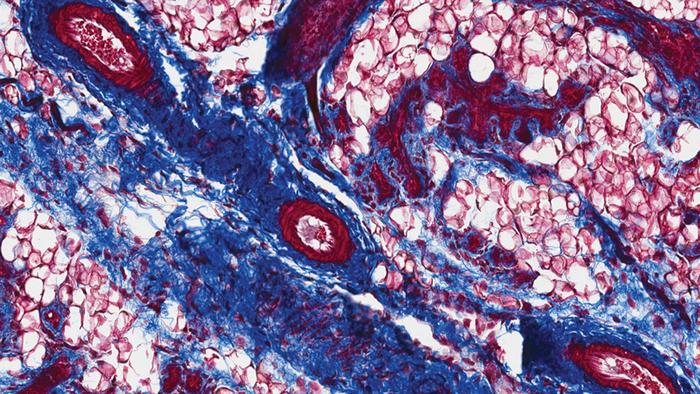
Women’s health is often talked about in terms of major, life-altering events like pregnancy and menopause. A new study from Cold Spring Harbor Laboratory (CSHL) underscores the importance of considering everyday occurrences’ impact on women’s well-being.

mouse breast tissue

Credit: dos Santos lab/Cold Spring Harbor Laboratory

Women’s health is often talked about in terms of major, life-altering events like pregnancy and menopause. A new study from Cold Spring Harbor Laboratory (CSHL) underscores the importance of considering everyday occurrences’ impact on women’s well-being.

CSHL researchers have made a surprising discovery involving urinary tract infections (UTIs). The scientists found that UTIs in mice can provoke a bodily response that results in structural changes in breast tissue. Remarkably, these changes are reversible once the infections are resolved.

The study was led by CSHL Associate Professor Camila dos Santos, graduate students Samantha Henry and Steven Lewis, and former postdoc Samantha Cyrill. Their findings show how disturbances far across the body can influence breast health.

More than half of all women will experience at least one UTI in their lifetime. So, the potential ramifications here are substantial. “Recurrent and hard-to-treat UTIs could provide opportunities for abnormal breast cell growth,” dos Santos says.

Cyrill notes that the breast changes that the team observed in mice with UTIs “were not directly caused by the infection itself. Rather, they were caused by the body’s responses.” The responses were mainly driven by a molecule called TIMP1. “This molecule mediated increased collagen deposits and milk duct enlargement in breast tissue,” Henry explains. Such changes are also observed during pregnancy.

Hormonal changes during pregnancy and menopause are known factors that can influence breast cancer risk. This new research suggests doctors and scientists need to think even more broadly about breast health. “It opened up a new research program in our lab,” dos Santos says. They’re now looking at how other changes women go through in their lifetimes might unexpectedly influence breast tissue.

“More research is needed to determine if the tissue changes we observed contribute to tumor growth and metastasis,” Lewis notes. It’s also not yet clear if UTIs and other infections could be associated with breast cancer risk in humans. Clarifying these relationships would help doctors provide more precise recommendations related to breast cancer risk, screening, and prevention. Moreover, it would empower women to become stronger advocates for their own health.


Journal

Nature Communications

DOI

10.1038/s41467-024-47462-7

Article Publication Date

16-Apr-2024

Share27Tweet17
Previous Post

Researchers create new chemical compound to solve 120-year-old problem

Next Post

Program announced for NUTRITION 2024 to be held June 29–July 2

Related Posts

Mcu Controls Bone Growth Through Mitochondrial Calcium — Cancer
Cancer

Mcu Controls Bone Growth Through Mitochondrial Calcium

May 2, 2026
Precise Spatiotemporal Cardiac Repair and Regeneration — Cancer
Cancer

Precise Spatiotemporal Cardiac Repair and Regeneration

May 2, 2026
SLC38A4 Boosts Kupffer Cells, Halts Liver Tumors — Cancer
Cancer

SLC38A4 Boosts Kupffer Cells, Halts Liver Tumors

May 1, 2026
Innovative Nanoparticle Technique Advances Early Detection of Pancreatic Cancer — Cancer
Cancer

Innovative Nanoparticle Technique Advances Early Detection of Pancreatic Cancer

May 1, 2026
Zinc: Master Regulator of Organelle Homeostasis — Cancer
Cancer

Zinc: Master Regulator of Organelle Homeostasis

May 1, 2026
Genetic Mutations Enable Blood Stem Cells to Escape Immunity in Aplastic Anemia Independently — Cancer
Cancer

Genetic Mutations Enable Blood Stem Cells to Escape Immunity in Aplastic Anemia Independently

May 1, 2026
Next Post
Program announced for NUTRITION 2024 to be held June 29–July 2

Program announced for NUTRITION 2024 to be held June 29–July 2

  • Mothers who receive childcare support from maternal grandparents show more parental warmth, finds NTU Singapore study

    Mothers who receive childcare support from maternal grandparents show more parental warmth, finds NTU Singapore study

    27639 shares
    Share 11052 Tweet 6908
  • University of Seville Breaks 120-Year-Old Mystery, Revises a Key Einstein Concept

    1042 shares
    Share 417 Tweet 261
  • Bee body mass, pathogens and local climate influence heat tolerance

    677 shares
    Share 271 Tweet 169
  • Researchers record first-ever images and data of a shark experiencing a boat strike

    540 shares
    Share 216 Tweet 135
  • Groundbreaking Clinical Trial Reveals Lubiprostone Enhances Kidney Function

    527 shares
    Share 211 Tweet 132
Science

Embark on a thrilling journey of discovery with Scienmag.com—your ultimate source for cutting-edge breakthroughs. Immerse yourself in a world where curiosity knows no limits and tomorrow’s possibilities become today’s reality!

RECENT NEWS

  • Family Health Needs of Disabled Elders Explored
  • Mcu Controls Bone Growth Through Mitochondrial Calcium
  • Physical Disorders, ADLs, Cognition, Depression in Nursing Homes
  • Precise Spatiotemporal Cardiac Repair and Regeneration

Categories

  • Agriculture
  • Anthropology
  • Archaeology
  • Athmospheric
  • Biology
  • Biotechnology
  • Blog
  • Bussines
  • Cancer
  • Chemistry
  • Climate
  • Earth Science
  • Editorial Policy
  • Marine
  • Mathematics
  • Medicine
  • Pediatry
  • Policy
  • Psychology & Psychiatry
  • Science Education
  • Social Science
  • Space
  • Technology and Engineering

Subscribe to Blog via Email

Success! An email was just sent to confirm your subscription. Please find the email now and click 'Confirm Follow' to start subscribing.

Join 5,146 other subscribers

© 2025 Scienmag - Science Magazine

Welcome Back!

Login to your account below

Forgotten Password?

Retrieve your password

Please enter your username or email address to reset your password.

Log In
No Result
View All Result
  • HOME
  • SCIENCE NEWS
  • CONTACT US

© 2025 Scienmag - Science Magazine
