


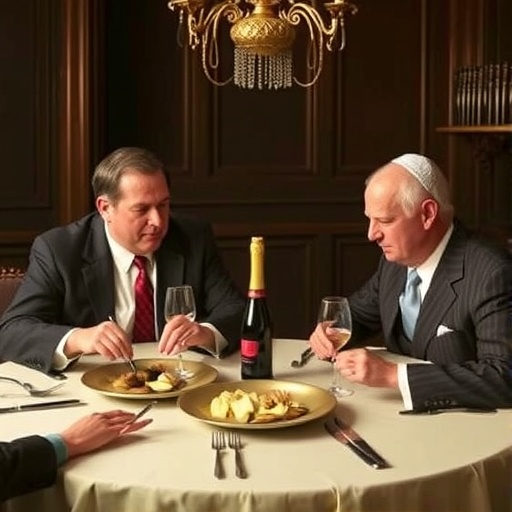
In an intriguing intersection of gastronomy and geopolitics, recent research from Portugal sheds light on how diplomatic meals have historically played a strategic role in shaping Portuguese foreign policy. Culinary diplomacy, once regarded merely as a formal tradition, emerges as a subtle yet potent tool that negotiates alliances, conveys political messages, and fosters cultural understanding. This groundbreaking study analyzed menus from 457 diplomatic events over more than a century, revealing the evolving narrative of Portugal’s geopolitical engagements through the language of food.
Diplomatic meals are far more than elegant social occasions; they are institutionalized platforms wherein states articulate intricate messages without uttering a single word. According to Óscar Cabral, a leading researcher in gastronomic sciences, culinary practices embedded in these official dinners help cement Portugal’s diplomatic objectives by facilitating cultural exchange, signaling strategic intentions, and asserting national identity. Understanding how food functions within this framework adds a nuanced layer to international relations, where taste becomes an instrument of power.
This comprehensive investigation focused on menus spanning from 1910 to 2023, a period marked by momentous political changes globally and within Portugal itself. Early in the twentieth century, French haute cuisine dominated diplomatic dining tables, reflecting the era’s prevailing international trends and Portugal’s alignment with European cultural norms. These multi-course banquets symbolized sophistication and power but rarely incorporated indigenous Portuguese ingredients at this stage.
However, a profound transformation occurred during Portugal’s Estado Novo dictatorship between 1950 and the early 1960s. The culinary flair of official menus began embracing a strategy known as gastronationalism, leveraging native products and regional delicacies to promote a distinctive Portuguese identity. This shift was emblematic of the regime’s desire to assert territorial pride and cultural uniqueness in front of foreign dignitaries. A vivid example is the 1957 regional luncheon hosted for Queen Elizabeth II, where dishes such as lobster from Peniche and fruit tarts from Alcobaça served as edible symbols of “Portugality.”
Beyond mere symbolism, culinary choices during diplomatic events have nuanced layers of political messaging. In the mid-20th century, menus started to reflect Portugal’s complex geopolitical realities, including the delicate question of its colonies. After decolonization, for instance, references to colonial origins were removed from menus to adapt to the changing political landscape, signaling a shift toward respectful recognition of sovereignty and a redefinition of national cuisine inclusive of these transformations.
Furthermore, the research identifies five distinct functional categories of diplomatic meals that delineate their geopolitical intentions. Tactical meals correspond to concrete diplomatic actions such as territorial negotiations, while geopolitical meals emphasize alliance-building and reaffirmation. Economic diplomacy meals focus on nurturing commercial ties, and scientific, cultural, or developmental cooperation dinners showcase shared advancements and collaborative goals. Finally, cultural proximity meals deepen bonds with specific nations—particularly Portuguese-speaking countries around the world—by featuring shared culinary heritage, enhancing a sense of fraternity and identity.
The study also illuminates how exclusivity and rarity were employed to impress and influence. In the 1960s and 1970s, rare delicacies like turtle soup and Azorean trout appeared on the tables of prominent figures such as Prince Philip and visiting presidents, projecting prestige and the diversity of Portugal’s natural resources. At the same time, economic and energy crises influenced practical menu choices, compelling hosts to opt for locally sourced Portuguese products due to logistical constraints, ironically reinforcing gastronationalism amid adversity.
Notably, the use of food to highlight pressing global issues is not a recent invention. Examples include the strategic naming of dishes at the COP25 climate summit meal in Madrid, which featured titles such as “Warm seas. Eating imbalance” and “Urgent. Minimize animal protein,” using culinary offerings to raise environmental awareness. This approach exemplifies how diplomatic menus can be dynamic, topical, and tailored to current global discussions.
Culinary diplomacy is not without its paradoxes and challenges. For instance, the serving of roast beef to the Indian president in 1990 seems incongruous considering beef’s contentious cultural significance in India. Similarly, the presentation of a French-style consommé featuring Portugal’s Barrancos ham to King Felipe VI of Spain in 2016 presents a layered cultural interplay—merging French culinary technique with Portuguese ingredients in a nation renowned for its own cured ham traditions. These choices invite interpretation, sometimes appearing as gastronomic provocations or playful diplomatic gestures.
The Portuguese research team argues that integrating gastronomy into a country’s strategic diplomatic efforts offers a multidimensional way to shape international perceptions. Alongside language, traditions, and values, culinary practices advance Portugal’s cultural diplomacy by reinforcing narratives of heritage, innovation, and cooperation. They emphasize that national cuisines serve as vehicles for soft power, simultaneously honoring history and crafting the future global image.
While this investigation provides robust insights, it is bounded by the availability of archival menus from certain periods, leaving gaps in understanding the complete evolution of culinary diplomacy. Future research will benefit from filling these sparse records and decoding contradictory menu choices that challenge simplistic interpretations of statecraft through food. The fusion of culinary analysis with political history promises to enrich diplomatic studies, revealing food as a universal language that transcends borderlines.
In conclusion, this extensive analysis enriches our comprehension of how food not only satisfies but also communicates within the esoteric realms of diplomacy. Portuguese diplomatic tables across the last century have narrated stories of identity, allegiance, and policy, demonstrating that power at dinner transcends the plate. As nations continue to seek innovative tools for engagement, culinary diplomacy stands out as a subtle yet influential art form beautifully blending culture, politics, and gastronomy.
Cite Scienmag News
Courtney Benton. (November 14, 2025). A Century of Menus Reveals How Food Shapes Political Alliances Through Diplomacy. Scienmag. https://scienmag.com/a-century-of-menus-reveals-how-food-shapes-political-alliances-through-diplomacy/
Courtney Benton. "A Century of Menus Reveals How Food Shapes Political Alliances Through Diplomacy." Scienmag, 14 November 2025, https://scienmag.com/a-century-of-menus-reveals-how-food-shapes-political-alliances-through-diplomacy/. Accessed 3 September 2026.
Courtney Benton. "A Century of Menus Reveals How Food Shapes Political Alliances Through Diplomacy." Scienmag. November 14, 2025. https://scienmag.com/a-century-of-menus-reveals-how-food-shapes-political-alliances-through-diplomacy/


