

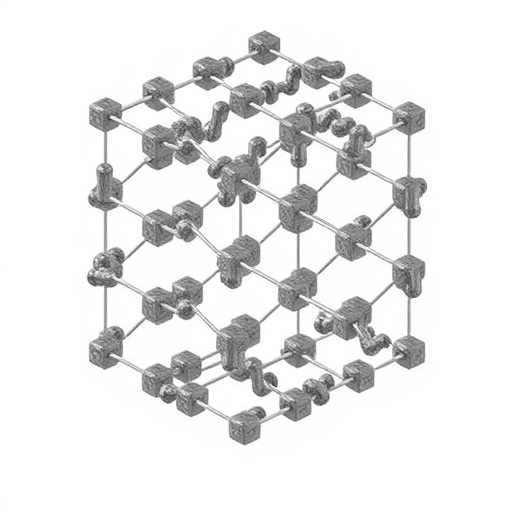
In the quest for sustainable energy solutions, researchers continue to explore innovative materials that can enhance the efficiency of electrocatalytic processes. A notable advancement in this field is the development of a palladium-integrated manganese dioxide (MnO2) along with delaminated boron nanocomposite, which shows promising potential as an efficient electrocatalyst for ethanol electrooxidation in an alkaline medium. This breakthrough, spearheaded by a team in a recent study, opens new avenues for the advancement of fuel cell technologies and sustainable energy sources.
Ethanol electrooxidation presents a viable alternative in the energy landscape for converting chemical energy into electrical energy. The ability to utilize bioethanol, which is a renewable resource, positions it as a favorable candidate for fuel cells and other catalytic systems. However, traditional methods often encounter drawbacks such as slow electrokinetics and low activity. To overcome these barriers, the research team has ingeniously integrated palladium into the MnO2 matrix that has been modified with delaminated boron, showcasing an improved catalytic performance.
The synthesized nanocomposite exhibits enhanced electrical conductivity, which is pivotal for facilitating the electrooxidation reactions of ethanol. Nanostructured materials have become increasingly attractive for their high surface area-to-volume ratios, allowing for greater interaction with the electroactive species in solution. By incorporating palladium, a noble metal known for its catalytic prowess, the researchers have significantly ameliorated the kinetics of the reaction, demonstrating that the integration of these elements can lead to superior performance in real-world applications.
Furthermore, the alkaline environment within which the ethanol electrooxidation takes place contributes to minimizing the issue of catalyst poisoning, a common complication in electrocatalytic reactions. The alkaline medium supports a more favorable composition of hydroxide ions, enhancing the overall electron transfer dynamics during the electrooxidation process. This finding suggests that the newly developed MnO2-delaminated boron-palladium nanocomposite not only exhibits high activity but also maintains stability under varying operational conditions.
Characterization techniques employed in the study revealed the structural and compositional attributes of the composite material. Techniques such as X-ray diffraction (XRD) and scanning electron microscopy (SEM) provided insight into the crystallinity and morphology of the nanocomposite. These results confirmed that the delamination process had successfully yielded finer boron structures, contributing to improved dispersion and accessibility in the catalytic reaction.
The electrochemical performance of the palladium-integrated MnO2/bored composite was further evaluated using cyclic voltammetry and chronoamperometry. Such assessments highlighted the substantial current densities achievable with this innovative catalyst, demonstrating its effectiveness compared to existing catalysts in the literature. As the electric currents were measured during the electrooxidation of ethanol, it became evident that this novel nanocomposite shows incredible promise for real-world applications, potentially revolutionizing the landscape of fuel cell technologies.
The researchers also capitalized on the reproducibility aspect of their catalyst, conducting multiple trials to assess stability over time. The results indicated that the palladium-integrated MnO2/bored composite maintains its catalytic activity, addressing a significant concern in electrocatalysis. Prolonging the lifetime of the catalyst is crucial for commercial viability in fuel cell applications, where operational costs and sustainability maneuver intricately together.
These exciting revelations set the stage for further exploration into other metal-integrated nanocomposites exhibiting similar properties. The versatility of utilizing different metals and structural variations can potentially broaden the spectrum of efficient catalysts for a host of challenging reactions. Future research could lead to the invention of optimized composites tailored for specific electrochemical applications, enhancing the practicality and adaptability of clean energy technologies across various industries.
Moreover, strategies focusing on optimizing the synthesis methods hold the key to scaling up the production of such nanocomposites. Researchers are now looking into cost-effective production processes that would facilitate the widespread adoption of these materials. As the world accelerates toward more environmentally friendly technologies, establishing economically viable production routes is paramount for transitioning from conventional fossil fuels to sustainable alternatives.
The implications of such advancements extend beyond ethanol and can be applied to various alcohols and organic compounds. This research lays the groundwork for future innovations within the realm of renewable energy, demonstrating the potential of integrating nanotechnology and materials science into large-scale applications. By fostering collaboration across disciplines, the scientific community can continue to unlock the secrets of catalysis and establish pathways toward a cleaner energy future.
Ultimately, the palladium-integrated MnO2/delaminated boron nanocomposite does not merely signify an incremental development in catalysis; it embodies a collective stride towards redefining energy conversion and storage mechanisms. As researchers delve deeper into this field, they will undoubtedly uncover more transformative solutions capable of addressing pressing global challenges, from environmental pollution to energy scarcity. As our dependence on fossil fuels wanes, innovations in electrocatalysis such as these will play an indispensable role in paving the way for tomorrow’s energy landscape.
In summary, the exploration of palladium-integrated MnO2/delaminated boron nanocomposites as effective electrocatalysts represents a promising leap forward in the quest for efficient ethanol electrooxidation. Through rigorous experimentation and characterization, researchers are not only proving the effectiveness of this new material but are also setting the stage for future breakthroughs in sustainable energy technologies. These advancements may well inspire a new generation of catalysts that prioritize both efficiency and environmental sustainability, ushering in a new era of clean energy solutions.
Idris, M.B., Mamba, B.B. & Xolile, F. Palladium-integrated MnO2/delaminated boron nanocomposite as an efficient electrocatalyst toward ethanol electrooxidation in an alkaline medium.
Ionics (2025). https://doi.org/10.1007/s11581-025-06659-6
Cite Scienmag News
SCIENMAG. (September 2, 2025). Palladium-MnO2/Boron Nanocomposite Boosts Ethanol Electrocatalysis. https://scienmag.com/palladium-mno2-boron-nanocomposite-boosts-ethanol-electrocatalysis/
SCIENMAG. "Palladium-MnO2/Boron Nanocomposite Boosts Ethanol Electrocatalysis." Scienmag, 2 September 2025, https://scienmag.com/palladium-mno2-boron-nanocomposite-boosts-ethanol-electrocatalysis/. Accessed 28 August 2026.
SCIENMAG. "Palladium-MnO2/Boron Nanocomposite Boosts Ethanol Electrocatalysis." Scienmag. September 2, 2025. https://scienmag.com/palladium-mno2-boron-nanocomposite-boosts-ethanol-electrocatalysis/


