


The ever-growing concern over water pollution, particularly from synthetic dyes, has catalyzed extensive research into the development of efficient remediation techniques. Among these, the photocatalytic degradation of organic contaminants has emerged as a viable solution, largely due to the increasing demand for environmentally friendly and sustainable processes. The research conducted by Lokhande, Narale, Deshmukh, and their team revolves around an innovative approach utilizing nickel-doped magnesium ferrichromite nanoparticles. Their pioneering efforts not only highlight the efficacy of this advanced material in degrading the Direct Black 122 dye but also open avenues for its application in broader industrial waste treatment.
In their comprehensive study, the authors embarked on synthesizing nickel-doped magnesium ferrichromite nanoparticles through a sol-gel method, a pivotal starting point that lays the foundation for their groundbreaking findings. The sol-gel method is revered for its ability to produce uniform nanoparticles with significant surface area and porosity, which are crucial in enhancing photocatalytic activity. By introducing nickel into the magnesium ferrichromite matrix, they aimed to optimize the photocatalyst’s properties, enabling it to effectively harness light energy to initiate the degradation process.
The synthesis process itself is multifaceted, involving controlled hydrolysis and gelation steps that ultimately yield nanoparticles with distinct physicochemical properties. The researchers meticulously adjusted the concentrations of nickel to explore its impact on the structural and morphological attributes of the nanoparticles, including size, crystallinity, and dispersibility. These parameters are crucial as they directly influence the photocatalytic behavior of the synthesized materials, dictating their efficiency in breaking down complex organic dye molecules.
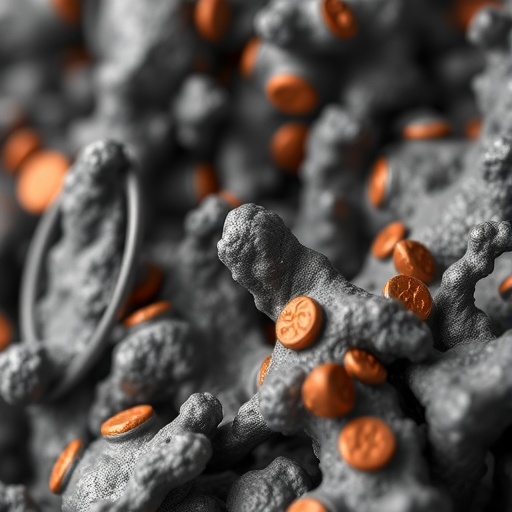
Once synthesized, the structural characteristics of the nanoparticles were assessed using advanced techniques such as X-ray diffraction (XRD) and scanning electron microscopy (SEM). XRD patterns provided insight into the crystallinity and phase purity of the nanoparticles, revealing a well-defined crystalline structure that is vital for photocatalytic reactions. SEM imaging further illustrated the morphology and surface features of the nanoparticles, showcasing their potential as a high-surface-area catalyst for environmental applications.
The core of the research centers on the photocatalytic performance of these nanoparticles in degrading Direct Black 122 dye. This dye, commonly used in textile industries, poses significant ecological risks and is notoriously challenging to degrade through conventional methods. By employing UV-light irradiation, the researchers subjected the dye to the catalytic effects of the nickel-doped magnesium ferrichromite nanoparticles. The results showcased an impressive degradation efficiency, emphasizing the potential that such materials have in addressing industrial effluents.
Throughout their experimentation, the researchers undertook a series of tests to quantify the degradation process. They meticulously measured the percentage degradation over time, aiming to establish a clear correlation between the concentration of the photocatalyst, light intensity, and catalyst activity. This empirical data reveals not only the kinetics of dye degradation but also indicates the optimal conditions for photocatalytic efficiency.
Notably, the study elucidated the mechanistic pathways through which the degradation occurs. The photocatalytic process involves the generation of reactive oxygen species (ROS) such as hydroxyl radicals and superoxide anions when the nanoparticles are irradiated with UV light. These highly reactive species engage with the dye molecules, facilitating their breakdown into less harmful byproducts. Such insights into the reaction mechanics are crucial for advancing the understanding of photocatalysis and refining these methods for practical applications.
Moreover, the team’s findings extend beyond just the performance metrics of the nanoparticles. They conclude with implications for scalability, indicating that the synthesis methods employed can be adapted for large-scale production, making it a feasible option for real-world applications. This aligns with global sustainability goals, pushing forward the agenda for greener technologies in managing water pollution.
The transition toward utilizing nanotechnology, particularly nickel-doped magnesium ferrichromite nanoparticles, in wastewater treatment exemplifies innovative thinking within environmental science. The study not only sets benchmarks for future research but also inspires researchers and industry stakeholders to explore similar avenues that combine efficacy with environmental responsibility. By spotlighting the importance of advanced materials in photocatalytic applications, the paper contributes to a larger discourse on sustainable practices and the role of science in tackling pressing ecological challenges.
In conclusion, the exploration of photocatalytic degradation techniques represents a critical frontier in environmental chemistry. The work of Lokhande et al. stands as a testament to the potential of nanotechnology in addressing complex issues inherent in pollution. Their robust research provides a framework for future studies and encourages a shift towards cleaner, more sustainable industrial practices. As researchers continue to unravel the possibilities that lie within nanostructured materials, the hope for a world with cleaner water and a reduced ecological footprint remains an achievable goal.
Cite Scienmag News
Denise Maddox. (September 2, 2025). Ni-Doped Magnesium Ferrichromite Nanoparticles Tackle Dye Pollution. Scienmag. https://scienmag.com/ni-doped-magnesium-ferrichromite-nanoparticles-tackle-dye-pollution/
Denise Maddox. "Ni-Doped Magnesium Ferrichromite Nanoparticles Tackle Dye Pollution." Scienmag, 2 September 2025, https://scienmag.com/ni-doped-magnesium-ferrichromite-nanoparticles-tackle-dye-pollution/. Accessed 5 September 2026.
Denise Maddox. "Ni-Doped Magnesium Ferrichromite Nanoparticles Tackle Dye Pollution." Scienmag. September 2, 2025. https://scienmag.com/ni-doped-magnesium-ferrichromite-nanoparticles-tackle-dye-pollution/


