


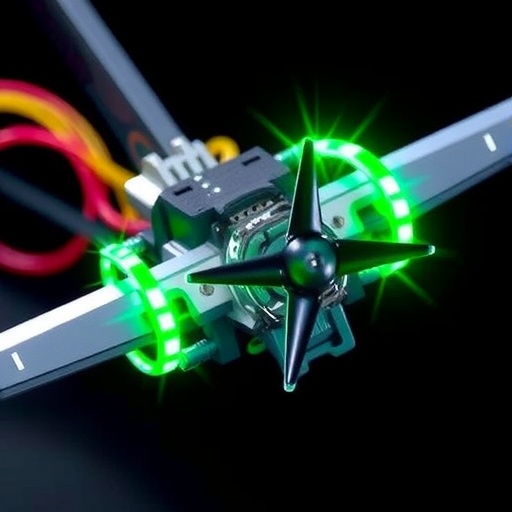
The burgeoning field of electrified transportation has ignited an intense pursuit for high-performance electro-mechanical actuation (EMA) systems, particularly within the aviation sector. As aircraft systems evolve, there is a pressing need for servo drives that exhibit not just speed, but also precision in response to a myriad of operational disturbances. Unlike the relatively controlled environments of industrial servo systems, aviation applications grapple with multifaceted and unpredictable disturbances from various sources. Addressing such challenges has become paramount, leading to innovations in control methodologies, chief among them being Active Disturbance Rejection Control (ADRC).
ADRC is gaining attention as a pioneering control architecture that effectively suppresses disturbances, offering a substantial edge over traditional approaches. Unlike conventional control methods that often rely on precise system modeling, ADRC operates on a different premise, focusing on real-time disturbance estimation. This characteristic is especially beneficial in the aviation sector where conditions are dynamic and often unpredictable. By not depending heavily on model accuracy, ADRC demonstrates a level of robustness that significantly enhances its applicability in real-world scenarios with numerous uncertainties.
The recent work by Chunqiang Liu and his team from Xidian University, published in the Chinese Journal of Aeronautics, delves deeply into the application of ADRC for electro-mechanical servo drives. This research is timely, as it not only outlines the inherent challenges in current aviation EMA systems but also presents viable solutions through ADRC. The team meticulously examines the various disturbances encountered in electro-mechanical servo systems, analyzing the complexities of noise that can interfere with the performance of these critical technologies.
The paper emphasizes that the key to effective disturbance rejection lies in how well the control system is structured. The proposed dual-loop control architecture, which integrates both position and speed control mechanisms, while positioning current control in the inner loop, highlights a strategic shift from traditional triple-loop designs. This innovative approach is aimed at optimizing performance under various nonlinear constraints faced by aviation systems, including voltage fluctuations, mechanical stress, and heat generation.
At the heart of ADRC is its capability to estimate total disturbances in real-time across multiple layers of the servo control system, from higher-level position control down to the direct electrical current control dictating motor operations. By accurately predicting disturbances, ADRC actively counteracts them before they can adversely influence the performance of the system. This proactive methodology not only heightens the control bandwidth—allowing for faster response times—but also enhances positioning accuracy and overall energy efficiency.
However, implementing ADRC is not without its challenges. The research identifies key hurdles, including the need for online adaptation of the control system’s bandwidth to accommodate various operational conditions and the pursuit of optimal control strategies under high-order, time-varying disturbances. As ADRC enters the mainstream discourse on aviation control systems, integrating it with existing complex architectures within aircraft operations necessitates rigorous and systematic development.
The authors draw attention to the significant implications of their findings for the future of aviation actuation systems. It’s evident that as the industry pivots towards more electrified and automated solutions, high-performance EMA systems must evolve concurrently to meet new demands. Enhanced reliability and efficiency in systems could fundamentally transform how unmanned aircraft operate, providing essential mechanisms for critical flight control surfaces and quieter, efficient cabin and cargo systems.
Ensuring the robustness of ADRC under diverse flight scenarios represents a key frontier in this ongoing research. The pathway forward will require extensive validation through real-flight testing, examining the performance of ADRC-integrated systems in actual operational environments beyond controlled laboratory simulations. Such empirical evaluations are critical to understanding the performance limits and durability of ADRC-enabled servo drives in the rigorous field of aviation.
The ultimate vision outlined by Liu and his colleagues is a new era in aviation technology characterized by systems that are not only responsive and energy-efficient but also fundamentally reliable in their operational integrity. As researchers continue to tackle the specified challenges and refine ADRC implementations, the aviation sector stands on the brink of a significant technological evolution.
As the demand for advanced electrified solutions accelerates in aviation, research into methodologies like ADRC is likely to gain momentum, positioning it as a vital component of future aviation designs. The promise of enhanced systems foreshadows a transformative journey towards achieving highly sensitive control mechanisms for unmanned aircraft, capable of maintaining operational efficiency while adapting to the dynamically changing flight environment.
Cite Scienmag News
Grant Pearson. (August 19, 2025). ADRC: The Key to High-Dynamic Servo Drives in Agile Aviation Electro-Mechanical Actuation. Scienmag. https://scienmag.com/adrc-the-key-to-high-dynamic-servo-drives-in-agile-aviation-electro-mechanical-actuation/
Grant Pearson. "ADRC: The Key to High-Dynamic Servo Drives in Agile Aviation Electro-Mechanical Actuation." Scienmag, 19 August 2025, https://scienmag.com/adrc-the-key-to-high-dynamic-servo-drives-in-agile-aviation-electro-mechanical-actuation/. Accessed 3 September 2026.
Grant Pearson. "ADRC: The Key to High-Dynamic Servo Drives in Agile Aviation Electro-Mechanical Actuation." Scienmag. August 19, 2025. https://scienmag.com/adrc-the-key-to-high-dynamic-servo-drives-in-agile-aviation-electro-mechanical-actuation/


