


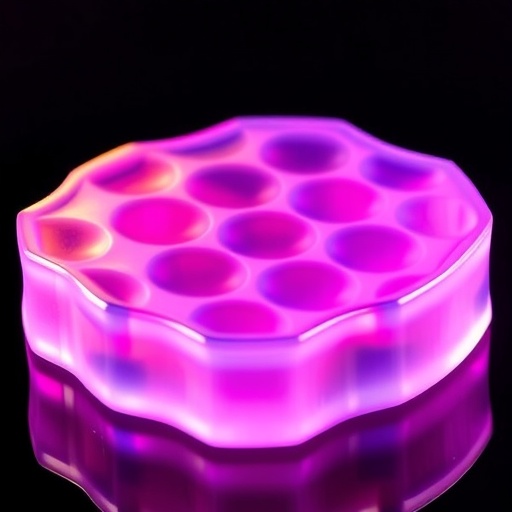
In recent years, energy storage solutions have become a focal point of research, driven by the urgent need for sustainable and efficient technologies to address the escalating energy demands of our planet. Among the various emerging solutions, redox hydrogel electrolytes are capturing substantial attention for their unique properties and potential applications in next-generation energy storage devices. A comprehensive review published in Ionics sheds light on the advancements and challenges facing redox hydrogel electrolytes, emphasizing their role in the evolution of energy storage technologies.
Hydrogels, materials composed primarily of water and polymer networks, have gained traction due to their flexibility, high ionic conductivity, and ability to form a bridge between solid electrodes. The intrinsic properties of hydrogels allow them to retain significant amounts of liquid while maintaining mechanical stability, making them ideal candidates for use in energy storage systems. This review highlights how the integration of redox-active species within hydrogel matrices can be optimized to create more efficient electrolytes, crucial for improving the performance of energy storage devices such as batteries and supercapacitors.
The ability to incorporate redox-active materials into hydrogels is not merely a scientific curiosity; it offers a practical solution to enhance charge transfer processes within the electrolytic medium. By utilizing redox-active moieties, researchers can design hydrogel electrolytes that facilitate rapid electron transfer, thereby improving the overall efficiency of energy devices. Such advancements could lead to devices that not only store energy more effectively but also charge and discharge at unprecedented rates, a significant step forward in the realm of portable and grid energy storage systems.
One of the most promising aspects of redox hydrogel electrolytes is their potential for tunability. The review discusses various strategies employed to synthesize these systems, allowing researchers to tailor mechanical, thermal, and electrochemical properties to meet specific application requirements. This tunability could enable the development of electric vehicles that charge faster and last longer, as well as renewable energy systems that store energy more effectively in a decentralized manner.
Moreover, the sustainability aspect of redox hydrogels cannot be overstated. As the world strives for greener alternatives in the development of technological solutions, redox hydrogels offer a pathway towards renewable and biodegradable materials. The review highlights ongoing research focused on sourcing eco-friendly polymers and redox-active species, presenting a vision where energy storage devices diminish environmental impact while still delivering the performance required for modern applications.
The integration of bio-inspired materials into hydrogel electrolytes is another novel area discussed in the review. By mimicking natural processes, researchers are finding ways to improve the efficiency and sustainability of hydrogels. Bioinspired designs could result in hydrogels that not only serve as efficient electrolytes but also possess self-healing properties, thereby extending the lifespan of energy storage devices significantly. This could revolutionize the lifecycle of energy technology, reducing the need for constant replacements and thus conserving resources.
In addition to these benefits, the study of redox hydrogel electrolytes fosters interdisciplinary collaboration across various scientific domains, inciting innovations at the intersection of materials science, electrochemistry, and renewable energy. The review emphasizes how collaborations among chemists, engineers, and environmental scientists could promote a holistic approach to addressing energy challenges, allowing them to harness insights from multiple fields to drive innovations that prioritize sustainability and efficiency.
Real-world applications for these advanced hydrogel electrolytes extend beyond traditional battery systems. Supercapacitors, a critical part of many energy storage systems, can also significantly benefit from the incorporation of redox activities into hydrogel matrices. The enhancing properties of redox hydrogels can bridge the gap between the rapid discharge rates of supercapacitors and the high energy density typical of batteries, leading to hybrid systems that outperform existing technologies.
Lastly, the review discusses current limitations and challenges that must be addressed to transition from laboratory-scale prototypes to commercial-ready solutions. Issues such as scalability, cost-effective production, and long-term stability of redox hydrogel electrolytes are critical factors that require further exploration. Future research should prioritize the development of scalable synthesis methods and rigorous testing to ensure the long-term viability of these materials under operational conditions.
In conclusion, the exploration of redox hydrogel electrolytes represents an exhilarating frontier in energy storage research. With their unique properties, tunability, sustainability potential, and broad application prospects, redox hydrogels could play a pivotal role in shaping the future of energy technology. As research continues to advance, one can foresee a world where energy storage becomes more efficient and less harmful to the environment, setting the stage for a sustainable energy future.
As we press forward in this quest for advanced materials for energy storage, the insights gleaned from this review will be crucial, prompting further exploration and experimentation. The journey towards optimizing redox hydrogel electrolytes has just begun, and it is an exciting time for researchers and innovators alike.
Sadaiyandy, K., Bashir, S., Pershaanaa, M. et al. A review on redox hydrogel electrolyte for energy storage devices.
Ionics (2025). https://doi.org/10.1007/s11581-025-06473-0
Cite Scienmag News
Faith Mcneil. (August 6, 2025). Redox Hydrogels: Revolutionizing Energy Storage Solutions. Scienmag. https://scienmag.com/redox-hydrogels-revolutionizing-energy-storage-solutions/
Faith Mcneil. "Redox Hydrogels: Revolutionizing Energy Storage Solutions." Scienmag, 6 August 2025, https://scienmag.com/redox-hydrogels-revolutionizing-energy-storage-solutions/. Accessed 4 September 2026.
Faith Mcneil. "Redox Hydrogels: Revolutionizing Energy Storage Solutions." Scienmag. August 6, 2025. https://scienmag.com/redox-hydrogels-revolutionizing-energy-storage-solutions/


