


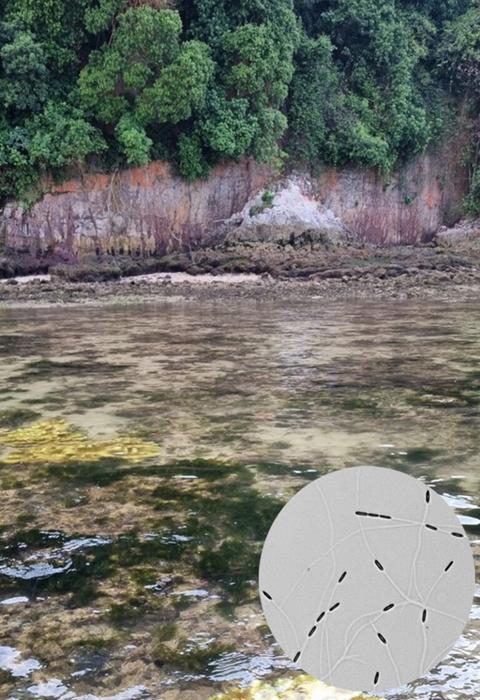
In the vast and vibrant underwater world along the coasts of Sentosa Island in Singapore, a peculiar group of algae challenges our understanding of ecological adaptation and genetic innovation. At first glance, diatoms—microscopic, photosynthetic algae that form the base of many marine food webs—might seem straightforward in their biology. Yet, within the immense diversity of over 100,000 known species, some have diverged in extraordinary ways, abandoning photosynthesis in favor of an alternative nutritional strategy. Among these, the species Nitzschia sing1 stands out as a fascinating subject of scientific investigation due to its unique ability to subsist on kelp, rather than sunlight.
Traditionally, diatoms are celebrated for their role as proficient photosynthesizers, converting sunlight, carbon dioxide, and water into organic compounds that fuel their growth and reproduction. This photosynthetic capability places them as critical contributors to marine ecosystems and, by extension, global carbon cycles. However, the discovery of a subset of diatoms that have forsaken this process in favor of heterotrophic feeding mechanisms marks a remarkable deviation. The team led by Professor Finn L. Aachmann at the Norwegian University of Science and Technology, in collaboration with Gregory Jedd’s group at the Temasek Life Sciences Laboratory in Singapore, has delved into the genomic and biochemical underpinnings of these “rule-breaking” algae.
Detailed genetic analyses reveal that Nitzschia sing1 and its relatives harbor a suite of genes that encode for enzymes capable of breaking down alginate—a complex polysaccharide abundant in the cell walls of brown algae such as kelp. Alginate represents a rich carbohydrate resource, but its degradation requires specialized enzymatic machinery. The presence of these alginate-degrading enzymes in diatoms points to a profound evolutionary innovation: the ability to harness organic substrates directly from their algal hosts or environment, effectively bypassing their ancestral reliance on photosynthesis.
One of the most striking findings of the research is the origin of these genes. The team’s analyses suggest that these alginate-degrading genes were not inherited via traditional vertical descent but rather acquired through horizontal gene transfer from marine bacteria. This genetic exchange enabled diatoms to obtain functional traits otherwise rare among eukaryotic microalgae. Following this initial transfer, gene duplication events and subsequent neofunctionalization—the process by which duplicated genes evolve new functions—further refined and diversified the enzymatic repertoire of these diatoms. Such evolutionary dynamics showcase nature’s remarkable capacity for innovation through genetic borrowing and adaptation.
The implications of these findings extend beyond fundamental biology. By occupying a unique ecological niche—living on and consuming kelp in tidal zones—Nitzschia sing1 and its relatives exhibit an ecological flexibility that refines our understanding of niche differentiation and speciation. This heterotrophic lifestyle enables these diatoms to exploit resources in environments less favorable to photosynthetic competitors, emphasizing the adaptive benefits of horizontal gene acquisition in response to environmental pressures.
Furthermore, the study provides a blueprint for biotechnological exploration. Alginate is an industrially significant biopolymer, used in products ranging from food additives like ice cream stabilizers to medical materials such as wound dressings and even in welding rods. Understanding the molecular mechanisms by which diatoms degrade alginate opens new avenues for sustainable bioprocessing, potentially enabling the conversion of kelp biomass into valuable biofuels, feed proteins, and other bioproducts with improved efficiency and environmental compatibility.
The potential applications resonate deeply with current scientific and industrial emphases on green technology and circular bioeconomies. By studying these diatoms, scientists gain insight into natural pathways of polysaccharide deconstruction and resource utilization, which could inspire innovative strategies for marine biomass recycling. Moreover, these findings contribute to advancing directed evolution techniques, where engineered enzymes with tailored capabilities can facilitate diverse bioconversions crucial for bioindustrial processes.
In terms of evolutionary biology, this research underscores the powerful role of horizontal gene transfer in shaping eukaryotic genomes—an area traditionally considered dominated by vertical inheritance. The ability of a eukaryotic microalga like Nitzschia sing1 to incorporate, duplicate, and optimize bacterial genes demonstrates the porous boundaries between domains of life and highlights the complexity of microbial evolution in marine ecosystems. This challenges prevailing assumptions and enriches our understanding of genetic plasticity and ecological innovation.
The research also prompts exciting questions about the co-evolution of diatoms and their algal substrates. How these interactions evolved at molecular and ecological levels invites further inquiry, potentially revealing unknown aspects of symbiosis and competition within marine bio-communities. The insights gleaned may have ripple effects in fields as varied as marine ecology, evolutionary genetics, and applied biotechnology.
In summary, the discovery of heterotrophic diatoms thriving on kelp polysaccharides, through genetic innovation enabled by horizontal gene transfer and subsequent evolutionary processes, represents a paradigm shift in our understanding of microalgal biology. This research not only unravels the complexities of diatom metabolism and ecological adaptation but also provides promising opportunities for harnessing marine biomass sustainably. As climate change and environmental challenges press for more efficient biological solutions, such pioneering studies underscore the potential of marine microorganisms to inspire technological breakthroughs.
Funded by institutions including Temasek, the Research Council of Norway, and the Deutsche Forschungsgemeinschaft, this work exemplifies the power of collaborative, multidisciplinary approaches to solving fundamental questions in biology with tangible benefits for society. Through the lens of a tiny, unconventional diatom, we glimpse the immense potential locked within the genome and the sea, waiting to be unlocked by science and innovation.
News Publication Date: 1-Apr-2025
Web References: http://dx.doi.org/10.1371/journal.pbio.3003038
References: Lim ZH, Zheng P, Quek C, Nowrousian M, Aachmann FL, Jedd G (2025) Diatom heterotrophy on brown algal polysaccharides emerged through horizontal gene transfer, gene duplication, and neofunctionalization. PLoS Biol 23(3): e3003038.
Cite Scienmag News
Gavin Prescott. (June 26, 2025). Microalgae That Eat Kelp Unlock Vast Potential. Scienmag. https://scienmag.com/microalgae-that-eat-kelp-unlock-vast-potential/
Gavin Prescott. "Microalgae That Eat Kelp Unlock Vast Potential." Scienmag, 26 June 2025, https://scienmag.com/microalgae-that-eat-kelp-unlock-vast-potential/. Accessed 4 September 2026.
Gavin Prescott. "Microalgae That Eat Kelp Unlock Vast Potential." Scienmag. June 26, 2025. https://scienmag.com/microalgae-that-eat-kelp-unlock-vast-potential/


