Researchers from the Postgraduate Institute of Medical Education and Research in Chandigarh, India, have demonstrated that a novel blood-based platform can model patient-specific functional phenotypes in sensorineural hearing loss. Published in Frontiers in Molecular Biosciences, the study introduces the Plasma-Induced Transcriptomic and epi-Transcriptomic Reprogramming (PITTRep) system, which uses autologous plasma to drive peripheral blood cells toward neurogenic states. The primary objective was to bridge the gap between genomic findings and functional disease biology, particularly in cases where genetic testing yields variants of uncertain significance or fails to identify a pathogenic cause entirely.
The study evaluated seven clinically distinct cases of sensorineural hearing loss, encompassing hereditary forms associated with POU3F4, MYO7A, GJB2, and FGF3, as well as an acquired ototoxic case without detectable pathogenic variants. By comparing these patient-derived cultures with healthy parental controls, the team sought to determine whether specific cellular disruptions could be observed across genetically diverse etiologies. The PITTRep platform was first validated using immortalized monocytic cells and primary human blood cells, confirming that plasma-derived cues alone are sufficient to initiate lineage reprogramming toward a neuronal state without the need for exogenous growth factors or genetic manipulation.
A central finding of the research is the reproducible disruption of the adipocyte-to-neurogenic transdifferentiation (ATN) continuum in all seven patient cases. In healthy control cultures, cells consistently underwent sequential adipogenic expansion, followed by structural remodelling and the emergence of organized neuron-like networks with extensive neurite projections. In contrast, patient-derived cultures exhibited arrested adipogenic remodelling, forming small, compact cellular aggregates with limited structural organization. These patient cultures showed reduced expression of neuronal markers and impaired neurite development, indicating a shared functional abnormality in cellular plasticity across different genetic backgrounds.
In the case of POU3F4-associated hearing loss, the researchers investigated the influence of the extracellular ionic environment on the patient-derived phenotype. Given the role of POU3F4 in cochlear development and endolymph homeostasis, artificial endolymph supplementation was introduced into the cultures. This intervention resulted in partial functional rescue, characterized by more prominent Stargazin immunoreactivity and more cohesive cellular architecture. Quantitative analysis revealed a significant reduction in α-SMA fluorescence and an increase in SERCA2 fluorescence following supplementation, suggesting that microenvironmental modulation can alter the patient-specific cellular state, although it did not establish a complete reversal of the underlying defect.
The MYO7A-associated case highlighted the importance of regulatory mechanisms beyond coding variants. While the homozygous MYO7A coding variant remained stable during plasma-induced culture, extensive context-dependent regulatory remodelling occurred in untranslated regions and intronic sites. This remodelling involved developmental transcription factors and long non-coding RNAs, particularly within chromosome 11-associated sensory-developmental pathways. The patient-derived cultures displayed a distinct cellular trajectory with limited progression toward neuronal differentiation, suggesting that non-coding regulatory features may contribute to the functional phenotype in ways that static genomic analysis cannot capture.
In the acquired ototoxic case, where whole-exome sequencing identified no significant phenotype-associated variant, the PITTRep system still revealed a marked disruption of the ATN continuum. The patient-derived cultures exhibited persistent neuroinflammatory activation, indicated by pronounced IBA1 staining, and defective neurogenic plasticity. This finding demonstrates that the platform can detect functional cellular alterations in genetically unresolved cases, providing a potential tool for stratifying patients who do not have a clear monogenic diagnosis. The presence of altered glial and immune-associated cellular states further supports the idea that the PITTRep phenotype reflects convergent effects of different disease contexts on cellular remodelling.
For the three GJB2-associated cases, the study utilized a qualitative nomenclature to describe the relative representation of neuronal and mesodermal lineages. Both the truncating and missense GJB2 variants were associated with an nM phenotype, indicating a predominant mesodermal representation with limited neuronal progression. ADH6, a marker associated with retinoid metabolism, was used to assess the intermediate stage of transdifferentiation. In patient cultures, ADH6 staining was reduced or heterogeneous, consistent with incomplete progression through the ATN trajectory. SERCA2 expression remained detectable but showed a spatial distribution that differed from parental controls, particularly under hypoxic conditions in the well-associated microenvironment.
Complementary multispectral optoacoustic tomography (MSOT) imaging was performed to assess neurovascular coupling in the GJB2-associated cultures. The patient-derived culture showed reduced and spatially heterogeneous signals for deoxygenated and oxygenated haemoglobin compared to parental controls. The total haemoglobin signal was lower, and the distribution of MSOT-derived oxygen saturation was altered. These findings provide preliminary evidence of an altered neurovascular phenotype, although the authors caution that these observations require validation in larger cohorts with direct measures of coupling to establish biological significance.
The final case involved a child with FGF3-associated congenital hearing loss and severe inner-ear malformation. Although the FGF3 variant was classified as a variant of uncertain significance, the patient-derived cultures demonstrated altered FGF2 and phosphorylated FGFR2 expression. This molecular alteration was accompanied by impaired neurogenic organization, providing functional evidence consistent with disturbed FGF-associated signalling. The clinical-genetic-functional concordance in this case illustrates how PITTRep can complement genomic findings in settings where molecular classification alone is insufficient to explain the severe developmental phenotype.
The study acknowledges several limitations, primarily the small sample size and the lack of independent biological or technical replicate cultures for each case. The young age of the participants limited the amount of blood that could be collected, necessitating the use of parental samples as controls. Consequently, the quantitative immunofluorescence and MSOT findings should be interpreted as exploratory. The authors emphasize that the study serves as a proof-of-concept for the PITTRep platform rather than definitive evidence of disease mechanisms, and that larger cohorts will be required to validate the reproducibility and predictive value of the observed functional signatures.
Despite these limitations, the research establishes PITTRep as a complementary approach to genomic diagnostics in sensorineural hearing loss. By translating static genomic information into dynamic biological phenotypes, the platform offers a new dimension for understanding genotype-phenotype correlations. It provides a scalable, minimally invasive method for characterizing unresolved or variable phenotypes, potentially guiding future precision diagnostics and regenerative medicine strategies for auditory-neural disorders.
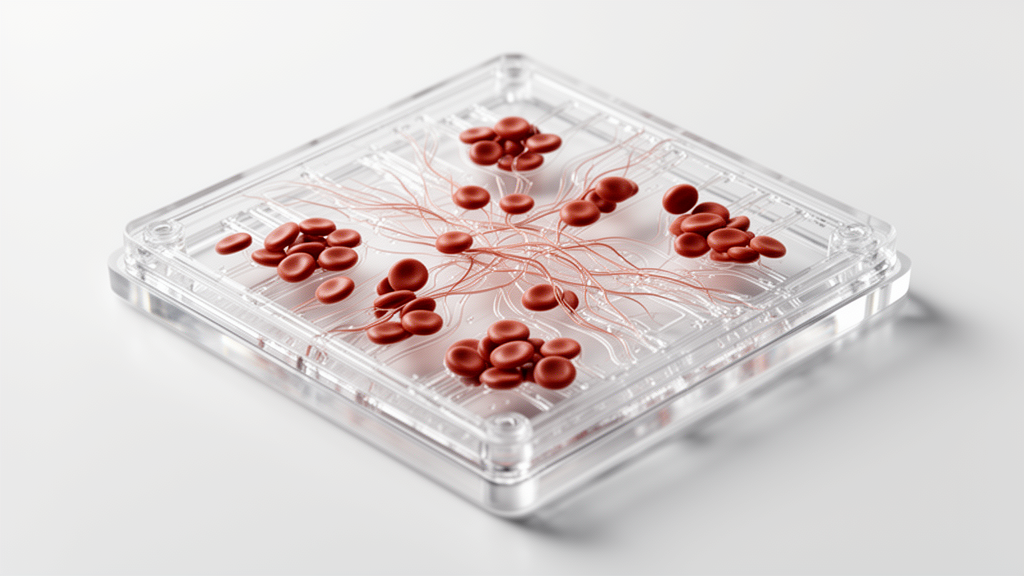
Methodologically, the PITTRep culture platform relied on a precise gradient separation to isolate autologous blood fractions without exogenous growth factors. Whole blood was diluted in equal parts with RPMI 1640, layered over HiMedia Hisep 1077 and Granulosep 1119 in a 1:1:3 ratio, and centrifuged at 2,000 revolutions per minute for 40 minutes. Mononuclear cells and granulocytes were then combined with autologous red blood cells at four microliters per milliliter and cultured in neat autologous plasma across 24-well plates for 14 days at 37 degrees Celsius with 5 percent carbon dioxide. The experimental setup maintained two distinct spatial microenvironments: normoxic coverslip surfaces and hypoxic well floors beneath the coverslips. Initial proof-of-concept tests demonstrated that 72 hours of plasma exposure reprogrammed THP-1 monocytic cells into transcriptomic pathways enriched for olfactory transduction, taste transduction, and gonadotropin-releasing hormone signalling, while healthy primary blood mononuclear cells expressed differentiated neuronal markers, including NeuN, beta-III-tubulin, and dopamine beta-hydroxylase.
High-resolution sequencing provided deep structural characterization for complex phenotypes. In the 3-year-old female carrying the MYO7A variant, clinical whole-genome sequencing achieved a mean depth of 30-fold on an Illumina platform, generating 88.13 gigabases of data with 99.98 percent read alignment and 97.11 percent of bases exceeding the Q30 threshold. Bioinformatic alignment to the GRCh38 human genome reference through DRAGEN and BWA identified additional variants of uncertain significance in TECTA and LOXHD1. Beyond the stable coding mutation, comparative regulatory analysis revealed that plasma culture uniquely enriched untranslated and intronic variants affecting developmental transcription factors, notably TFAP4, TCF3, KLF14, KLF15, and SP8. Bioinformatic network modeling through Enrichr and WikiPathways demonstrated that these factors clustered around long non-coding RNA LINC00618 and developmental pathways, confirming coordinated regulatory adaptations within the chromosome 11 sensory hub.
Clinical histories and experimental manipulations further detailed the diverse etiologies under investigation. The POU3F4 case involved a seven-year-old male with prelingual progressive hearing impairment confirmed by brainstem evoked response audiometry, whose hemizygous frameshift variant was verified by targeted massively parallel sequencing. To assess environmental modifiability, researchers introduced an artificial endolymph solution composed of 140 millimoles per liter potassium chloride and 25 millimoles per liter potassium bicarbonate alongside auditory music stimulation for six hours on culture day eight. In exploratory paired comparisons across four family members, this ionic exposure yielded statistically significant changes with p-values of 0.022 for alpha-smooth muscle actin reduction and 0.007 for SERCA2 increase, whereas Stargazin and MSX2 differences were not statistically significant. In contrast, the ototoxic case involved a young male whose postlingual hearing loss followed critical systemic illness requiring hemodialysis, management for gastrointestinal bleeding, and tracheostomy with prolonged mechanical ventilation, producing cellular arrest that resisted even hypoxia-driven stimulation.
Distinct molecular loci and advanced imaging clarified the remaining clinical profiles. The investigated GJB2 alterations spanned structurally divergent domains: the truncating nonsense mutation at codon 24 halts Connexin 26 translation near the first transmembrane region, whereas the missense substitution at codon 184 disrupts the second extracellular loop. For the one-year-old male presenting with triangular facies and complete inner-ear Michel aplasia requiring auditory brainstem implantation, cellular profiling confirmed impaired downstream signaling through phosphorylated FGFR2. Functional vascular imaging utilized a multispectral optoacoustic tomography system equipped with a tunable optical parametric oscillator laser operating between 660 and 1,300 nanometers. Agarose-embedded cultures were evaluated across eight specific wavelengths from 660 to 875 nanometers, allowing spectral unmixing to track oxygenated hemoglobin at 875 nanometers, deoxygenated hemoglobin near 760 nanometers, and total hemoglobin at the 800-nanometer isosbestic point.
Subject of Research: Development and application of a blood-based PITTRep platform for functional modeling of sensorineural hearing loss phenotypes.
Article Title: Genotype-phenotype studies in neurosensory diseases: a blood based personalized disease modeling platform for neurosensory hearing loss
Article References: Arora, R., Panda, N. K., Virk, R. S., Bakshi, J., Dogra, M., Kaushik, S., & Sharma, M. (2026). Genotype-phenotype studies in neurosensory diseases: a blood based personalized disease modeling platform for neurosensory hearing loss. Frontiers in Molecular Biosciences, 13, Article 1922984. https://doi.org/10.3389/fmolb.2026.1922984
Image Credits: AI Generated
DOI: 10.3389/fmolb.2026.1922984
Keywords: sensorineural hearing loss, PITTRep, genotype-phenotype correlation, adipocyte-to-neurogenic transdifferentiation, blood-based modeling, functional diagnostics, GJB2, MYO7A, POU3F4, FGF3, ototoxicity, precision medicine
Cite Scienmag News
Drew Townsend. (November 8, 2026). Blood-Based Platform Models Hearing Loss Phenotypes. Scienmag. https://scienmag.com/blood-based-platform-models-hearing-loss-phenotypes/
Drew Townsend. "Blood-Based Platform Models Hearing Loss Phenotypes." Scienmag, 8 November 2026, https://scienmag.com/blood-based-platform-models-hearing-loss-phenotypes/. Accessed 8 November 2026.
Drew Townsend. "Blood-Based Platform Models Hearing Loss Phenotypes." Scienmag. November 8, 2026. https://scienmag.com/blood-based-platform-models-hearing-loss-phenotypes/