


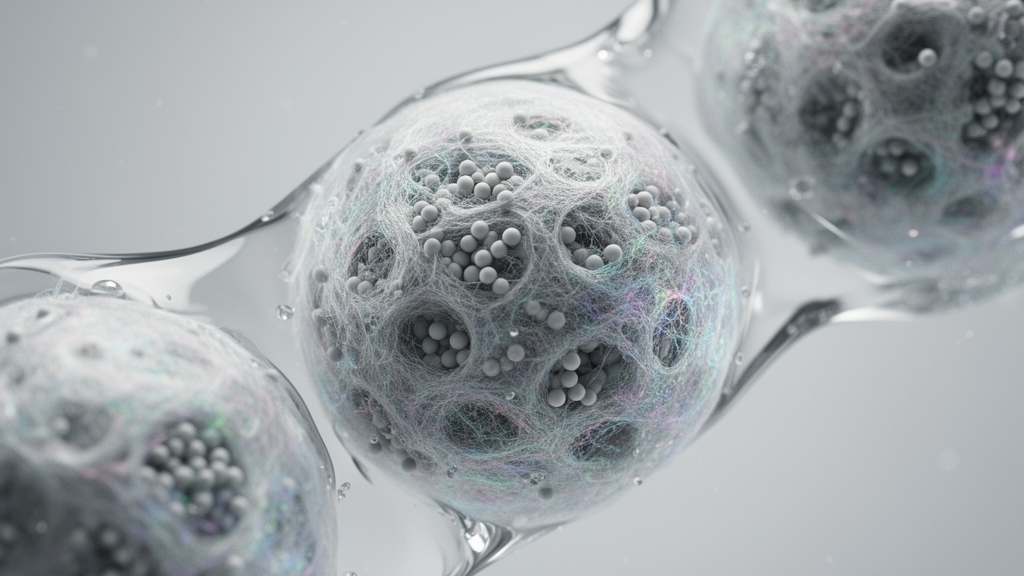
Published in BMC Biotechnology, the study introduces a modified recombinant protein known as DM4R2, which addresses specific limitations found in previous silk-based carriers. The primary innovation involves the incorporation of an aspartic acid residue into the protein sequence, a structural change intended to improve the colloidal stability and drug affinity of the resulting particles. This work builds upon earlier findings regarding M4R2 silk particles, which had already demonstrated an efficient loading capacity for positively charged antitumor polypeptides, but suffered from insufficient stability and drug binding strength.
The previous M4R2 particles, while effective in loading certain drugs, required improvement in their ability to remain stable in suspension and maintain strong interactions with therapeutic agents. The study represents a significant step in the field of biomaterials, where spider silks are valued for their impressive material properties and their unique ability to self-assemble into various morphological structures suitable for drug delivery applications.
The design of the DM4R2 protein specifically targets the electrostatic interactions that govern drug loading and release. The incorporation of the aspartic acid residue results in a particle surface with a more negative charge compared to the original M4R2 particles. The study confirms that the DM4R2 particles exhibit greater stability than their predecessors, making them a more robust platform for pharmaceutical applications.
Safety is a critical consideration for any drug delivery system, and the study reports that the DM4R2 particles showed no cytotoxicity in the tests conducted. The researchers also evaluated the loading efficiency of two specific drugs: methotrexate (MTX), a small-molecule chemotherapeutic agent, and lysozyme, a protein drug. Both drugs were efficiently loaded onto the DM4R2 particles, with loading efficiencies reaching up to 90%. This high efficiency is attributed to strong electrostatic interactions between the negatively charged particles and the positively charged drug molecules, demonstrating the effectiveness of the design strategy.
A key advantage of the DM4R2 particles is their superior loading capacity for methotrexate. The study observed a maximum loading capacity of nearly 50% for MTX on the DM4R2 particles, which is a significant improvement over the approximately 35% loading capacity observed for the M4R2 particles. The results indicate that the structural modification of the silk protein has a direct and positive impact on its drug-carrying capabilities.
The study found that the DM4R2 particles exhibited a significantly higher release efficiency of drugs at a pH of 4.5. In contrast, the M4R2 particles showed greater release at a pH of 5.5. These differences in release profiles are consistent with the respective isoelectric points and electrostatic binding affinities of the two types of particles.
The study concludes that the DM4R2 particles are promising carriers for delivering both small-molecule chemotherapeutic drugs and protein drugs. The combination of reasonable loading capacity, high loading efficiency, and desired release efficiency makes this bioengineered system a strong candidate for future development in pharmaceutical applications. The work highlights the potential of recombinant spider silk proteins as versatile platforms for drug delivery, where minor structural modifications can lead to significant improvements in performance.
Subject of Research: Bioengineered recombinant spider silk particles for drug delivery
Article Title: Design and characterization of bioengineered recombinant protein-based particles DM4R2 for chemotherapeutic agent and protein drug delivery
Article References: Chen, H., Zhao, T., Peng, X., Huang, Q., Wei, S., Gu, L., & Chen, Y. (2026). Design and characterization of bioengineered recombinant protein-based particles DM4R2 for chemotherapeutic agent and protein drug delivery. BMC Biotechnology. https://doi.org/10.1186/s12896-026-01215-0
Image Credits: AI Generated
DOI: 10.1186/s12896-026-01215-0
Keywords: spider silk, drug delivery, recombinant protein, chemotherapy, biomaterials, methotrexate, lysozyme, colloidal stability, protein engineering, BMC Biotechnology, Design, characterization
Cite Scienmag News
Gregory Coleman. (November 8, 2026). New Spider Silk Particles Improve Drug Loading Stability. Scienmag. https://scienmag.com/new-spider-silk-particles-improve-drug-loading-stability/
Gregory Coleman. "New Spider Silk Particles Improve Drug Loading Stability." Scienmag, 8 November 2026, https://scienmag.com/new-spider-silk-particles-improve-drug-loading-stability/. Accessed 14 November 2026.
Gregory Coleman. "New Spider Silk Particles Improve Drug Loading Stability." Scienmag. November 8, 2026. https://scienmag.com/new-spider-silk-particles-improve-drug-loading-stability/




