

Monday, November 9, 2026
Science
No Result
View All Result
  • Login
  • HOME
  • SCIENCE NEWS
  • CONTACT US
  • HOME
  • SCIENCE NEWS
  • CONTACT US
No Result
View All Result
Scienmag
No Result
View All Result
Home Science News Biology

Scientists Reconstruct Human Chorion Emergence Using Hippo Pathway Modulation

November 7, 2026
in Biology
Drew Townsend
By Drew Townsend Scienmag Editorial Profile - Cell Biology
Reading Time: 2 mins read
0
Scientists Reconstruct Human Chorion Emergence Using Hippo Pathway Modulation

Scientists Reconstruct Human Chorion Emergence Using Hippo Pathway Modulation

65
SHARES
587
VIEWS
Share on FacebookShare on Twitter
ADVERTISEMENT

In a technical report published in Nature Cell Biology, researchers establish a developmentally informed human stem cell model that reconstructs the emergence of the human chorion. To investigate this developmental trajectory, the authors demonstrated that targeted inhibition of LATS kinase directly initiates trophectoderm differentiation without requiring any exogenous morphogens.

To evaluate how closely the in vitro model mirrors natural developmental milestones, the researchers stage-matched the differentiation program against an integrated embryo–chorion single-cell reference atlas. This comprehensive single-cell comparison revealed a coordinated and ordered developmental progression advancing systematically from early trophectoderm cells to secondary chorionic lineages. Furthermore, detailed analyses of temporal gene expression dynamics downstream of LATS kinase inhibition confirmed that the induced differentiation program accurately tracks the natural embryonic trophoblast trajectory over time.

The investigation also provided comprehensive transcriptional and DNA methylome characterization of the differentiation program induced by Hippo pathway modulation. Whole-genome bisulfite sequencing revealed that cells undergo pronounced epigenetic remodeling during the transition, passing through a naive-like hypomethylated state that is subsequently followed by widespread remethylation. Crucially, despite this extensive global epigenetic reset, key known placenta-associated imprinted domains successfully retained their characteristic DNA methylation patterns as well as their parent-of-origin allelic bias.

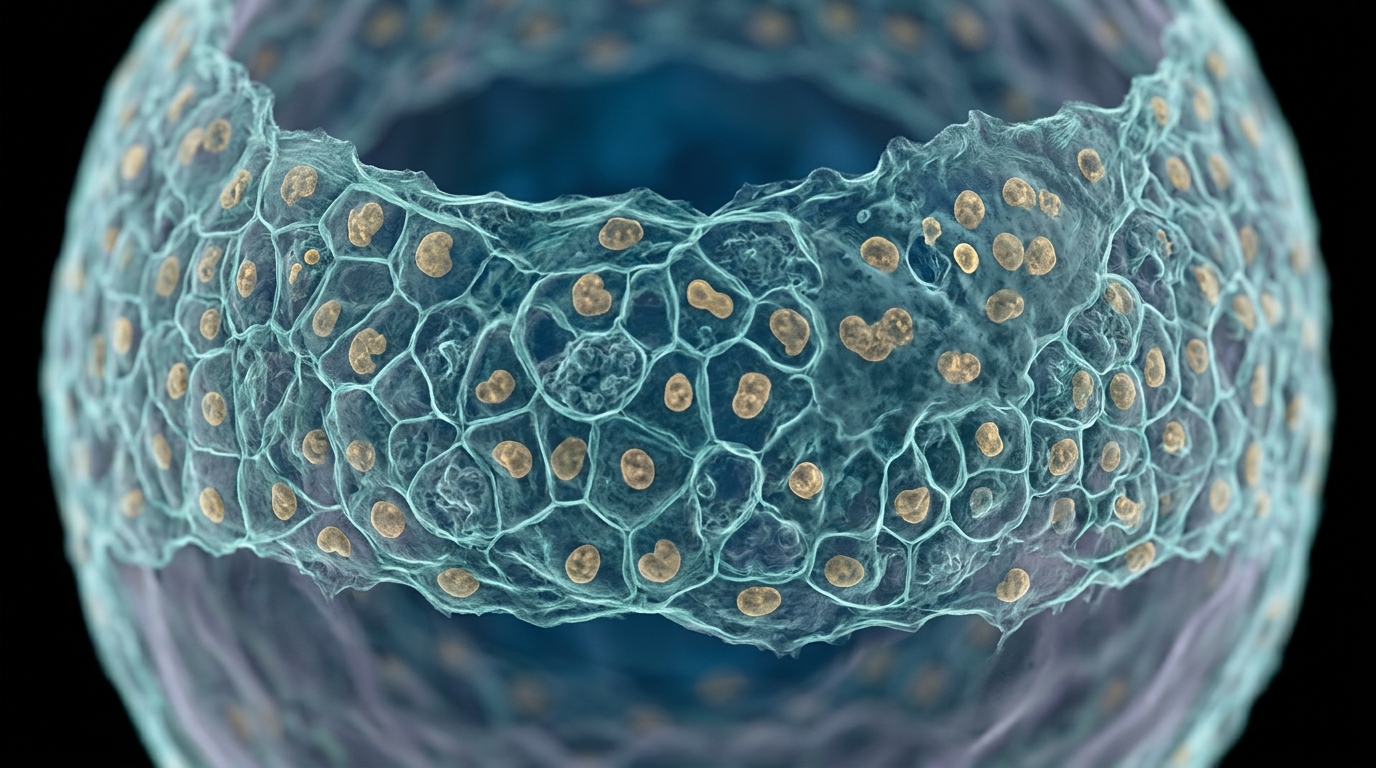
Moving beyond two-dimensional culture, the authors established a three-dimensional human chorion model by agitating induced-cell aggregates in suspension culture. Structural characterization showed that these aggregates developed an outward-facing trophoblast polarity along with an inside-out stromal–epithelial topology, effectively reproducing key architectural aspects of human chorion development.

Finally, the authors dissected downstream signalling pathways and transitional cell identities, determining that endogenous WNT signalling was dispensable for initial trophectoderm induction but critically regulated later chorionic lineage balance. In addition, prospective isolation of cells marked by the specific surface profile CLDN6+ITGA6− identified a distinct proEVT-like trophoblast intermediate. Lineage potential assays demonstrated that this intermediate retains both villous and extravillous trophoblast developmental potential. Taken together, this experimental framework directly connects human trophectoderm induction to three-dimensional chorion modelling, providing a tractable in vitro platform that enables future investigation of the mechanisms governing early human placental specification.

Subject of Research: Stem cell modeling of human trophectoderm induction and chorion self-organization

Article Title: Reconstructing the emergence of the human chorion via Hippo-mediated trophoblast induction

Article References: Zhang, M., Lim, R. L., Reis, A. H., Piszker, W., Boyd, W. W., Pagon, A., Mahajan, A., Wu, L., Zhao, C., Petropoulos, S., Ronda, C., & Simunovic, M. (2026). Reconstructing the emergence of the human chorion via Hippo-mediated trophoblast induction. Nature Cell Biology. https://doi.org/10.1038/s41556-026-02082-9

Image Credits: AI Generated

DOI: 10.1038/s41556-026-02082-9

Keywords: human chorion, trophectoderm, Hippo signalling, LATS kinase, trophoblast induction, stem cell model, DNA methylation, WNT signalling, Reconstructing, emergence, human, chorion

Cite Scienmag News

Drew Townsend. (November 7, 2026). Scientists Reconstruct Human Chorion Emergence Using Hippo Pathway Modulation. Scienmag. https://scienmag.com/scientists-reconstruct-human-chorion-emergence-using-hippo-pathway-modulation/

Drew Townsend. "Scientists Reconstruct Human Chorion Emergence Using Hippo Pathway Modulation." Scienmag, 7 November 2026, https://scienmag.com/scientists-reconstruct-human-chorion-emergence-using-hippo-pathway-modulation/. Accessed 9 November 2026.

Drew Townsend. "Scientists Reconstruct Human Chorion Emergence Using Hippo Pathway Modulation." Scienmag. November 7, 2026. https://scienmag.com/scientists-reconstruct-human-chorion-emergence-using-hippo-pathway-modulation/

Tags: chorionDNA MethylationemergenceHippo signallinghumanhuman chorionLATS kinaseReconstructingstem cell modeltrophectodermtrophoblast inductionWnt signalling
Share26Tweet16
Previous Post

Hospital care among French centenarians shifts toward emergency admissions and rehabilitation

Next Post

Northwestern Turkish Population Genetic Profile Mapped Across 23 Autosomal STR Loci

Related Posts

Study Maps Global Research Trends in Adipose Thermogenesis and Mitochondrial Interactions
Biology

Study Maps Global Research Trends in Adipose Thermogenesis and Mitochondrial Interactions

November 9, 2026
Body Size Changes May Initiate Evolutionary Divergence
Biology

Body Size Changes May Initiate Evolutionary Divergence

November 9, 2026
Demethylzeylasteral Suppresses Mammary Tumor Growth by Modulating MDM2-p21 Signaling
Biology

Demethylzeylasteral Suppresses Mammary Tumor Growth by Modulating MDM2-p21 Signaling

November 9, 2026
Eyeless Mite Embryos Transiently Activate Vestigial Eye Genes During Brain Development
Biology

Eyeless Mite Embryos Transiently Activate Vestigial Eye Genes During Brain Development

November 9, 2026
Loss of BMP15 Gene Function Does Not Abolish Male Atlantic Salmon Fertility
Biology

Loss of BMP15 Gene Function Does Not Abolish Male Atlantic Salmon Fertility

November 9, 2026
Air-Powered Tagging Tracks Free-Swimming Sharks Without Capture
Biology

Air-Powered Tagging Tracks Free-Swimming Sharks Without Capture

November 9, 2026
Next Post
Northwestern Turkish Population Genetic Profile Mapped Across 23 Autosomal STR Loci

Northwestern Turkish Population Genetic Profile Mapped Across 23 Autosomal STR Loci

  • Mothers who receive childcare support from maternal grandparents show more optimized

    Mothers who receive childcare support from maternal grandparents show more parental warmth, finds NTU Singapore study

    27656 shares
    Share 11059 Tweet 6912
  • University of Seville Breaks 120-Year-Old Mystery, Revises a Key Einstein Concept

    1061 shares
    Share 424 Tweet 265
  • Bee body mass, pathogens and local climate influence heat tolerance

    682 shares
    Share 273 Tweet 171
  • Researchers record first-ever images and data of a shark experiencing a boat strike

    546 shares
    Share 218 Tweet 137
  • Groundbreaking Clinical Trial Reveals Lubiprostone Enhances Kidney Function

    531 shares
    Share 212 Tweet 133
Science

Embark on a thrilling journey of discovery with Scienmag.com—your ultimate source for cutting-edge breakthroughs. Immerse yourself in a world where curiosity knows no limits and tomorrow’s possibilities become today’s reality!

RECENT NEWS

  • Cellular Study Links Hepatitis B Mutation to Altered Liver Cell Mechanics
  • Standardized Test Assesses Nutrition Knowledge Among Rural Women in Uttar Pradesh
  • Meta-Analysis Assesses Targeted Therapies for MET-Altered Non-Small Cell Lung Cancer
  • Deep Learning System Separates Rhythmic Brain Waves from Background Neural Noise

Categories

  • Agriculture
  • Anthropology
  • Archaeology
  • Athmospheric
  • Biology
  • Biotechnology
  • Blog
  • Bussines
  • Cancer
  • Chemistry
  • Climate
  • Earth Science
  • Editorial Policy
  • Marine
  • Mathematics
  • Medicine
  • Pediatry
  • Policy
  • Psychology & Psychiatry
  • Science Education
  • Science News
  • Social Science
  • Space
  • Technology and Engineering

Subscribe to Blog via Email

Enter your email address to subscribe to this blog and receive notifications of new posts by email.

Join 5,150 other subscribers

© 2025 Scienmag - Science Magazine

Welcome Back!

Login to your account below

Forgotten Password?

Retrieve your password

Please enter your username or email address to reset your password.

Log In
No Result
View All Result
  • HOME
  • SCIENCE NEWS
  • CONTACT US

© 2025 Scienmag - Science Magazine

Discover more from Science

Subscribe now to keep reading and get access to the full archive.

Continue reading

