

Sunday, November 15, 2026
Science
No Result
View All Result
  • Login
  • HOME
  • SCIENCE NEWS
  • CONTACT US
  • HOME
  • SCIENCE NEWS
  • CONTACT US
No Result
View All Result
Scienmag
No Result
View All Result
Home Science News Biology

Review Challenges Classical Monocyte Differentiation and Evaluates Humanized Mouse Models

November 7, 2026
in Biology
Drew Townsend
By Drew Townsend Scienmag Editorial Profile - Cell Biology
Reading Time: 2 mins read
0
Review Challenges Classical Monocyte Differentiation and Evaluates Humanized Mouse Models

Review Challenges Classical Monocyte Differentiation and Evaluates Humanized Mouse Models

65
SHARES
587
VIEWS
Share on FacebookShare on Twitter
ADVERTISEMENT

The classical mononuclear phagocyte system model, which defines a unidirectional trajectory from bone marrow-derived monocytes to terminal tissue macrophages, is undergoing fundamental change. Recent advances in genetic fate mapping and single-cell transcriptomics reveal that most tissue-resident macrophages arise from embryonic precursors and sustain their populations through local self-renewal rather than continuous monocytic recruitment.

In a mini-review published in Cellular & Molecular Biology Letters, researchers synthesize current findings on the hierarchical commitment of murine and human monocytes. The authors highlight evolutionary divergences in phenotypic markers and regulatory checkpoints between the two species, noting that these differences frequently impede clinical translation.

The review examines the transition of circulating monocytes from inflammatory first responders to patrolling vascular guardians. Furthermore, the authors evaluate the molecular mechanisms that regulate how circulating cells extravasate into specialized tissue niches across the body.

Challenging the long-standing terminal differentiation hypothesis, the authors evaluate emerging evidence for myeloid plasticity and recirculation. By analyzing molecular footprinting and the migration of macrophages into lymphatic compartments, the review proposes an updated framework in which these cells function as mobile messengers rather than strictly resident effectors.

To help resolve these paradigms in human immunobiology, the authors evaluate first- and second-generation humanized mouse models, including NSG-derived, cytokine knock-in MI[S]TRG, and cKit-mutant strains. The review details the comparative strengths and limitations of these model systems for investigating human monocyte trafficking and macrophage recirculation.

Subject of Research: Comparative monocyte and macrophage development and humanized mouse models

Article Title: Comparative development and migratory trajectories of human and murine monocyte–macrophage systems: potential use of next-generation humanized mouse models

Article References: de Jager, A. L., van der Pan, K., Louis, A., Kassem, S., Naber, B. A. E., de Laat, I. F., Staal, F. J. T., van Dongen, J. J. M., Díez, P., & Teodosio, C. (2026). Comparative development and migratory trajectories of human and murine monocyte–macrophage systems: potential use of next-generation humanized mouse models. Cellular & Molecular Biology Letters. https://doi.org/10.1186/s11658-026-01030-7

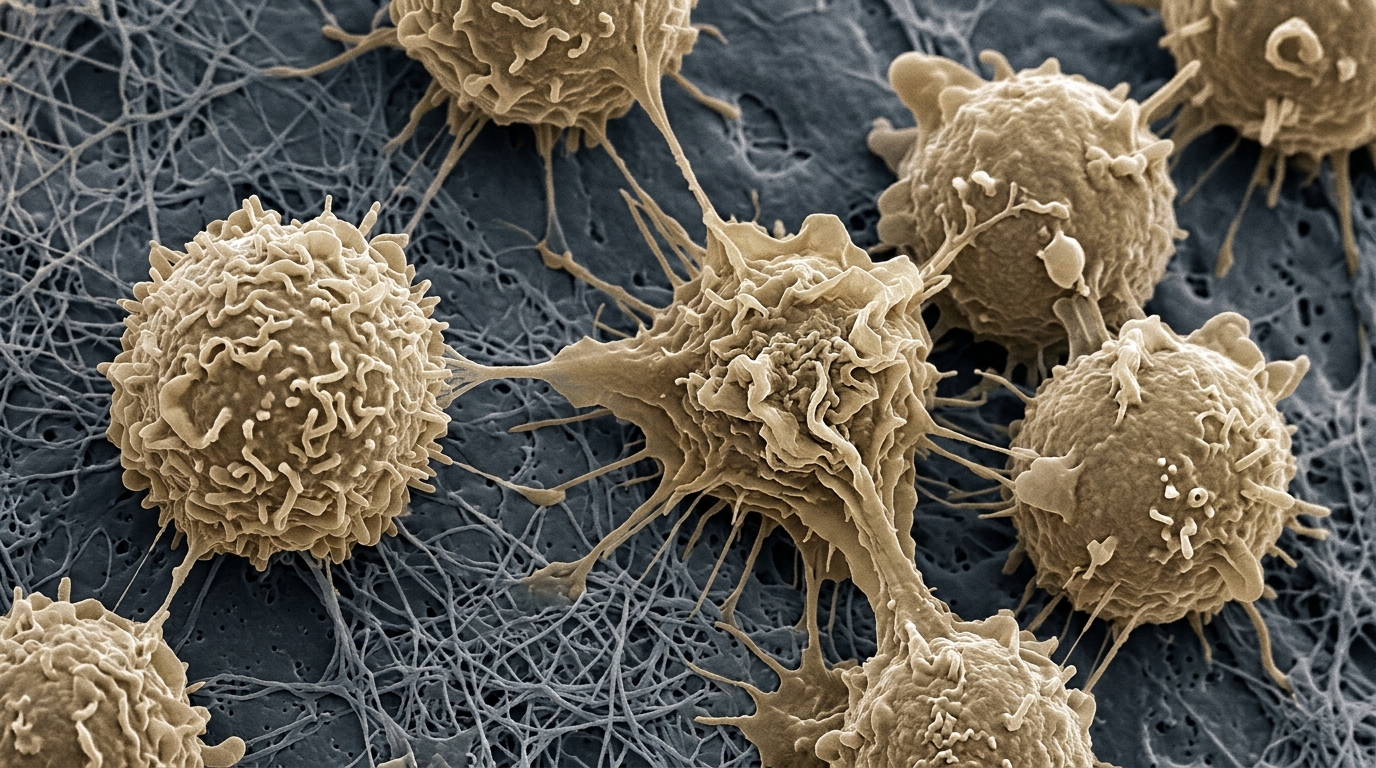
Image Credits: AI Generated

DOI: 10.1186/s11658-026-01030-7

Keywords: mononuclear phagocyte system, monocytes, tissue-resident macrophages, humanized mouse models, myeloid plasticity, single-cell transcriptomics, fate mapping, immunobiology, Comparative, development, migratory, trajectories

Cite Scienmag News

Drew Townsend. (November 7, 2026). Review Challenges Classical Monocyte Differentiation and Evaluates Humanized Mouse Models. Scienmag. https://scienmag.com/review-challenges-classical-monocyte-differentiation-and-evaluates-humanized-mouse-models/

Drew Townsend. "Review Challenges Classical Monocyte Differentiation and Evaluates Humanized Mouse Models." Scienmag, 7 November 2026, https://scienmag.com/review-challenges-classical-monocyte-differentiation-and-evaluates-humanized-mouse-models/. Accessed 15 November 2026.

Drew Townsend. "Review Challenges Classical Monocyte Differentiation and Evaluates Humanized Mouse Models." Scienmag. November 7, 2026. https://scienmag.com/review-challenges-classical-monocyte-differentiation-and-evaluates-humanized-mouse-models/

Tags: comparativedevelopmentfate mappinghumanized mouse modelsimmunobiologyMigratorymonocytesmononuclear phagocyte systemmyeloid plasticitysingle-cell transcriptomicstissue-resident macrophagestrajectories
Share26Tweet16
Previous Post

Past Uneventful Anesthesia Does Not Exclude Malignant Hyperthermia Susceptibility

Next Post

Automated One-Step Radiosynthesis of Ga-68 FAPI-46 Validated for Clinical PET Production

Related Posts

Solitary Ascidian Styela plicata Exhibits Diurnal Behavioral and Neural Rhythms
Biology

Solitary Ascidian Styela plicata Exhibits Diurnal Behavioral and Neural Rhythms

November 15, 2026
Galectin-3 Restricts Dengue Virus Infection Through Envelope Binding and Immune Signaling
Biology

Galectin-3 Restricts Dengue Virus Infection Through Envelope Binding and Immune Signaling

November 15, 2026
Host Epigenetic Controls and Immune Responses Regulate Human Adenovirus Latency
Biology

Host Epigenetic Controls and Immune Responses Regulate Human Adenovirus Latency

November 15, 2026
Comprehensive Review Details Ovarian Theca Cell Development and Critical Endocrine Functions
Biology

Comprehensive Review Details Ovarian Theca Cell Development and Critical Endocrine Functions

November 15, 2026
Over Half of Southern Italian Hunting Dogs Harbor Parasites, Survey Finds
Biology

Over Half of Southern Italian Hunting Dogs Harbor Parasites, Survey Finds

November 15, 2026
Engineered Phycosphere Microbiomes Could Stabilize Open Wastewater Algal Ponds Against Crashes
Biotechnology

Engineered Phycosphere Microbiomes Could Stabilize Open Wastewater Algal Ponds Against Crashes

November 15, 2026
Next Post
Automated One-Step Radiosynthesis of Ga-68 FAPI-46 Validated for Clinical PET Production

Automated One-Step Radiosynthesis of Ga-68 FAPI-46 Validated for Clinical PET Production

  • Mothers who receive childcare support from maternal grandparents show more optimized

    Mothers who receive childcare support from maternal grandparents show more parental warmth, finds NTU Singapore study

    27656 shares
    Share 11059 Tweet 6912
  • University of Seville Breaks 120-Year-Old Mystery, Revises a Key Einstein Concept

    1061 shares
    Share 424 Tweet 265
  • Bee body mass, pathogens and local climate influence heat tolerance

    682 shares
    Share 273 Tweet 171
  • Researchers record first-ever images and data of a shark experiencing a boat strike

    546 shares
    Share 218 Tweet 137
  • Groundbreaking Clinical Trial Reveals Lubiprostone Enhances Kidney Function

    531 shares
    Share 212 Tweet 133
Science

Embark on a thrilling journey of discovery with Scienmag.com—your ultimate source for cutting-edge breakthroughs. Immerse yourself in a world where curiosity knows no limits and tomorrow’s possibilities become today’s reality!

RECENT NEWS

  • Severe Delusion-Dominant Psychosis Marks Atypical Parkinson’s Disease Case Report
  • Repeated Heat Waves Linked to Childhood Adversity and Distress in Nepal
  • Extending Planned Behaviour Model in Sport Research Risks Weakening Theoretical Rigour
  • Distinct Genomic Landscapes Distinguish Survival Outcomes in Systemic Anaplastic Large Cell Lymphomas

Categories

  • Agriculture
  • Anthropology
  • Archaeology
  • Athmospheric
  • Biology
  • Biotechnology
  • Blog
  • Bussines
  • Cancer
  • Chemistry
  • Climate
  • Earth Science
  • Editorial Policy
  • Marine
  • Mathematics
  • Medicine
  • Pediatry
  • Policy
  • Psychology & Psychiatry
  • Science Education
  • Science News
  • Social Science
  • Space
  • Technology and Engineering

Subscribe to Blog via Email

Enter your email address to subscribe to this blog and receive notifications of new posts by email.

Join 5,150 other subscribers

© 2026 Scienmag - Science Magazine

Welcome Back!

Login to your account below

Forgotten Password?

Retrieve your password

Please enter your username or email address to reset your password.

Log In
No Result
View All Result
  • HOME
  • SCIENCE NEWS
  • CONTACT US

© 2026 Scienmag - Science Magazine

Discover more from Science

Subscribe now to keep reading and get access to the full archive.

Continue reading

