


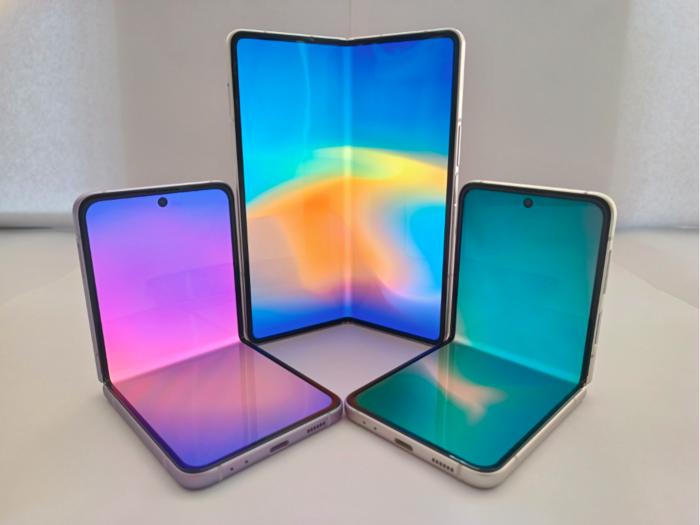
Organic light-emitting diodes (OLEDs) have profoundly transformed the landscape of display technology, becoming an indispensable component in devices ranging from foldable smartphones to ultrathin television screens. Their inherent advantages—such as flexibility, self-emission, lightweight construction, and superior contrast—have fueled widespread adoption and inspired ongoing research to enhance their performance and longevity. However, these multilayered organic film structures are vulnerable to charge accumulation and interface degradation, which pose significant challenges to device stability and efficiency. Addressing these hurdles necessitates a deep understanding of the electrical charge dynamics and electronic structure at the molecular interfaces within OLEDs.
A team of researchers at Chiba University, led by Professor Takayuki Miyamae, has made a groundbreaking stride in this direction by employing a sophisticated nonlinear spectroscopic method known as electronic sum-frequency generation (ESFG) spectroscopy. This avant-garde technique enables the direct probing of vibrational and electronic properties at OLED interfaces under operational voltages, providing unprecedented insights into the way charges behave and redistribute across the device’s organic layers. Their seminal work, published in the Journal of Materials Chemistry C, breaks new ground in the characterization of solid-state thin-film devices and paves the way for inventing more durable and efficient OLEDs.
The challenge of exploring the electronic structure at OLED interfaces under real operating conditions is immense. Conventional characterization tools often fall short because they either lack the required surface/interface specificity or are destructive, compromising the delicate device architecture. ESFG spectroscopy overcomes these limitations by combining vibrational spectroscopy’s chemical specificity with nonlinear optical sensitivity confined to interfaces, allowing in situ, non-invasive observation of charge-induced electronic changes. When voltage is applied, the resultant charge recombination at the organic interfaces modulates the sum-frequency signal, thereby encoding detailed information about local electric fields and molecular interactions.
In their study, Miyamae’s team meticulously examined three multilayer OLED devices with distinct organic layer compositions, applying ESFG spectroscopy to detect spectral variations linked to electronic charges and field strengths within the devices. By correlating spectral bands with individual organic layers through absorption spectrum comparisons and layer designs, they identified material-specific responses to applied voltages. Notably, an increase in signal intensity was observed at the absorption band associated with hole transport materials, indicative of positive charge accumulation, while the emission layer’s spectral intensity decreased. These opposing trends illustrate differential charge distribution and field modulation critical for understanding charge transport and emission efficiency.
The team further expanded their investigation by applying dynamic square-wave voltage pulses to evaluate temporal evolution of internal electric fields and charge motion. Interestingly, the introduction of BAlq, a commonly employed electron transport molecule, was found to shift the emission zone location within the OLED. Such spatial shifts in light generation critically influence the emitted color purity, emission pattern, and ultimately, the quantum efficiency of the device. By capturing these subtleties, ESFG spectroscopy not only reveals static charge states but also dynamic processes underpinning OLED operation.
Professor Miyamae emphasizes the novelty and power of ESFG as a nondestructive, interface-sensitive optical probe that can quantify electric field generation induced by injected charges inside thin-film devices. This capability offers researchers a potent new window into the fundamental phenomena dictating OLED performance and degradation. As OLED technologies become increasingly sophisticated and feature complex multilayer architectures, tools such as ESFG will be essential for guiding optimized material selection and device engineering.
From a practical standpoint, the insights gleaned through ESFG spectroscopy herald a promising future for OLED development. By elucidating precisely how charges accumulate, migrate, and influence vibrational states at the nanoscale, materials scientists are empowered to rationally tailor organic layers that resist degradation, improve charge balance, and maximize light output. Consequently, device lifetimes can be extended and energy consumption reduced, benefiting both manufacturers and consumers. These improvements will accelerate the integration of flexible, wearable, and transparent OLED technologies into everyday life.
Furthermore, this research methodology promises to transform the iterative and time-consuming processes traditionally associated with OLED materials development. Currently, researchers often rely on trial-and-error synthesis followed by prolonged device aging tests to gauge efficiency and stability. The application of ESFG spectroscopy enables rapid, in situ evaluation of candidate materials’ electronic and vibrational characteristics under realistic conditions, significantly shortening development cycles and enhancing experimental efficiency.
Professor Takayuki Miyamae’s distinguished academic career has been centered on probing the intricate electronic structures and charge transport phenomena in conducting polymers and organic semiconductor interfaces. His leadership in this project exemplifies how interdisciplinary expertise integrating physical chemistry, materials science, and optical physics can tackle pressing technological bottlenecks. With over 130 publications and substantial citations, his work continues to shape the path towards next-generation organic optoelectronic devices.
This research underscores a broader trend of leveraging advanced spectroscopic and imaging techniques to decode interfacial phenomena fundamental to electronic device operation. As devices shrink to nanometer dimensions and complexity escalates, interface behavior increasingly dictates overall performance. Technologies like ESFG spectroscopy thus play a vital role in bridging experimental observation with theoretical models, enabling materials innovation grounded on robust scientific understanding.
Looking ahead, the integration of ESFG spectroscopy routines into standard OLED characterization protocols will likely encourage complementary investigations into organic photovoltaics, sensors, and other organic electronic systems where interface charge dynamics are crucial. The ability to non-invasively monitor operational interfaces in real-time offers opportunities for adaptive control and diagnostics, further pushing the frontiers of organic electronics and photonics.
In sum, the pioneering work of Professor Miyamae and colleagues represents a landmark in OLED research, delivering a powerful spectroscopic tool to unravel the complexities of charge behavior at organic interfaces. Their achievements promise tangible benefits in device robustness, energy efficiency, and cost-effectiveness, fortifying the prospects of OLED technology in consumer electronics, lighting, and beyond. As the field accelerates toward ubiquitous, high-performance organic devices, ESFG spectroscopy emerges as an invaluable asset in the quest for sustainable, next-generation optoelectronics.
—
News Publication Date: 10-Mar-2025
Web References:
https://pubs.rsc.org/en/content/articlelanding/2025/tc/d4tc04970e
http://dx.doi.org/10.1039/d4tc04970e
Keywords
Organic light-emitting diodes, OLED, electronic sum-frequency generation spectroscopy, ESFG, charge behavior, multilayer interfaces, vibrational spectroscopy, non-linear optics, organic semiconductors, device efficiency, charge accumulation, electric field mapping, BAlq, hole transport layer, emission layer, optoelectronics, solid-state devices, interface science
Cite Scienmag News
Bethany Barker. (April 23, 2025). Exploring Charge Dynamics in Multilayer OLEDs with Advanced Laser Spectroscopy. Scienmag. https://scienmag.com/exploring-charge-dynamics-in-multilayer-oleds-with-advanced-laser-spectroscopy/
Bethany Barker. "Exploring Charge Dynamics in Multilayer OLEDs with Advanced Laser Spectroscopy." Scienmag, 23 April 2025, https://scienmag.com/exploring-charge-dynamics-in-multilayer-oleds-with-advanced-laser-spectroscopy/. Accessed 6 September 2026.
Bethany Barker. "Exploring Charge Dynamics in Multilayer OLEDs with Advanced Laser Spectroscopy." Scienmag. April 23, 2025. https://scienmag.com/exploring-charge-dynamics-in-multilayer-oleds-with-advanced-laser-spectroscopy/


