

Saturday, October 31, 2026
Science
No Result
View All Result
  • Login
  • HOME
  • SCIENCE NEWS
  • CONTACT US
  • HOME
  • SCIENCE NEWS
  • CONTACT US
No Result
View All Result
Scienmag
No Result
View All Result
Home Science News Biotechnology

Machine learning model predicts early pregnancy loss after IVF using five routine clinical markers

October 30, 2026
in Biology, Biotechnology, Technology and Engineering
Harold Sullivan
By Harold Sullivan Scienmag Editorial Profile - Maternal and Child Health
Reading Time: 2 mins read
0
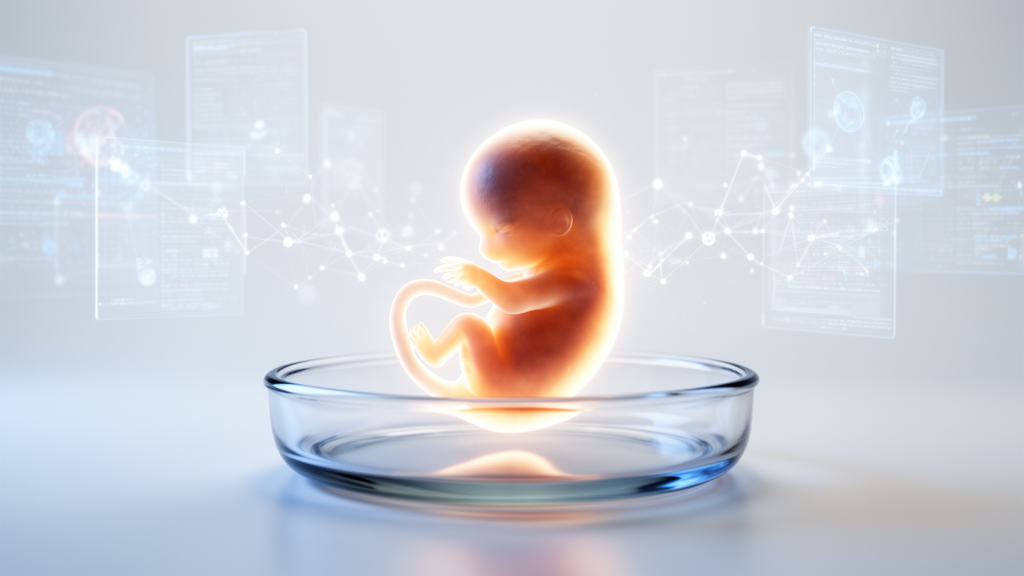
Machine learning model predicts early pregnancy loss after IVF using five routine clinical markers

Machine learning model predicts early pregnancy loss after IVF using five routine clinical markers

65
SHARES
587
VIEWS
Share on FacebookShare on Twitter
ADVERTISEMENT

Researchers have developed a machine learning model that estimates the risk of early pregnancy loss after in vitro fertilization or intracytoplasmic sperm injection using five indicators that fertility clinics already collect routinely. The retrospective cohort study, published in BioData Mining, analyzed data from couples undergoing their first IVF/ICSI cycle and produced an online risk calculator intended to support counseling and risk stratification.

The study included 1,201 couples whose first IVF/ICSI cycle resulted in an ultrasound-confirmed intrauterine clinical pregnancy. Outcomes across the study population comprised 979 live births and 222 cases of early pregnancy loss, providing a substantial basis for model development.

Feature selection combined univariable analysis, Boruta, and LASSO regression to identify the most relevant routine clinical features.

Five core predictors emerged from the selection process: female age, body mass index, basal follicle-stimulating hormone, platelet count, and thyroid-stimulating hormone. All five are standard measurements gathered during fertility workups, which means the model can be applied without additional testing or cost. Among the evaluated algorithms, XGBoost, a gradient-boosted decision tree method, showed the highest area under the receiver operating characteristic curve together with a relatively low Brier score, indicating both strong discrimination and well-calibrated probability estimates.

The SHAP analysis ranked basal follicle-stimulating hormone as the largest contributor to the model’s output, followed by body mass index, thyroid-stimulating hormone, female age, and platelet count. This ordering offers clinicians a transparent view of which factors drive an estimated risk in a given patient.

Because the model relies exclusively on routinely available indicators, the authors suggest it could be integrated into clinical workflows with minimal friction, and a web-based calculator was developed to facilitate its implementation.

The researchers are careful to frame the tool’s status. Their conclusion states that the XGBoost model based on the five indicators may assist in estimating early pregnancy loss risk after IVF/ICSI, that it is intended to support risk stratification and counseling, and that it requires external validation before broader use.

As a retrospective, single-cohort study, the work establishes an internally validated predictive tool rather than a clinically deployed one. The reported performance figures, the identified predictor panel, and the SHAP-based interpretation together describe a model that estimates risk from data clinics already hold, with its real-world value still to be confirmed in independent populations.

Subject of Research: Machine learning prediction of early pregnancy loss after IVF/ICSI using routine clinical features

Article Title: A machine learning–based prediction model for early pregnancy loss after IVF/ICSI: a retrospective cohort study

Article References: Li, H., Zhang, R., & Li, Y. (2026). A machine learning–based prediction model for early pregnancy loss after IVF/ICSI: a retrospective cohort study. BioData Mining. https://doi.org/10.1186/s13040-026-00599-1

Image Credits: AI Generated

DOI: 10.1186/s13040-026-00599-1

Keywords: machine learning, early pregnancy loss, IVF, ICSI, XGBoost, prediction model, SHAP, risk stratification, retrospective cohort, assisted reproduction, BioData Mining, machine

Cite Scienmag News

Harold Sullivan. (October 30, 2026). Machine learning model predicts early pregnancy loss after IVF using five routine clinical markers. Scienmag. https://scienmag.com/machine-learning-model-predicts-early-pregnancy-loss-after-ivf-using-five-routine-clinical-markers/

Harold Sullivan. "Machine learning model predicts early pregnancy loss after IVF using five routine clinical markers." Scienmag, 30 October 2026, https://scienmag.com/machine-learning-model-predicts-early-pregnancy-loss-after-ivf-using-five-routine-clinical-markers/. Accessed 31 October 2026.

Harold Sullivan. "Machine learning model predicts early pregnancy loss after IVF using five routine clinical markers." Scienmag. October 30, 2026. https://scienmag.com/machine-learning-model-predicts-early-pregnancy-loss-after-ivf-using-five-routine-clinical-markers/

Tags: assisted reproductionbasal follicle-stimulating hormoneBioData Miningclinical feature selection in IVFearly pregnancy lossfertility clinic data analysisICSIin vitro fertilization risk assessmentIVFIVF early pregnancy loss predictionmachineMachine learningmachine learning fertility modelprediction modelpredictive analytics in reproductive medicinepregnancy outcome risk calculatorretrospective cohortrisk stratificationrisk stratification in IVF patientsroutine clinical markers in IVFSHAPSHAP analysis for model interpretabilityXGBoostXGBoost model for pregnancy loss
Share26Tweet16
Previous Post

Pretomanid resistance found in 4.5% of tuberculosis isolates in China

Next Post

Parachute Sprint Training Shows Promise but Evidence Stays Weak, Review Finds

Related Posts

Microbial Sources and Stress Shape the Hidden Endophytes of an Invasive Plant
Biology

Microbial Sources and Stress Shape the Hidden Endophytes of an Invasive Plant

October 30, 2026
Firebreaks Leave Lasting Scars in Grasslands While Wildfire Heals Fast
Biology

Firebreaks Leave Lasting Scars in Grasslands While Wildfire Heals Fast

October 30, 2026
Systematic review maps sustainability tensions in offshore wind development
Climate

Systematic review maps sustainability tensions in offshore wind development

October 30, 2026
Amateur maps and sketches helped put Hong Kong’s wartime pillboxes on official charts
Archaeology

Amateur maps and sketches helped put Hong Kong’s wartime pillboxes on official charts

October 30, 2026
Heavier logging trucks only pay off when the road network lets them work
Technology and Engineering

Heavier logging trucks only pay off when the road network lets them work

October 30, 2026
One gene locus flags atrial fibrillation risk after major surgery, UK Biobank study finds
Medicine

One gene locus flags atrial fibrillation risk after major surgery, UK Biobank study finds

October 30, 2026
Next Post
Parachute Sprint Training Shows Promise but Evidence Stays Weak, Review Finds

Parachute Sprint Training Shows Promise but Evidence Stays Weak, Review Finds

  • Mothers who receive childcare support from maternal grandparents show more optimized

    Mothers who receive childcare support from maternal grandparents show more parental warmth, finds NTU Singapore study

    27656 shares
    Share 11059 Tweet 6912
  • University of Seville Breaks 120-Year-Old Mystery, Revises a Key Einstein Concept

    1061 shares
    Share 424 Tweet 265
  • Bee body mass, pathogens and local climate influence heat tolerance

    682 shares
    Share 273 Tweet 171
  • Researchers record first-ever images and data of a shark experiencing a boat strike

    546 shares
    Share 218 Tweet 137
  • Groundbreaking Clinical Trial Reveals Lubiprostone Enhances Kidney Function

    531 shares
    Share 212 Tweet 133
Science

Embark on a thrilling journey of discovery with Scienmag.com—your ultimate source for cutting-edge breakthroughs. Immerse yourself in a world where curiosity knows no limits and tomorrow’s possibilities become today’s reality!

RECENT NEWS

  • Trademarks Meet Patents in New Method to Spot Technology Opportunities
  • Reddit self-declarations offer auditable labels for demographic inference
  • Scots pine needles map trace element pollution in Polish industrial town
  • Dual-blockchain scheme secures vehicle handovers without pre-shared keys

Categories

  • Agriculture
  • Anthropology
  • Archaeology
  • Athmospheric
  • Biology
  • Biotechnology
  • Blog
  • Bussines
  • Cancer
  • Chemistry
  • Climate
  • Earth Science
  • Editorial Policy
  • Marine
  • Mathematics
  • Medicine
  • Pediatry
  • Policy
  • Psychology & Psychiatry
  • Science Education
  • Science News
  • Social Science
  • Space
  • Technology and Engineering

Subscribe to Blog via Email

Enter your email address to subscribe to this blog and receive notifications of new posts by email.

Join 5,150 other subscribers

© 2025 Scienmag - Science Magazine

Welcome Back!

Login to your account below

Forgotten Password?

Retrieve your password

Please enter your username or email address to reset your password.

Log In
No Result
View All Result
  • HOME
  • SCIENCE NEWS
  • CONTACT US

© 2025 Scienmag - Science Magazine

Discover more from Science

Subscribe now to keep reading and get access to the full archive.

Continue reading




