
Saturday, February 7, 2026
Science
No Result
View All Result
  • Login
  • HOME
  • SCIENCE NEWS
  • CONTACT US
  • HOME
  • SCIENCE NEWS
  • CONTACT US
No Result
View All Result
Scienmag
No Result
View All Result
Home Science News Space

Surrey engineers help Mauritius spot illegal fishing from space

April 17, 2024
in Space
Reading Time: 2 mins read
0
Surrey engineers help Mauritius spot illegal fishing from space
67
SHARES
611
VIEWS
Share on FacebookShare on Twitter
ADVERTISEMENT

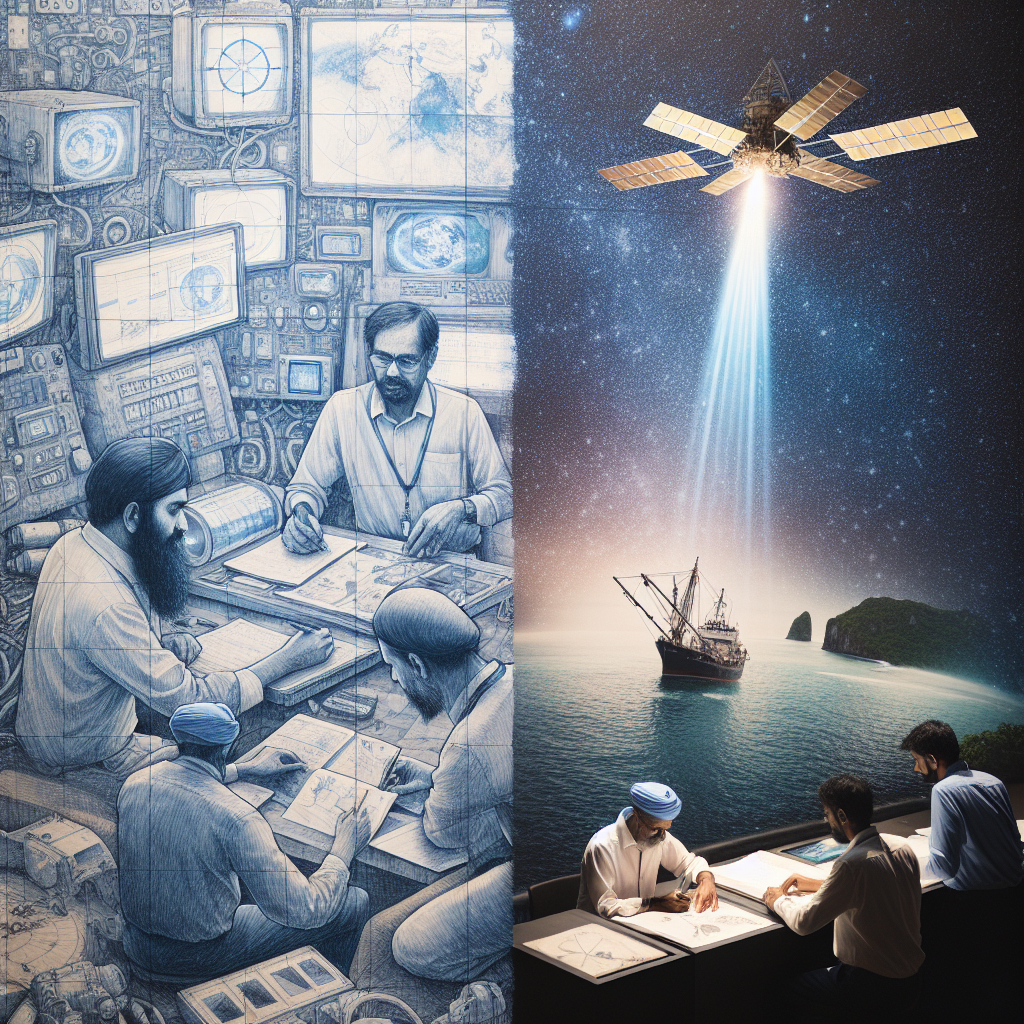
Authorities in Mauritius will begin combatting illegal fishing with satellite technology thanks to a partnership between the University of Surrey and the Mauritius Research and Innovation Council (MRIC).  

Authorities in Mauritius will begin combatting illegal fishing with satellite technology thanks to a partnership between the University of Surrey and the Mauritius Research and Innovation Council (MRIC).  

The Nereus project combines satellite images with other ship location data. It uses artificial intelligence (AI) to detect anomalies, spotting ships of interest and working out where they are headed. Authorities can then check whether illegal fishing is taking place.  

Dr Raffaella Guida, Reader in Satellite Remote Sensing at the Surrey Space Centre, at the University of Surrey, said:

“Catching vessels illegally fishing off an island such as Mauritius can be like finding a needle in a haystack. With our expertise in satellite data, we’ve been able to find a solution that identifies areas more at risk and supports the detection of suspicious behaviours at sea. 

“This is an exciting milestone in this rewarding project – and we’re looking forward to seeing how our partners in Mauritius use it to protect their precious marine environment.

Nereus, funded by the UN Development Programme’s UNDP Ocean Innovation Challenge, is a potent addition to Mauritius’s tools for detecting illegal maritime activity. It offers the chance to detect it in near-real time. 

The National Coast Guard accesses live satellite data. A plug-in developed at the University of Surrey will give the National Coast Guard access to Nereus as they do so. This will help them detect suspicious activity more precisely and then investigate it.

As the project nears completion, it will be celebrated at Mauritius’s first International Space Symposium on 18 April.  

Dr Vickram Bissonauth, Director of Research at the Mauritius Research and Innovation Council, said: 

“Three years after Mauritius launched its first satellite, we are proud to deploy our first downstream application of satellite data through Nereus.  

“This is a concrete example of how space technology research can help us in addressing challenges we face as a small island developing state.   

“Mauritius is ideally located, connected and equipped to build a thriving space sector. We’re looking forward to a bright future of extra-terrestrial exploration.” 

Dr Mary Matthews from the United Nations Development Programme said: 

“Illegal fishing is a multifaceted threat impacting economies, livelihoods, and nature.  

“UNDP supports frontline solutions and working with Mauritius through the Surrey Space Centre and MRIC allowed us to use the transformative power of technology and develop vital tools to combat this issue. Nereus brings new hope to the fight against illegal fishing.”


ENDS 


Share27Tweet17
Previous Post

Protecting brain cells with cannabinol

Next Post

Opioid dependence remains high but stable in Scotland, new surveillance report finds

Related Posts

blank
Space

Rising Toxicity Levels Hinder Global Efforts to Reduce Pesticide Use

February 6, 2026
blank
Space

New Model Links Animal Mobility to Population Dynamics

February 5, 2026
blank
Space

HKU and UCLA Researchers Discover Mechanism Behind ‘Space Battery’ Functioning in Auroral Regions

February 5, 2026
blank
Space

Final Opportunity for Hotel Discounts at the World’s Largest Physics Conference!

February 5, 2026
blank
Space

Revolutionary Blood Test Unveils Insights into Individual Infection Histories

February 4, 2026
blank
Space

First-Time Measurement of Invisible Particles Responsible for Star Formation

February 4, 2026
Next Post

Health improvements occurred worldwide since 2010 despite COVID-19 pandemic, but progress was uneven

  • Mothers who receive childcare support from maternal grandparents show more parental warmth, finds NTU Singapore study

    Mothers who receive childcare support from maternal grandparents show more parental warmth, finds NTU Singapore study

    27610 shares
    Share 11040 Tweet 6900
  • University of Seville Breaks 120-Year-Old Mystery, Revises a Key Einstein Concept

    1017 shares
    Share 407 Tweet 254
  • Bee body mass, pathogens and local climate influence heat tolerance

    662 shares
    Share 265 Tweet 166
  • Researchers record first-ever images and data of a shark experiencing a boat strike

    529 shares
    Share 212 Tweet 132
  • Groundbreaking Clinical Trial Reveals Lubiprostone Enhances Kidney Function

    515 shares
    Share 206 Tweet 129
Science

Embark on a thrilling journey of discovery with Scienmag.com—your ultimate source for cutting-edge breakthroughs. Immerse yourself in a world where curiosity knows no limits and tomorrow’s possibilities become today’s reality!

RECENT NEWS

  • Florida Cane Toad: Complex Spread and Selective Evolution
  • Single-Atom Enzymes Transform Water Pollutants Efficiently
  • Exploring Decision-Making in Dementia Caregivers’ Mobility
  • Digital Health Perspectives from Baltic Sea Experts

Categories

  • Agriculture
  • Anthropology
  • Archaeology
  • Athmospheric
  • Biology
  • Biotechnology
  • Blog
  • Bussines
  • Cancer
  • Chemistry
  • Climate
  • Earth Science
  • Editorial Policy
  • Marine
  • Mathematics
  • Medicine
  • Pediatry
  • Policy
  • Psychology & Psychiatry
  • Science Education
  • Social Science
  • Space
  • Technology and Engineering

Subscribe to Blog via Email

Success! An email was just sent to confirm your subscription. Please find the email now and click 'Confirm Follow' to start subscribing.

Join 5,190 other subscribers

© 2025 Scienmag - Science Magazine

Welcome Back!

Login to your account below

Forgotten Password?

Retrieve your password

Please enter your username or email address to reset your password.

Log In
No Result
View All Result
  • HOME
  • SCIENCE NEWS
  • CONTACT US

© 2025 Scienmag - Science Magazine
