Sunday, November 1, 2026
Science
No Result
View All Result
  • Login
  • HOME
  • SCIENCE NEWS
  • CONTACT US
  • HOME
  • SCIENCE NEWS
  • CONTACT US
No Result
View All Result
Scienmag
No Result
View All Result
Home Science News Chemistry

Copper turns designer peptides into selective cancer-cell killers in lab tests

October 29, 2026
in Biology, Chemistry
Nathaniel Bowman
By Nathaniel Bowman Scienmag Editorial Profile - Precision Oncology
Reading Time: 2 mins read
0
Copper turns designer peptides into selective cancer-cell killers in lab tests

Copper turns designer peptides into selective cancer-cell killers in lab tests

65
SHARES
587
VIEWS
Share on FacebookShare on Twitter
ADVERTISEMENT

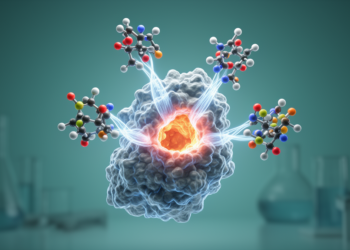
Chemists have designed and synthesized two functionalized peptides built around non-canonical amino acids, and found that binding copper ions to one of them markedly increases its ability to kill cancer cells in laboratory tests, while leaving normal human dermal fibroblasts unaffected across the concentration range tested. The study, published as an open-access original article in the journal Amino Acids, was led by Agnieszka Rombel-Bryzek together with colleagues including Hayarpi Simonyan, Anna Mkrtchyan, Tatevik Sargsyan, Satenik Petrosyan, Karolina Kapłon, Szymon Wenta, Joanna Wątły and Danuta Witkowska.

Unusual, non-canonical amino acids are prized tools in peptidomimetic design because they can accommodate diverse substituents while preserving a chiral center. According to the researchers, incorporating them into peptides allows fine-tuning of physicochemical and biological properties, and also provides versatile functional handles for further structural modification. In this study, the team chose specific non-canonical residues with the aim of improving peptide stability and conferring predicted biological activity.

The researchers pursued two complementary strategies for modulating peptide activity. The first was structural: designing the peptides themselves around the non-canonical building blocks. The second was coordination chemistry: binding the peptides to copper(II) ions, an approach that has previously been associated with enhanced antimicrobial, antioxidant and therapeutic potential in metal–peptide systems. The team investigated in detail how the two synthetic peptides coordinate Cu(II) ions, mapping the coordination behavior of each compound.

The biological evaluation covered both the free peptides and their copper complexes, tested in cancer cell lines and in normal fibroblasts. The central result was selective: copper(II) coordination markedly increased the in vitro cytotoxic activity of one of the two tested compounds, while the other did not show the same enhancement. No reduction of viability was detected in normal human dermal fibroblasts within the concentration range tested, a point the authors highlight as evidence that the active copper–peptide complex can discriminate between cancerous and healthy cells under the conditions of the assay.

The findings are limited to in vitro experiments on cell lines, and the article is being shared early as a peer-reviewed, accepted manuscript that is citable and carries a permanent DOI, subject to further edits before the final version of record.

Subject of Research: Copper(II) coordination of peptides incorporating non-canonical amino acids and its effect on cytotoxic activity in cancer cell lines

Article Title: Functionalized peptides incorporating non-canonical ɑ–amino acids: copper(II) coordination and cytotoxic activity

Article References: Rombel-Bryzek, A., Simonyan, H., Mkrtchyan, A., Sargsyan, T., Petrosyan, S., Kapłon, K., Wenta, S., Wątły, J., & Witkowska, D. (2026). Functionalized peptides incorporating non-canonical ɑ–amino acids: copper(II) coordination and cytotoxic activity. Amino Acids. https://doi.org/10.1007/s00726-026-03555-9

Image Credits: AI Generated

DOI: 10.1007/s00726-026-03555-9

Keywords: non-canonical amino acids, peptidomimetics, copper(II) coordination, cytotoxicity, cancer cell lines, normal fibroblasts, peptide design, coordination chemistry, in vitro study, Amino Acids journal, Functionalized, peptides

Cite Scienmag News

Nathaniel Bowman. (October 29, 2026). Copper turns designer peptides into selective cancer-cell killers in lab tests. Scienmag. https://scienmag.com/copper-turns-designer-peptides-into-selective-cancer-cell-killers-in-lab-tests/


Nathaniel Bowman. "Copper turns designer peptides into selective cancer-cell killers in lab tests." Scienmag, 29 October 2026, https://scienmag.com/copper-turns-designer-peptides-into-selective-cancer-cell-killers-in-lab-tests/. Accessed 1 November 2026.

Nathaniel Bowman. "Copper turns designer peptides into selective cancer-cell killers in lab tests." Scienmag. October 29, 2026. https://scienmag.com/copper-turns-designer-peptides-into-selective-cancer-cell-killers-in-lab-tests/

Tags: advances in peptide-based cancer therapeutamino acids in peptide stability and functionAmino Acids journalcancer cell linescoordination chemistrycopper-binding peptides for cancer cell killingCopper-enhanced peptide cancer therapycopper(II) coordinationcytotoxicityfunctionalizedin vitro studylaboratory testing of peptide-based anticancer agentsmetal-ion peptide interactions for cancer treatmentnon-canonical amino acidsnon-canonical amino acids in peptide designnormal fibroblastspeptide designpeptide stability and biological activity optimizationpeptidespeptidomimetic design using non-standard amino acidspeptidomimeticsselective cancer cell targeting with peptidesstructural modification of peptides with non-canonical residuestherapeutic potential of metal-peptide complexes
Share26Tweet16
Previous Post

Lower stocking density boosts striped dwarf catfish growth in biofloc systems

Next Post

Beijing phone data reveal segregation varies sharply across transport modes

Related Posts

Microbial Sources and Stress Shape the Hidden Endophytes of an Invasive Plant
Biology

Microbial Sources and Stress Shape the Hidden Endophytes of an Invasive Plant

October 30, 2026
Firebreaks Leave Lasting Scars in Grasslands While Wildfire Heals Fast
Biology

Firebreaks Leave Lasting Scars in Grasslands While Wildfire Heals Fast

October 30, 2026
Hidden Peptides in Non-Coding RNAs Reshape Cardiovascular Biology
Biology

Hidden Peptides in Non-Coding RNAs Reshape Cardiovascular Biology

October 30, 2026
Phage K Holin’s C-Terminal Region Shapes Antibacterial Activity, Study Finds
Biotechnology

Phage K Holin’s C-Terminal Region Shapes Antibacterial Activity, Study Finds

October 30, 2026
Computational screen flags five natural compounds that bind a tuberculosis virulence enzyme
Chemistry

Computational screen flags five natural compounds that bind a tuberculosis virulence enzyme

October 30, 2026
Antifungal liver injury study pinpoints KDR as shared hepatotoxicity target
Biology

Antifungal liver injury study pinpoints KDR as shared hepatotoxicity target

October 30, 2026
Next Post
Beijing phone data reveal segregation varies sharply across transport modes

Beijing phone data reveal segregation varies sharply across transport modes

  • Mothers who receive childcare support from maternal grandparents show more optimized

    Mothers who receive childcare support from maternal grandparents show more parental warmth, finds NTU Singapore study

    27656 shares
    Share 11059 Tweet 6912
  • University of Seville Breaks 120-Year-Old Mystery, Revises a Key Einstein Concept

    1061 shares
    Share 424 Tweet 265
  • Bee body mass, pathogens and local climate influence heat tolerance

    682 shares
    Share 273 Tweet 171
  • Researchers record first-ever images and data of a shark experiencing a boat strike

    546 shares
    Share 218 Tweet 137
  • Groundbreaking Clinical Trial Reveals Lubiprostone Enhances Kidney Function

    531 shares
    Share 212 Tweet 133
Science

Embark on a thrilling journey of discovery with Scienmag.com—your ultimate source for cutting-edge breakthroughs. Immerse yourself in a world where curiosity knows no limits and tomorrow’s possibilities become today’s reality!

RECENT NEWS

  • Trademarks Meet Patents in New Method to Spot Technology Opportunities
  • Reddit self-declarations offer auditable labels for demographic inference
  • Scots pine needles map trace element pollution in Polish industrial town
  • Dual-blockchain scheme secures vehicle handovers without pre-shared keys

Categories

  • Agriculture
  • Anthropology
  • Archaeology
  • Athmospheric
  • Biology
  • Biotechnology
  • Blog
  • Bussines
  • Cancer
  • Chemistry
  • Climate
  • Earth Science
  • Editorial Policy
  • Marine
  • Mathematics
  • Medicine
  • Pediatry
  • Policy
  • Psychology & Psychiatry
  • Science Education
  • Science News
  • Social Science
  • Space
  • Technology and Engineering

Subscribe to Blog via Email

Enter your email address to subscribe to this blog and receive notifications of new posts by email.

Join 5,150 other subscribers

© 2025 Scienmag - Science Magazine

Welcome Back!

Login to your account below

Forgotten Password?

Retrieve your password

Please enter your username or email address to reset your password.

Log In
No Result
View All Result
  • HOME
  • SCIENCE NEWS
  • CONTACT US

© 2025 Scienmag - Science Magazine

Discover more from Science

Subscribe now to keep reading and get access to the full archive.

Continue reading