Saturday, October 31, 2026
Science
No Result
View All Result
  • Login
  • HOME
  • SCIENCE NEWS
  • CONTACT US
  • HOME
  • SCIENCE NEWS
  • CONTACT US
No Result
View All Result
Scienmag
No Result
View All Result
Home Science News Biology

Selenium Helps Tomato Seedlings Cope with Saline-Alkali Stress, Study Finds

October 28, 2026
in Biology
Drew Townsend
By Drew Townsend Scienmag Editorial Profile - Cell Biology
Reading Time: 2 mins read
0
Selenium Helps Tomato Seedlings Cope with Saline-Alkali Stress, Study Finds

Selenium Helps Tomato Seedlings Cope with Saline-Alkali Stress, Study Finds

65
SHARES
587
VIEWS
Share on FacebookShare on Twitter
ADVERTISEMENT

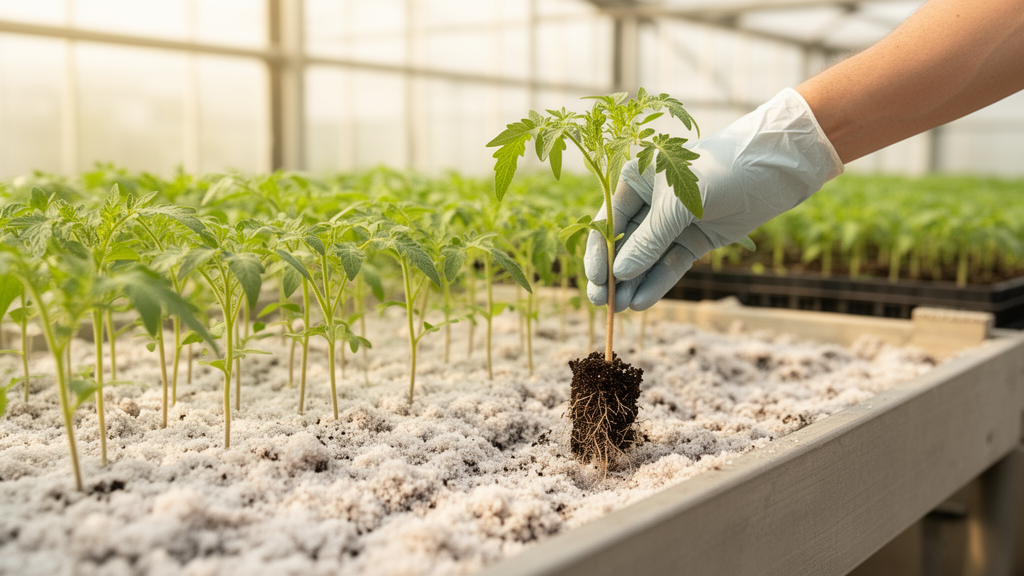
Exogenous selenium can strengthen the tolerance of tomato seedlings to saline-alkali stress, according to a new study published in BMC Plant Biology that combined physiological measurements with transcriptome sequencing to trace how the element acts at both the biochemical and molecular levels.

Saline-alkali stress is a serious constraint on tomato growth, and while selenium has been reported to mitigate various abiotic stresses in plants, its physiological and molecular regulatory mechanisms in tomato seedlings under these conditions had remained insufficiently understood. The research team set out to close that gap using an integrated experimental design.

The researchers worked with the tomato inbred line Solanum lycopersicum cv. Ailsa Craig. Saline-alkali conditions were created by supplementing a quarter-strength Hoagland nutrient solution with a complex saline-alkali mixture, and sodium selenite was applied as the source of exogenous selenium. The team then evaluated growth phenotypes and physiological parameters and carried out transcriptome sequencing to examine the molecular mechanisms involved.

The selenium treatment reduced chlorophyll degradation, suggesting a protective effect on the seedlings’ photosynthetic function. At the same time, it sharply increased the activities of key antioxidant and defense-related enzymes: superoxide dismutase rose by 377.37 percent, catalase by 145.67 percent, peroxidase by 3.39 percent, and phenylalanine ammonia-lyase by 340.30 percent.

The treatment also promoted the accumulation of salicylic acid and jasmonic acid, two signaling molecules involved in plant stress responses. Concurrently, malondialdehyde content and reactive oxygen species accumulation were reduced, indicating less oxidative damage to the seedlings under stress.

Transcriptomic profiling revealed that the selenium treatment activated phenylalanine metabolism, carotenoid biosynthesis, galactose metabolism, and related pathways. According to the authors, these activated pathways supported the improved saline-alkali tolerance observed in the tomato seedlings.

Taken together, the results point to a multi-layered mechanism. The authors conclude that exogenous selenium synergistically enhances saline-alkali tolerance in tomato seedlings through the enhancement of antioxidant system activity, protection of photosynthetic function, maintenance of cell membrane homeostasis, and modulation of metabolic pathways such as phenylalanine and galactose metabolism.

The study’s authors state that these findings provide a theoretical basis and genetic resource support for stress-tolerant tomato cultivation and for the genetic improvement of elite saline-alkali-tolerant germplasm. As the work was conducted on seedlings of a single inbred line under controlled conditions, further field-level validation across diverse tomato genotypes would be needed to confirm how broadly the approach can be applied in practice.

Subject of Research: Mechanisms by which exogenous selenium alleviates saline-alkali stress in tomato seedlings

Article Title: Integrated physiological and transcriptomic analyses reveal the mechanisms of exogenous selenium-mediated alleviation of saline-alkali stress in tomato seedlings

Article References: Zhang, J., Hu, X., He, S., Liu, G., Jiang, Z., & Zhang, D. (2026). Integrated physiological and transcriptomic analyses reveal the mechanisms of exogenous selenium-mediated alleviation of saline-alkali stress in tomato seedlings. BMC Plant Biology. https://doi.org/10.1186/s12870-026-09927-3

Image Credits: AI Generated

DOI: 10.1186/s12870-026-09927-3

Keywords: selenium, saline-alkali stress, tomato seedlings, antioxidant enzymes, transcriptomics, chlorophyll, salicylic acid, jasmonic acid, phenylalanine metabolism, carotenoid biosynthesis, plant stress tolerance, BMC Plant Biology

Cite Scienmag News

Drew Townsend. (October 28, 2026). Selenium Helps Tomato Seedlings Cope with Saline-Alkali Stress, Study Finds. Scienmag. https://scienmag.com/selenium-helps-tomato-seedlings-cope-with-saline-alkali-stress-study-finds/

Drew Townsend. "Selenium Helps Tomato Seedlings Cope with Saline-Alkali Stress, Study Finds." Scienmag, 28 October 2026, https://scienmag.com/selenium-helps-tomato-seedlings-cope-with-saline-alkali-stress-study-finds/. Accessed 31 October 2026.

Drew Townsend. "Selenium Helps Tomato Seedlings Cope with Saline-Alkali Stress, Study Finds." Scienmag. October 28, 2026. https://scienmag.com/selenium-helps-tomato-seedlings-cope-with-saline-alkali-stress-study-finds/

Tags: antioxidant enzyme response in tomatoantioxidant enzymesbiochemical mechanisms of selenium in plantsBMC Plant Biologycarotenoid biosynthesischlorophyllintegrated physiological and molecularjasmonic acidmolecular regulation of saline-alkali stress in tomatoesphenylalanine metabolismphysiological effects of selenium on plant growthplant stress toleranceprotective effects of selenium on photosynthesisrole of exogenous selenium in plant stress resistancesalicylic acidsaline-alkali stresssaline-alkali stress impacts on tomato developmentsaline-alkali stress mitigation in plantsseleniumSelenium-induced stress tolerance in tomato seedlingsselenium’s influence on plant defense enzymestomato seedlingstranscriptome analysis of tomato under abiotic stressTranscriptomics
Share26Tweet16
Previous Post

Spermatic Vein Blood Reveals Hidden Inhibin B Drop in Varicocele

Next Post

Community-based health insurance reaches few Ethiopian households, national survey finds

Related Posts

Microbial Sources and Stress Shape the Hidden Endophytes of an Invasive Plant
Biology

Microbial Sources and Stress Shape the Hidden Endophytes of an Invasive Plant

October 30, 2026
Firebreaks Leave Lasting Scars in Grasslands While Wildfire Heals Fast
Biology

Firebreaks Leave Lasting Scars in Grasslands While Wildfire Heals Fast

October 30, 2026
Hidden Peptides in Non-Coding RNAs Reshape Cardiovascular Biology
Biology

Hidden Peptides in Non-Coding RNAs Reshape Cardiovascular Biology

October 30, 2026
Phage K Holin’s C-Terminal Region Shapes Antibacterial Activity, Study Finds
Biotechnology

Phage K Holin’s C-Terminal Region Shapes Antibacterial Activity, Study Finds

October 30, 2026
Computational screen flags five natural compounds that bind a tuberculosis virulence enzyme
Chemistry

Computational screen flags five natural compounds that bind a tuberculosis virulence enzyme

October 30, 2026
Antifungal liver injury study pinpoints KDR as shared hepatotoxicity target
Biology

Antifungal liver injury study pinpoints KDR as shared hepatotoxicity target

October 30, 2026
Next Post
Community-based health insurance reaches few Ethiopian households, national survey finds

Community-based health insurance reaches few Ethiopian households, national survey finds

  • Mothers who receive childcare support from maternal grandparents show more optimized

    Mothers who receive childcare support from maternal grandparents show more parental warmth, finds NTU Singapore study

    27656 shares
    Share 11059 Tweet 6912
  • University of Seville Breaks 120-Year-Old Mystery, Revises a Key Einstein Concept

    1061 shares
    Share 424 Tweet 265
  • Bee body mass, pathogens and local climate influence heat tolerance

    682 shares
    Share 273 Tweet 171
  • Researchers record first-ever images and data of a shark experiencing a boat strike

    546 shares
    Share 218 Tweet 137
  • Groundbreaking Clinical Trial Reveals Lubiprostone Enhances Kidney Function

    531 shares
    Share 212 Tweet 133
Science

Embark on a thrilling journey of discovery with Scienmag.com—your ultimate source for cutting-edge breakthroughs. Immerse yourself in a world where curiosity knows no limits and tomorrow’s possibilities become today’s reality!

RECENT NEWS

  • Trademarks Meet Patents in New Method to Spot Technology Opportunities
  • Reddit self-declarations offer auditable labels for demographic inference
  • Scots pine needles map trace element pollution in Polish industrial town
  • Dual-blockchain scheme secures vehicle handovers without pre-shared keys

Categories

  • Agriculture
  • Anthropology
  • Archaeology
  • Athmospheric
  • Biology
  • Biotechnology
  • Blog
  • Bussines
  • Cancer
  • Chemistry
  • Climate
  • Earth Science
  • Editorial Policy
  • Marine
  • Mathematics
  • Medicine
  • Pediatry
  • Policy
  • Psychology & Psychiatry
  • Science Education
  • Science News
  • Social Science
  • Space
  • Technology and Engineering

Subscribe to Blog via Email

Enter your email address to subscribe to this blog and receive notifications of new posts by email.

Join 5,150 other subscribers

© 2025 Scienmag - Science Magazine

Welcome Back!

Login to your account below

Forgotten Password?

Retrieve your password

Please enter your username or email address to reset your password.

Log In
No Result
View All Result
  • HOME
  • SCIENCE NEWS
  • CONTACT US

© 2025 Scienmag - Science Magazine

Discover more from Science

Subscribe now to keep reading and get access to the full archive.

Continue reading