Friday, October 30, 2026
Science
No Result
View All Result
  • Login
  • HOME
  • SCIENCE NEWS
  • CONTACT US
  • HOME
  • SCIENCE NEWS
  • CONTACT US
No Result
View All Result
Scienmag
No Result
View All Result
Home Science News Biology

Chicory Root Compounds Linked to Gene and microRNA Networks in Mouse Data Analysis

October 28, 2026
in Biology, Medicine
Juliet Wilcox
By Juliet Wilcox Scienmag Editorial Profile - Human Genetics
Reading Time: 2 mins read
0
Chicory Root Compounds Linked to Gene and microRNA Networks in Mouse Data Analysis

Chicory Root Compounds Linked to Gene and microRNA Networks in Mouse Data Analysis

65
SHARES
587
VIEWS
Share on FacebookShare on Twitter
ADVERTISEMENT

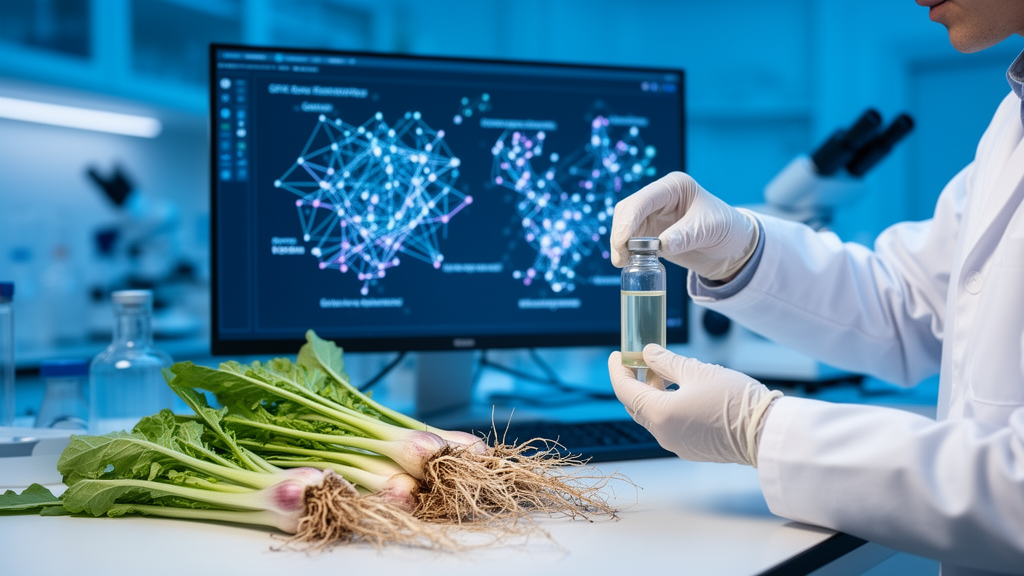
Chicory (Cichorium intybus L.) is a medicinal plant whose root contains bioactive compounds including inulin, fructose, chlorogenic acids, and sesquiterpene lactones. A new integrated transcriptomic analysis, published in the journal Genes & Nutrition, has mapped gene and microRNA regulatory networks associated with these four major compounds, offering a molecular framework that the authors say can guide future mechanistic studies.

The study, conducted by Fatemeh Abolmashadi, Mahdi Moridi Farimani, and Gholamreza Farnoosh, did not involve new laboratory experiments with the compounds themselves. Instead, the researchers reanalyzed two publicly available mouse microarray datasets, GSE150218 and GSE190056, to identify differentially expressed genes, hub genes, and associated microRNAs linked to each compound category.

To characterize the biological relevance of their findings, the team applied gene ontology enrichment analysis, KEGG pathway analysis, and protein–protein interaction network mapping. These computational tools allowed them to place the differentially expressed genes within known functional categories and signaling pathways.

The analysis identified distinct sets of hub genes for each compound. For inulin, the hub genes were Rps28 and Rps2. For fructose, the analysis highlighted Rplp0, Cct2, and Rps20. Sesquiterpene lactones were associated with Mki67, Egfr, and Pparg, while chlorogenic acids were linked to Socs2, Six2, Smtnl2, and Gcsh.

Pathway enrichment revealed significant associations between these gene sets and several molecular pathways, including mRNA surveillance, PPAR signaling, AMPK signaling, ribosome function, and coronavirus-related pathways.

The analysis highlighted strong predicted regulatory interactions between specific microRNAs and the hub genes identified for each compound: mmu-miR-204-3p for inulin, mmu-miR-17-5p for fructose, mmu-miR-15a-5p for sesquiterpene lactones, and mmu-miR-142a-5p for chlorogenic acids.

The authors emphasize that these regulatory interactions are computational predictions rather than experimentally demonstrated relationships. In the study’s conclusion, they state that experimental validation is required to confirm the predicted regulatory networks, positioning the current work as a hypothesis-generating resource rather than a demonstration of biological mechanism.

Because the underlying datasets derive from mouse studies, the findings describe molecular associations in animal transcriptomic data and cannot be directly extended to human health effects. The open-access article, published on 8 September 2026, was shared early as a peer-reviewed, accepted manuscript that remains citable through its permanent DOI, with a final version of record to follow.

Subject of Research: Bioinformatic identification of gene and microRNA networks associated with chicory root bioactive compounds

Article Title: Integrated transcriptomic analysis identifies gene–miRNA regulatory networks associated with major chicory root bioactive compounds

Article References: Abolmashadi, F., Moridi Farimani, M., & Farnoosh, G. (2026). Integrated transcriptomic analysis identifies gene–miRNA regulatory networks associated with major chicory root bioactive compounds. Genes & Nutrition. https://doi.org/10.1186/s12263-026-00819-7

Image Credits: AI Generated

DOI: 10.1186/s12263-026-00819-7

Keywords: chicory, Cichorium intybus, transcriptomics, microRNA, inulin, chlorogenic acids, sesquiterpene lactones, fructose, hub genes, PPAR signaling, AMPK signaling, bioinformatics

Cite Scienmag News

Juliet Wilcox. (October 28, 2026). Chicory Root Compounds Linked to Gene and microRNA Networks in Mouse Data Analysis. Scienmag. https://scienmag.com/chicory-root-compounds-linked-to-gene-and-microrna-networks-in-mouse-data-analysis/


Juliet Wilcox. "Chicory Root Compounds Linked to Gene and microRNA Networks in Mouse Data Analysis." Scienmag, 28 October 2026, https://scienmag.com/chicory-root-compounds-linked-to-gene-and-microrna-networks-in-mouse-data-analysis/. Accessed 30 October 2026.

Juliet Wilcox. "Chicory Root Compounds Linked to Gene and microRNA Networks in Mouse Data Analysis." Scienmag. October 28, 2026. https://scienmag.com/chicory-root-compounds-linked-to-gene-and-microrna-networks-in-mouse-data-analysis/

Tags: AMPK signalingbioinformaticschicoryChicory root bioactive compoundschlorogenic acidschlorogenic acids gene associationsCichorium intybuscomputational genomics in plant researchfructosegene ontology enrichment in medicinal plantsgene regulatory networks in micehub genesinulininulin and fructose genetic pathwaysKEGG pathway analysis in bioinformaticsmicroRNAmicroRNA-mRNA interactionsPPAR signalingprotein-protein interaction network mappingsesquiterpene lactonessesquiterpene lactones molecular targetssystems biology of plant-derived compoundstranscriptomic data analysisTranscriptomics
Share26Tweet16
Previous Post

Moringa and Spirulina Ease Pesticide Damage in Nile Tilapia

Next Post

Research report: How algorithms shape the global visibility of Korean content

Related Posts

Fever After CAR T-Cell Therapy: New Push for Early Detection of Toxicity
Medicine

Fever After CAR T-Cell Therapy: New Push for Early Detection of Toxicity

October 30, 2026
Compact 3D Scanner Captures Face and Neck Injuries in Under One Second
Medicine

Compact 3D Scanner Captures Face and Neck Injuries in Under One Second

October 30, 2026
Gene Variants Tied to Gestational Diabetes Risk in Iranian Pregnant Women
Medicine

Gene Variants Tied to Gestational Diabetes Risk in Iranian Pregnant Women

October 30, 2026
Gold nanoparticle laser therapy shows strong preclinical tumor-killing power in major meta-analysis
Cancer

Gold nanoparticle laser therapy shows strong preclinical tumor-killing power in major meta-analysis

October 30, 2026
Caribbean Anole Lizards Glide Without Wings, Wind Tunnel Study Finds
Biology

Caribbean Anole Lizards Glide Without Wings, Wind Tunnel Study Finds

October 30, 2026
Depression and Somatization May Link Night Eating Symptoms to Poor Sleep
Psychology & Psychiatry

Depression and Somatization May Link Night Eating Symptoms to Poor Sleep

October 30, 2026
Next Post
Research report: How algorithms shape the global visibility of Korean content

Research report: How algorithms shape the global visibility of Korean content

  • Mothers who receive childcare support from maternal grandparents show more optimized

    Mothers who receive childcare support from maternal grandparents show more parental warmth, finds NTU Singapore study

    27656 shares
    Share 11059 Tweet 6912
  • University of Seville Breaks 120-Year-Old Mystery, Revises a Key Einstein Concept

    1061 shares
    Share 424 Tweet 265
  • Bee body mass, pathogens and local climate influence heat tolerance

    682 shares
    Share 273 Tweet 171
  • Researchers record first-ever images and data of a shark experiencing a boat strike

    546 shares
    Share 218 Tweet 137
  • Groundbreaking Clinical Trial Reveals Lubiprostone Enhances Kidney Function

    531 shares
    Share 212 Tweet 133
Science

Embark on a thrilling journey of discovery with Scienmag.com—your ultimate source for cutting-edge breakthroughs. Immerse yourself in a world where curiosity knows no limits and tomorrow’s possibilities become today’s reality!

RECENT NEWS

  • Fever After CAR T-Cell Therapy: New Push for Early Detection of Toxicity
  • Compact 3D Scanner Captures Face and Neck Injuries in Under One Second
  • Gene Variants Tied to Gestational Diabetes Risk in Iranian Pregnant Women
  • Bacterium and Fungicide Combo Curbs Soybean Root Rot Fungus

Categories

  • Agriculture
  • Anthropology
  • Archaeology
  • Athmospheric
  • Biology
  • Biotechnology
  • Blog
  • Bussines
  • Cancer
  • Chemistry
  • Climate
  • Earth Science
  • Editorial Policy
  • Marine
  • Mathematics
  • Medicine
  • Pediatry
  • Policy
  • Psychology & Psychiatry
  • Science Education
  • Science News
  • Social Science
  • Space
  • Technology and Engineering

Subscribe to Blog via Email

Enter your email address to subscribe to this blog and receive notifications of new posts by email.

Join 5,151 other subscribers

© 2025 Scienmag - Science Magazine

Welcome Back!

Login to your account below

Forgotten Password?

Retrieve your password

Please enter your username or email address to reset your password.

Log In
No Result
View All Result
  • HOME
  • SCIENCE NEWS
  • CONTACT US

© 2025 Scienmag - Science Magazine

Discover more from Science

Subscribe now to keep reading and get access to the full archive.

Continue reading