Wednesday, October 28, 2026
Science
No Result
View All Result
  • Login
  • HOME
  • SCIENCE NEWS
  • CONTACT US
  • HOME
  • SCIENCE NEWS
  • CONTACT US
No Result
View All Result
Scienmag
No Result
View All Result
Home Science News Agriculture

Prickly pear pomace powder darkens biscuits and boosts their antioxidants

October 28, 2026
in Agriculture
Daisy Hatcher
By Daisy Hatcher Scienmag Editorial Profile - Food Safety and Toxicology
Reading Time: 2 mins read
0
Prickly pear pomace powder darkens biscuits and boosts their antioxidants

Prickly pear pomace powder darkens biscuits and boosts their antioxidants

65
SHARES
587
VIEWS
Share on FacebookShare on Twitter
ADVERTISEMENT

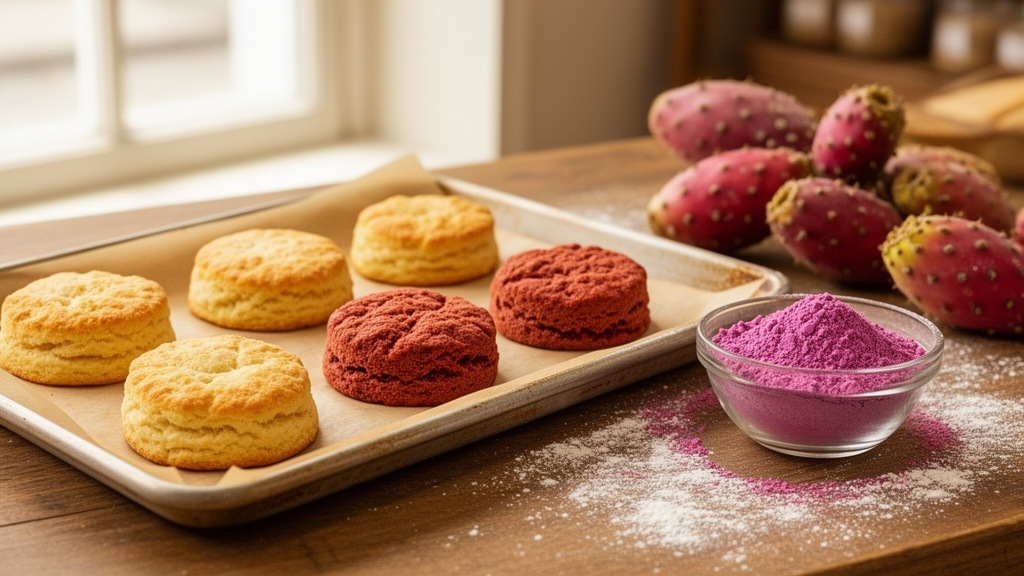
Biscuits made with powdered prickly pear fruit pomace, a by-product usually discarded after juice processing, showed darker colour, greater hardness, higher phenolic content and stronger antioxidant activity than plain wheat-flour biscuits, according to a study published in Discover Food on 27 October 2026.

Researchers Anneline Jeanette Govender, Laura Suzanne Da Silva and Daniso Beswa formulated biscuits by partially replacing wheat flour with pomace powder from two prickly pear (Opuntia ficus-indica L.) cultivars, Skinner’s Court and Algerian, at substitution levels ranging from 5 to 20 percent. The team evaluated physical and functional properties, total phenolic content, antioxidant activity using ABTS and FRAP assays, Fourier Transform Infrared spectra and descriptive sensory attributes with standard analytical techniques.

Colour changed markedly with increasing pomace. Lightness fell from 95.55 in the control biscuits to between 64.54 and 68.64 at the 20 percent substitution level, while redness rose to as much as 11.77, reflecting the pigments carried by the fruit pomace.

Texture shifted as well.

Total phenolic content rose from 16.25 milligrams of gallic acid equivalents per gram in the control to 28.57 milligrams per gram in biscuits containing 20 percent Algerian pomace. Antioxidant activity rose in parallel, with ABTS inhibition reaching up to 39.54 percent.

FTIR spectra confirmed enrichment in hydroxyl-rich polysaccharides and phenolic compounds, providing molecular-level evidence that the pomace contributed both fibre-associated carbohydrates and phenolic substances to the baked product.

Sensory profiling indicated acceptable texture and flavour at moderate substitution levels, even though panellists detected increased bran-like and seedy notes as pomace levels rose. The authors conclude that prickly pear pomace has the potential to enrich biscuits with fibre and antioxidants, supporting sustainable food production while enhancing nutritional quality.

The study addresses a knowledge gap concerning the use of pomace from different prickly pear cultivars in biscuits. The fruit pomace is described as rich in dietary fibre and bioactive compounds but vastly underutilised, and its valorisation fits growing demand for functional foods and sustainable processing of agro-industrial by-products.

As with any formulation study, the findings describe the measured properties of these specific biscuits under the tested conditions; the reported sensory acceptability applies to the substitution levels evaluated, and the hardness increase at high pomace levels remains a practical consideration for product developers seeking to raise fibre and antioxidant content in baked snacks.

Subject of Research: Effects of prickly pear fruit pomace powder on the physicochemical, bioactive and sensory properties of biscuits

Article Title: Effect of prickly pear (Opuntia ficus-indica L.) fruit pomace powder on the physicochemical, functional, bioactive, molecular, and sensory properties of biscuits

Article References: Govender, A. J., Da Silva, L. S., & Beswa, D. (2026). Effect of prickly pear (Opuntia ficus-indica L.) fruit pomace powder on the physicochemical, functional, bioactive, molecular, and sensory properties of biscuits. Discover Food. https://doi.org/10.1007/s44187-026-01332-x

Image Credits: AI Generated

DOI: 10.1007/s44187-026-01332-x

Keywords: prickly pear, Opuntia ficus-indica, pomace, biscuits, dietary fibre, antioxidants, total phenolic content, FTIR, sensory analysis, functional foods, food by-product valorisation, Effect

Cite Scienmag News

Daisy Hatcher. (October 28, 2026). Prickly pear pomace powder darkens biscuits and boosts their antioxidants. Scienmag. https://scienmag.com/prickly-pear-pomace-powder-darkens-biscuits-and-boosts-their-antioxidants/

Daisy Hatcher. "Prickly pear pomace powder darkens biscuits and boosts their antioxidants." Scienmag, 28 October 2026, https://scienmag.com/prickly-pear-pomace-powder-darkens-biscuits-and-boosts-their-antioxidants/. Accessed 28 October 2026.

Daisy Hatcher. "Prickly pear pomace powder darkens biscuits and boosts their antioxidants." Scienmag. October 28, 2026. https://scienmag.com/prickly-pear-pomace-powder-darkens-biscuits-and-boosts-their-antioxidants/

Tags: antioxidant-rich biscuit formulationsantioxidantsbiscuitsdevelopment ofdietary fibreEffecteffects of fruit waste utilization on food qualityenhancement of antioxidant activity in biscuitsfood by-product valorisationFourier-transform infrared spectroscopy in food analysisFTIRfunctional foodsfunctional properties of fruit pomace in baked goodsimpact of fruit pomace on biscuit color and texturenutritional benefits of prickly pear by-productsOpuntia ficus-indicaphenolic compounds in prickly pearpomaceprickly pearprickly pear pomace powder in biscuitssensory analysissensory evaluation of pomace-enriched biscuitstotal phenolic contentuse of prickly pear cultivars in food products
Share26Tweet16
Previous Post

Smart PID control cuts energy use in tobacco-leaf oven drying, study reports

Next Post

Pupil index disagreement in brain-injured patients traced to scale and sedation

Related Posts

Peppermint Oil Nanocarriers in Gelatin Coatings Slow Microbial Spoilage of Trout Fillets
Agriculture

Peppermint Oil Nanocarriers in Gelatin Coatings Slow Microbial Spoilage of Trout Fillets

October 28, 2026
Food rescue programs improve diets but fall short on nutrition, review finds
Agriculture

Food rescue programs improve diets but fall short on nutrition, review finds

October 28, 2026
Local Feed Supplement Boosts Milk Protein and Solids in Ugandan Dairy Cows
Agriculture

Local Feed Supplement Boosts Milk Protein and Solids in Ugandan Dairy Cows

October 28, 2026
Akkermansia muciniphila stays a beneficial symbiont, perspective argues, as context determines its effects
Medicine

Akkermansia muciniphila stays a beneficial symbiont, perspective argues, as context determines its effects

October 28, 2026
Probiotics may ease chemo-radiation mouth sores, but evidence stays patchy
Agriculture

Probiotics may ease chemo-radiation mouth sores, but evidence stays patchy

October 28, 2026
Genipin-crosslinked chitosan films keep fresh-cut pears fresher for longer
Agriculture

Genipin-crosslinked chitosan films keep fresh-cut pears fresher for longer

October 28, 2026
Next Post
Pupil index disagreement in brain-injured patients traced to scale and sedation

Pupil index disagreement in brain-injured patients traced to scale and sedation

  • Mothers who receive childcare support from maternal grandparents show more optimized

    Mothers who receive childcare support from maternal grandparents show more parental warmth, finds NTU Singapore study

    27656 shares
    Share 11059 Tweet 6912
  • University of Seville Breaks 120-Year-Old Mystery, Revises a Key Einstein Concept

    1061 shares
    Share 424 Tweet 265
  • Bee body mass, pathogens and local climate influence heat tolerance

    682 shares
    Share 273 Tweet 171
  • Researchers record first-ever images and data of a shark experiencing a boat strike

    546 shares
    Share 218 Tweet 137
  • Groundbreaking Clinical Trial Reveals Lubiprostone Enhances Kidney Function

    531 shares
    Share 212 Tweet 133
Science

Embark on a thrilling journey of discovery with Scienmag.com—your ultimate source for cutting-edge breakthroughs. Immerse yourself in a world where curiosity knows no limits and tomorrow’s possibilities become today’s reality!

RECENT NEWS

  • Research report: Near-infrared light-activated collagen-based hydrogel with oriented microchannel structure promoting fibroblast infiltration and inflammatory resolution‌
  • AI drafts and grades image-based neurosurgery exam questions with expert oversight
  • Philosophers Argue Innovation Is Not Just Utility but a Moral and Ontological Act
  • Strict digital parenting linked to less teen screen time, but effects fade with age

Categories

  • Agriculture
  • Anthropology
  • Archaeology
  • Athmospheric
  • Biology
  • Biotechnology
  • Blog
  • Bussines
  • Cancer
  • Chemistry
  • Climate
  • Earth Science
  • Editorial Policy
  • Marine
  • Mathematics
  • Medicine
  • Pediatry
  • Policy
  • Psychology & Psychiatry
  • Science Education
  • Science News
  • Social Science
  • Space
  • Technology and Engineering

Subscribe to Blog via Email

Enter your email address to subscribe to this blog and receive notifications of new posts by email.

Join 5,151 other subscribers

© 2025 Scienmag - Science Magazine

Welcome Back!

Login to your account below

Forgotten Password?

Retrieve your password

Please enter your username or email address to reset your password.

Log In
No Result
View All Result
  • HOME
  • SCIENCE NEWS
  • CONTACT US

© 2025 Scienmag - Science Magazine

Discover more from Science

Subscribe now to keep reading and get access to the full archive.

Continue reading