Saturday, October 31, 2026
Science
No Result
View All Result
  • Login
  • HOME
  • SCIENCE NEWS
  • CONTACT US
  • HOME
  • SCIENCE NEWS
  • CONTACT US
No Result
View All Result
Scienmag
No Result
View All Result
Home Science News Cancer

Regular experience, time and dye linked to better IBD cancer checks in UK study

October 28, 2026
in Cancer, Medicine
Nathaniel Bowman
By Nathaniel Bowman Scienmag Editorial Profile - Precision Oncology
Reading Time: 2 mins read
0
Regular experience, time and dye linked to better IBD cancer checks in UK study

Regular experience, time and dye linked to better IBD cancer checks in UK study

65
SHARES
587
VIEWS
Share on FacebookShare on Twitter
ADVERTISEMENT

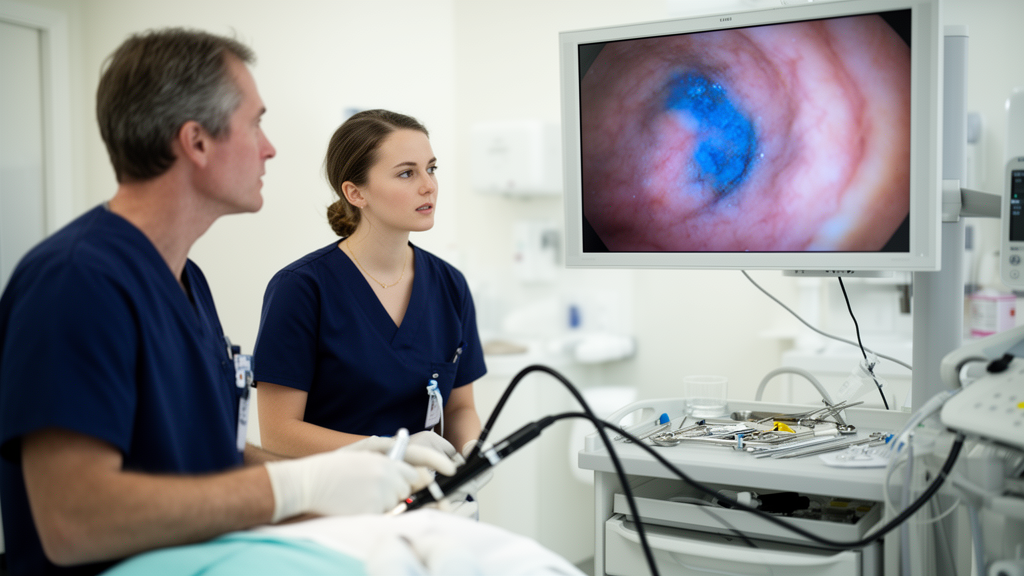
The first UK-wide analysis of bowel cancer surveillance for people with inflammatory bowel disease has found that the way these checks are delivered varies widely, and that certain factors are associated with detecting more polyps, the small growths that may become cancer.

Researchers led by the University of Edinburgh analysed data from the National Endoscopy Database, covering approximately 65 per cent of UK endoscopy units. The dataset included almost 16,000 procedures carried out in 2024 by 4,669 endoscopists, making it the largest study of its kind globally.

The study found that fewer than one in five endoscopists performed IBD surveillance checks at least monthly, yet this small group was responsible for 57 per cent of all procedures. People with IBD affecting the large bowel, such as Crohn’s disease or ulcerative colitis, have a higher risk of bowel cancer, and regular camera checks known as endoscopies can find early changes. These checks are usually scheduled alongside other hospital procedures, which can make consistent care harder to plan.

According to the analysis, checks performed by professionals with regular experience, allowing more time for the procedure, and the use of a special dye to improve visibility were each associated with finding more polyps, some of which may be precancerous. The study provides the first national evidence linking polyp detection with the experience of the person doing the test, the time allowed and the use of dye.

Dr Shahida Din, the study’s principal investigator from the University of Edinburgh’s Institute of Genetics and Cancer, said: “IBD cancer checks are important, but unlike organised bowel cancer screening, they do not have the same protected capacity. A small proportion of endoscopists perform most of these checks, and regular experience, more time and use of dye were associated with finding more polyps.”

She added that further research should establish whether more consistent pathways and dedicated time improve detection of precancerous changes and, ultimately, patient outcomes. Experts say the findings provide a starting point for measuring and improving care for people with IBD, and support further investigation into whether more consistent pathways and protected time could lead to better outcomes.

The study team notes an important limitation: the database did not include laboratory results for removed polyps, so the researchers cannot determine whether the observed differences led to fewer cancers. Further research is needed to find out which changes improve cancer prevention.

Better evidence could ultimately help people with IBD receive more consistent care and improve the chances of finding important changes early, the researchers say. The study is published in the Journal of Crohn’s and Colitis, and the UK-wide collaboration involved clinicians and researchers from NHS organisations and universities across all four nations of the UK.

Subject of Research: Quality of endoscopic bowel cancer surveillance for people with inflammatory bowel disease in the UK

Article Title: Improve IBD bowel checks for early cancer detection, study finds

Article References: Improve IBD bowel checks for early cancer detection, study finds. Original publication (Bibliographic details unavailable.)

Image Credits: AI Generated

DOI: Not provided

Keywords: inflammatory bowel disease, bowel cancer, endoscopy, polyp detection, National Endoscopy Database, University of Edinburgh, Crohn's disease, ulcerative colitis, cancer screening, surveillance quality, Improve, bowel

Cite Scienmag News

Nathaniel Bowman. (October 28, 2026). Regular experience, time and dye linked to better IBD cancer checks in UK study. Scienmag. https://scienmag.com/regular-experience-time-and-dye-linked-to-better-ibd-cancer-checks-in-uk-study/


Nathaniel Bowman. "Regular experience, time and dye linked to better IBD cancer checks in UK study." Scienmag, 28 October 2026, https://scienmag.com/regular-experience-time-and-dye-linked-to-better-ibd-cancer-checks-in-uk-study/. Accessed 31 October 2026.

Nathaniel Bowman. "Regular experience, time and dye linked to better IBD cancer checks in UK study." Scienmag. October 28, 2026. https://scienmag.com/regular-experience-time-and-dye-linked-to-better-ibd-cancer-checks-in-uk-study/

Tags: bowelbowel cancerbowel cancer detection in IBD patientscancer screeningCrohn's disease and ulcerative colitis bowel cancer riskCrohn’s diseaseendoscopyfactors influencing polyp detection during colonimpact of endoscopist experience on polyp detectionimportance of scheduled endoscopies for IBD managementimproVEinflammatory bowel diseaseInflammatory bowel disease cancer surveillancelarge-scale study of IBD endoscopy proceduresNational Endoscopy Databasepolyp detectionrole of procedural frequency in early cancer detectionsignificance of dye use in colonoscopysurveillance qualityUK endoscopy data analysisulcerative colitisUniversity of Edinburghvariations in IBD cancer screening practices
Share26Tweet16
Previous Post

Toxoplasma Parasite Disrupts a Protective Macrophage Signal in Pregnancy

Next Post

Rural Ethiopian women show large gaps in breast and cervical cancer knowledge

Related Posts

ZNF207 shields glutamine transporter ASCT2 from degradation to fuel liver cancer growth
Cancer

ZNF207 shields glutamine transporter ASCT2 from degradation to fuel liver cancer growth

October 30, 2026
Most Ethiopian HIV patients on dolutegravir therapy show good knowledge, survey finds
Medicine

Most Ethiopian HIV patients on dolutegravir therapy show good knowledge, survey finds

October 30, 2026
Serum and urine protein biomarkers may sharpen prostate cancer detection beyond PSA
Medicine

Serum and urine protein biomarkers may sharpen prostate cancer detection beyond PSA

October 30, 2026
One gene locus flags atrial fibrillation risk after major surgery, UK Biobank study finds
Medicine

One gene locus flags atrial fibrillation risk after major surgery, UK Biobank study finds

October 30, 2026
Deep-learning CT reconstruction sharpens calcium visibility in phantom tests, but dose evens the score
Medicine

Deep-learning CT reconstruction sharpens calcium visibility in phantom tests, but dose evens the score

October 30, 2026
Pennywort Leaf Extract Lowers Blood Sugar in Diabetic Rats, Study Finds
Medicine

Pennywort Leaf Extract Lowers Blood Sugar in Diabetic Rats, Study Finds

October 30, 2026
Next Post
Rural Ethiopian women show large gaps in breast and cervical cancer knowledge

Rural Ethiopian women show large gaps in breast and cervical cancer knowledge

  • Mothers who receive childcare support from maternal grandparents show more optimized

    Mothers who receive childcare support from maternal grandparents show more parental warmth, finds NTU Singapore study

    27656 shares
    Share 11059 Tweet 6912
  • University of Seville Breaks 120-Year-Old Mystery, Revises a Key Einstein Concept

    1061 shares
    Share 424 Tweet 265
  • Bee body mass, pathogens and local climate influence heat tolerance

    682 shares
    Share 273 Tweet 171
  • Researchers record first-ever images and data of a shark experiencing a boat strike

    546 shares
    Share 218 Tweet 137
  • Groundbreaking Clinical Trial Reveals Lubiprostone Enhances Kidney Function

    531 shares
    Share 212 Tweet 133
Science

Embark on a thrilling journey of discovery with Scienmag.com—your ultimate source for cutting-edge breakthroughs. Immerse yourself in a world where curiosity knows no limits and tomorrow’s possibilities become today’s reality!

RECENT NEWS

  • Trademarks Meet Patents in New Method to Spot Technology Opportunities
  • Reddit self-declarations offer auditable labels for demographic inference
  • Scots pine needles map trace element pollution in Polish industrial town
  • Dual-blockchain scheme secures vehicle handovers without pre-shared keys

Categories

  • Agriculture
  • Anthropology
  • Archaeology
  • Athmospheric
  • Biology
  • Biotechnology
  • Blog
  • Bussines
  • Cancer
  • Chemistry
  • Climate
  • Earth Science
  • Editorial Policy
  • Marine
  • Mathematics
  • Medicine
  • Pediatry
  • Policy
  • Psychology & Psychiatry
  • Science Education
  • Science News
  • Social Science
  • Space
  • Technology and Engineering

Subscribe to Blog via Email

Enter your email address to subscribe to this blog and receive notifications of new posts by email.

Join 5,150 other subscribers

© 2025 Scienmag - Science Magazine

Welcome Back!

Login to your account below

Forgotten Password?

Retrieve your password

Please enter your username or email address to reset your password.

Log In
No Result
View All Result
  • HOME
  • SCIENCE NEWS
  • CONTACT US

© 2025 Scienmag - Science Magazine

Discover more from Science

Subscribe now to keep reading and get access to the full archive.

Continue reading