Wednesday, October 28, 2026
Science
No Result
View All Result
  • Login
  • HOME
  • SCIENCE NEWS
  • CONTACT US
  • HOME
  • SCIENCE NEWS
  • CONTACT US
No Result
View All Result
Scienmag
No Result
View All Result
Home Science News Biotechnology

New Node Embeddings Bring Multiscale EDN Into De Bruijn Graph Learning

October 27, 2026
in Biology, Biotechnology, Technology and Engineering
Gregory Coleman
By Gregory Coleman Scienmag Editorial Profile - Synthetic Biology
Reading Time: 3 mins read
0
New Node Embeddings Bring Multiscale EDN Into De Bruijn Graph Learning

New Node Embeddings Bring Multiscale EDN Into De Bruijn Graph Learning

65
SHARES
587
VIEWS
Share on FacebookShare on Twitter
ADVERTISEMENT

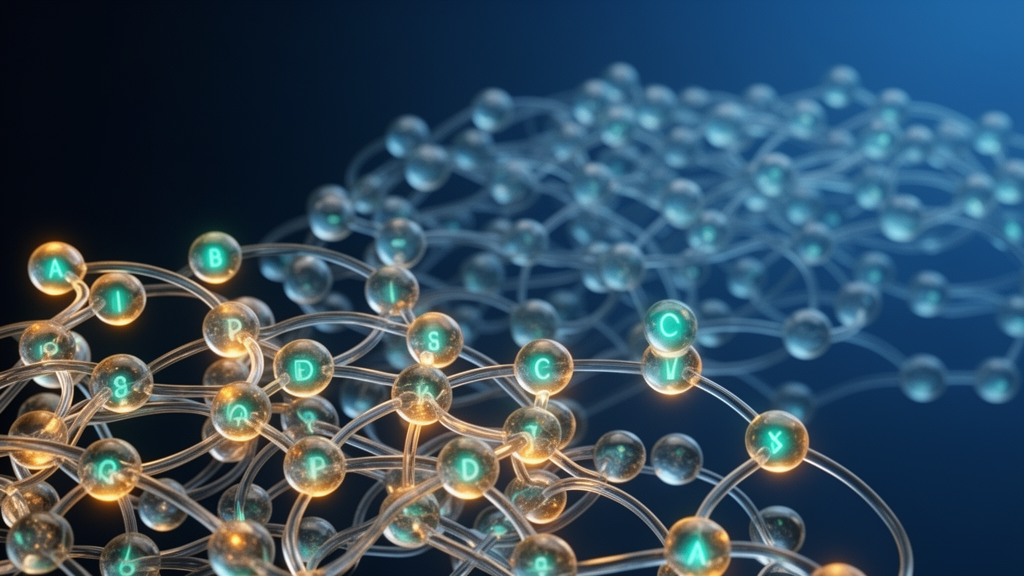
Graph neural networks have become a popular framework for classifying biological sequences when the sequences are represented as De Bruijn graphs, but the way individual nodes in those graphs are encoded has received comparatively little attention. A new study addresses that gap with a method called Contextual Multiscale Expected Density of Nucleotide, or cMSEDN, which converts sequence-level representations into node-level embeddings suitable for graph-based sequence learning.

The challenge the researchers set out to solve is structural. Multiscale Expected Density of Nucleotide (EDN) produces informative representations at the level of whole sequences, yet De Bruijn graphs require representations attached to individual nodes, which correspond to k-mers. A sequence-level encoding cannot simply be dropped into a graph neural network, because the graph needs features for each node rather than one feature vector per sequence.

cMSEDN is described as a lightweight, deterministic framework that adapts multiscale EDN sequence representations into sequence-specific node embeddings while preserving k-mer identity and incorporating occurrence-level context. In other words, the method keeps track of which k-mer a node represents while also capturing information about the contexts in which that k-mer occurs within a given sequence.

A key distinction from conventional encodings lies in how identical k-mers are treated. Static k-mer encodings assign the same representation to a given k-mer regardless of where it appears. cMSEDN instead aggregates occurrence-level contextual features, so that identical k-mers can receive distinct, sequence-specific representations across different biological sequences.

To test the approach, the authors evaluated the framework on seven biological sequence classification datasets. The benchmark suite spans transcription factor binding prediction, promoter recognition, and RNA subcellular localization, covering multiple species and encompassing both DNA and RNA sequence analysis tasks.

The experiments used two graph neural network architectures, GCN and GIN, applied to De Bruijn graph representations of the sequences. The comparisons included conventional context-independent node representations, off-the-shelf foundation models used as static node-feature extractors, and a static EDN-based baseline.

According to the reported results, cMSEDN consistently achieved improved classification performance across the benchmark suite for De Bruijn graph neural networks, while relying on compact deterministic embeddings. The authors note that the method requires no modifications to the underlying graph neural network architecture, meaning it can be adopted as a node-encoding layer without redesigning the models themselves.

The study is published in BioData Mining as an open access article and is currently available as an accepted-manuscript version shared early to provide faster access to peer-reviewed research; this version remains subject to further edits before the final Version of Record replaces it. The work was authored by Saman Zabihi, Eghbal Mansoori and Sattar Hashemi.

For researchers working on biological sequence classification, the findings suggest that sequence-specific k-mer encodings derived from multiscale EDN can serve as an effective, computationally lightweight graph representation for De Bruijn graph learning, offering an alternative to both static k-mer encodings and large foundation-model feature extractors.

Subject of Research: A method for adapting multiscale EDN sequence representations into sequence-specific node embeddings for biological sequence classification with De Bruijn graph neural networks.

Article Title: Adapting multiscale EDN representation into sequence-specific node embeddings for De Bruijn graph learning

Article References: Zabihi, S., Mansoori, E., & Hashemi, S. (2026). Adapting multiscale EDN representation into sequence-specific node embeddings for De Bruijn graph learning. BioData Mining. https://doi.org/10.1186/s13040-026-00616-3

Image Credits: AI Generated

DOI: 10.1186/s13040-026-00616-3

Keywords: De Bruijn graphs, graph neural networks, node embeddings, EDN, biological sequence classification, transcription factor binding, promoter recognition, RNA subcellular localization, GCN, GIN, k-mer encoding, bioinformatics

Cite Scienmag News

Gregory Coleman. (October 27, 2026). New Node Embeddings Bring Multiscale EDN Into De Bruijn Graph Learning. Scienmag. https://scienmag.com/new-node-embeddings-bring-multiscale-edn-into-de-bruijn-graph-learning/

Gregory Coleman. "New Node Embeddings Bring Multiscale EDN Into De Bruijn Graph Learning." Scienmag, 27 October 2026, https://scienmag.com/new-node-embeddings-bring-multiscale-edn-into-de-bruijn-graph-learning/. Accessed 28 October 2026.

Gregory Coleman. "New Node Embeddings Bring Multiscale EDN Into De Bruijn Graph Learning." Scienmag. October 27, 2026. https://scienmag.com/new-node-embeddings-bring-multiscale-edn-into-de-bruijn-graph-learning/

Tags: bioinformaticsbiological sequence classificationContextual Multiscale Expected Density of Nucleotide (cMSEDN)De Bruijn graph learningde Bruijn graphsEDNEnhancing biological sequence analysis with graph embeddingsGCNGINGraph neural network for biological dataGraph Neural NetworksK-mer contextual information preservationk-mer encodingLightweight deterministic encoding frameworkMultiscale Expected Density of Nucleotide (EDN)node embeddingsNode embeddings in graph neural networkspromoter recognitionRNA subcellular localizationSequence-level to node-level encodingSequence-to-node representation conversionStructural challenges in sequence graph learningtranscription factor binding
Share26Tweet16
Previous Post

Cheap Aldehyde Probes Detect Hydrazine at Nanomolar Levels by Glowing

Next Post

Random Forest Outperforms Regression in Predicting River Water Quality in Indian Punjab

Related Posts

FOXO1 Emerges as Candidate Regulator and Biomarker in Hip Dysplasia
Medicine

FOXO1 Emerges as Candidate Regulator and Biomarker in Hip Dysplasia

October 28, 2026
CO2-Rich Fluids Alter How Sandstone Permeability Responds to Stress in Lab Tests
Earth Science

CO2-Rich Fluids Alter How Sandstone Permeability Responds to Stress in Lab Tests

October 28, 2026
Laboratory Generations of Sugarcane Parasitoid Wasp Lose Fitness Within Ten Generations
Agriculture

Laboratory Generations of Sugarcane Parasitoid Wasp Lose Fitness Within Ten Generations

October 28, 2026
Friction Stir Processing Refines AZ41 Magnesium Alloy Grains and Slows Biocorrosion in Simulated Body Fluid
Technology and Engineering

Friction Stir Processing Refines AZ41 Magnesium Alloy Grains and Slows Biocorrosion in Simulated Body Fluid

October 28, 2026
Mushroom Sheets Laminated with Glycerol Form Tough, Recyclable Leather Alternative
Technology and Engineering

Mushroom Sheets Laminated with Glycerol Form Tough, Recyclable Leather Alternative

October 28, 2026
Prophages Shape Virulence, Not Resistance, in Staphylococcus aureus Genomes
Biology

Prophages Shape Virulence, Not Resistance, in Staphylococcus aureus Genomes

October 28, 2026
Next Post
Random Forest Outperforms Regression in Predicting River Water Quality in Indian Punjab

Random Forest Outperforms Regression in Predicting River Water Quality in Indian Punjab

  • Mothers who receive childcare support from maternal grandparents show more optimized

    Mothers who receive childcare support from maternal grandparents show more parental warmth, finds NTU Singapore study

    27656 shares
    Share 11059 Tweet 6912
  • University of Seville Breaks 120-Year-Old Mystery, Revises a Key Einstein Concept

    1061 shares
    Share 424 Tweet 265
  • Bee body mass, pathogens and local climate influence heat tolerance

    682 shares
    Share 273 Tweet 171
  • Researchers record first-ever images and data of a shark experiencing a boat strike

    546 shares
    Share 218 Tweet 137
  • Groundbreaking Clinical Trial Reveals Lubiprostone Enhances Kidney Function

    531 shares
    Share 212 Tweet 133
Science

Embark on a thrilling journey of discovery with Scienmag.com—your ultimate source for cutting-edge breakthroughs. Immerse yourself in a world where curiosity knows no limits and tomorrow’s possibilities become today’s reality!

RECENT NEWS

  • Systematic review maps end-of-life psychosocial and spiritual needs in physical disability
  • Text Message Campaign Reached Only a Third of Patients Overdue for Colorectal Cancer Screening
  • FOXO1 Emerges as Candidate Regulator and Biomarker in Hip Dysplasia
  • Regulators, developers and clinicians in Shenzhen voice concerns over medical AI governance

Categories

  • Agriculture
  • Anthropology
  • Archaeology
  • Athmospheric
  • Biology
  • Biotechnology
  • Blog
  • Bussines
  • Cancer
  • Chemistry
  • Climate
  • Earth Science
  • Editorial Policy
  • Marine
  • Mathematics
  • Medicine
  • Pediatry
  • Policy
  • Psychology & Psychiatry
  • Science Education
  • Science News
  • Social Science
  • Space
  • Technology and Engineering

Subscribe to Blog via Email

Enter your email address to subscribe to this blog and receive notifications of new posts by email.

Join 5,151 other subscribers

© 2025 Scienmag - Science Magazine

Welcome Back!

Login to your account below

Forgotten Password?

Retrieve your password

Please enter your username or email address to reset your password.

Log In
No Result
View All Result
  • HOME
  • SCIENCE NEWS
  • CONTACT US

© 2025 Scienmag - Science Magazine

Discover more from Science

Subscribe now to keep reading and get access to the full archive.

Continue reading