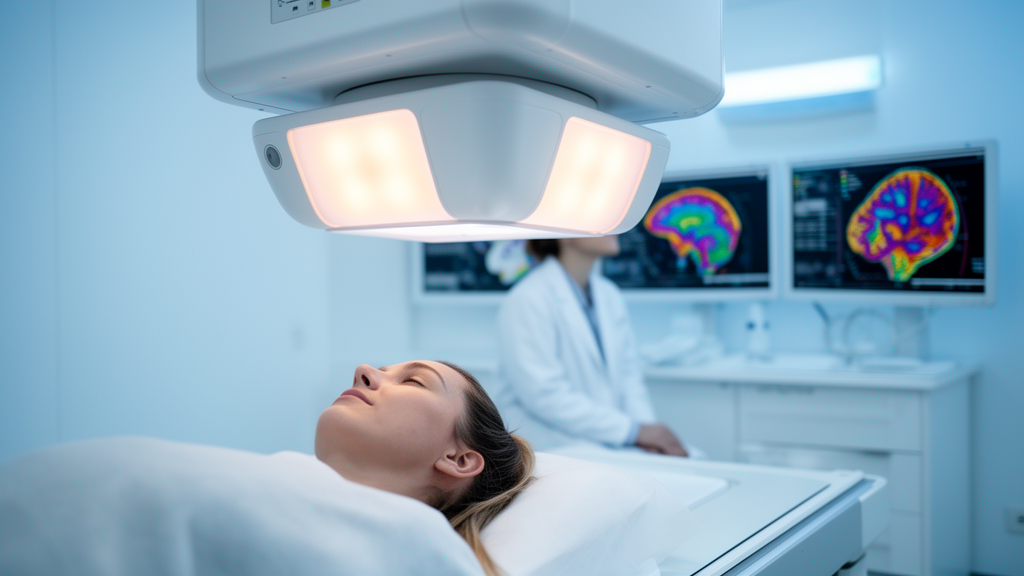
Choosing which patients with drug-resistant epilepsy benefit from brain surgery depends on pinpointing the exact region where seizures begin, a task that often requires several imaging techniques working in concert. A new exploratory study from a Chinese epilepsy center suggests that functional near-infrared spectroscopy, or fNIRS, performed while patients complete a verbal fluency task, could serve as a useful adjunct to the widely used 18F-FDG PET scan in this presurgical workup. The research, published in Acta Epileptologica, also hints that changes in task-related brain connectivity measured by the same light-based method might accompany a feared complication of surgery: the loss of verbal memory.
The retrospective study included 28 patients with drug-resistant epilepsy, defined as seizures that persist despite at least two tolerated, appropriately chosen antiseizure medications at effective doses. All patients underwent presurgical evaluation at a single center between December 2022 and December 2023, receiving video EEG monitoring, high-resolution MRI, and interictal 18F-FDG PET scanning. They also completed fNIRS recordings during a phonemic verbal fluency task before surgery and again at least one month after the operation. The patients, 11 males and 17 females, had a mean age at seizure onset of 15.6 years, a mean age at surgery of 23.5 years, and had lived with epilepsy for an average of 7.9 years.
The logic behind pairing the two modalities rests on the fact that they measure fundamentally different physiological signals. PET captures static resting-state cerebral glucose metabolism, reflecting baseline neuronal activity, while fNIRS tracks dynamic, task-triggered hemodynamic changes that represent real-time cortical activation. Because fNIRS relies on neurovascular coupling, it is noninvasive, portable, and free of radiation, making it attractive for populations in which PET is problematic, including pregnant or breastfeeding women and young children. PET, by contrast, cannot be routinely used for ictal imaging and is limited by radiation exposure, high cost, and restricted use in vulnerable groups.
The fNIRS setup used a 52-channel Hitachi ETG-4100 system with optode arrays covering the frontal and anterior temporal areas according to the international 10-20 system. Dual wavelengths of 695 and 830 nanometers sampled data at 10 hertz, and channels were grouped into 11 predefined cortical regions, including bilateral premotor, motor, and somatosensory cortex, Broca’s areas, temporal regions, frontopolar cortex, and the dorsolateral prefrontal cortex. During the verbal fluency task, participants generated as many words as possible beginning with a given Chinese phoneme across three 20-second blocks, following a 30-second baseline and preceding a 70-second post-task baseline. Oxygenated hemoglobin signals were analyzed with a general linear model, and functional connectivity between regions was estimated using Pearson correlations that were Fisher z-transformed.
To judge localization performance, the researchers needed a postsurgical reference standard. For patients who were seizure-free two years after surgery, defined as Engel I or ILAE 1-2 outcomes, concordance with the surgically resected or disconnected region served as a pragmatic benchmark. Concordance was graded at several levels: fully concordant when the abnormality lay completely within the surgical area, localizing when the correct lobe was identified but the abnormality extended beyond it, lateralizing when only the correct hemisphere was identified, and negative when findings were normal or discordant with the surgical area. Postoperative MRI coregistered with preoperative PET and the fNIRS channel space allowed the team to assess spatial overlap.
The results favored PET as the stronger standalone tool. Among the 20 patients who achieved seizure freedom, PET showed hypometabolism involving the surgical intervention area in 14 cases, a 70 percent positivity rate, with 5 fully concordant, 6 localizing, and 3 lateralizing only. The authors note this corresponds to precise localization in 55 percent of patients, slightly lower than the accuracy reported for high-resolution MRI. fNIRS-VFT, by comparison, showed hypoactivation involving the surgical area in 9 of the 20 seizure-free patients, a 45 percent positivity rate, comprising 4 localizing and 5 lateralizing patterns, with no patient showing hypoactivation fully concordant with the surgical site.
Yet the modest fNIRS performance concealed its key virtue: complementarity. In one patient whose PET scan failed to lateralize the epileptogenic zone, fNIRS-VFT correctly identified the affected hemisphere. The 45 percent positivity rate also exceeds the 6 to 24 percent detection rates previously reported for resting-state fNIRS, suggesting that task-based paradigms may offer a modest advantage for epileptic lateralization. The authors emphasize that fNIRS should be regarded as a supplementary presurgical modality rather than a replacement for PET, and that its practical benefits, including freedom from radiation, high temporal resolution, portability, and naturalistic task testing, make it worth further investigation in cases with ambiguous imaging findings.
The second arm of the study explored whether fNIRS could shed light on postoperative cognitive outcomes. Nineteen patients completed both pre- and postoperative assessments with the Chinese version of the Auditory Verbal Learning Test, which focuses on delayed recall. Four showed a clinically significant decline of at least 4 points, a threshold based on the Reliable Change Index, while 15 remained stable. No patient showed a clinically meaningful reduction on the Western Aphasia Battery Aphasia Quotient, which ruled out language impairment as a confounder. The memory decline group exhibited larger and more polarized connectivity changes than non-decliners, particularly involving frontopolar, dorsolateral prefrontal, premotor, and temporal regions, with some connections showing opposite-direction changes and pronounced disinhibition in the decliners.
The authors are careful to stress that these connectivity findings are purely descriptive and hypothesis-generating. All analyses in the study were descriptive, with no robust inferential statistical testing and no correction for multiple comparisons. The memory decline subgroup contained only four patients, and mechanistic interpretations, such as disrupted strategic retrieval or inefficient compensatory reorganization, remain speculative. The retrospective, single-center design introduces selection bias, fNIRS coverage excluded deep memory structures such as the hippocampus, short-channel correction for extracerebral artifacts was absent, and variability in antiseizure medications may have confounded the hemodynamic results. Connectivity was also estimated without removing the task-evoked response, so correlations may partly reflect shared task timing rather than pure interregional neural coupling, and the lack of healthy and non-surgical epilepsy controls prevented distinguishing surgery-associated changes from inherent epileptic abnormalities.
Even the interpretation of task-related hypoactivation as a marker of the epileptogenic zone carries caveats the authors spell out explicitly. Chronic recurrent seizures can reduce neuronal density, disrupt synaptic function, and alter metabolic baseline in regions involved in seizure generation and propagation, and these deficits can manifest as reduced task-evoked hemodynamic responses. But such hypoactivation is not specific to the epileptogenic network, since it can also stem from variable task performance, medication effects, preoperative cognitive deficits, and generalized network dysfunction. Within those limits, the study’s preliminary message stands: interictal 18F-FDG PET remains the stronger concordant tool for presurgical localization, fNIRS-VFT may add value when PET is inconclusive, and task-based fNIRS connectivity could eventually become a repeatable, radiation-free marker for postoperative cognitive monitoring, pending validation in larger prospective cohorts.
Subject of Research: Using task-based fNIRS alongside 18F-FDG PET for presurgical localization and postoperative memory monitoring in drug-resistant epilepsy
Article Title: fNIRS-VFT is a complementary tool to 18F-FDG PET in presurgical evaluation of drug-resistant epilepsy: an exploratory study
Article References: Hong, S., Xiao, H., Li, C., Lai, X., Mei, Z., Huang, X., Tian, Y., Lin, L., Pang, Y., Luo, Z., Zhang, Y., Zeng, L., Wang, F., & Lin, Y. (2026). fNIRS-VFT is a complementary tool to 18F-FDG PET in presurgical evaluation of drug-resistant epilepsy: an exploratory study. Acta Epileptologica, 8(1), Article 37. https://doi.org/10.1186/s42494-026-00282-2
Image Credits: AI Generated
DOI: 10.1186/s42494-026-00282-2
Keywords: drug-resistant epilepsy, fNIRS, 18F-FDG PET, epilepsy surgery, epileptogenic zone, verbal fluency task, functional connectivity, verbal memory decline, presurgical evaluation, neuroimaging, seizure freedom, AVLT
Cite Scienmag News
Ophelia Keating. (October 27, 2026). Light-Based Brain Scan May Complement PET Scans in Epilepsy Surgery Planning. Scienmag. https://scienmag.com/light-based-brain-scan-may-complement-pet-scans-in-epilepsy-surgery-planning/
Ophelia Keating. "Light-Based Brain Scan May Complement PET Scans in Epilepsy Surgery Planning." Scienmag, 27 October 2026, https://scienmag.com/light-based-brain-scan-may-complement-pet-scans-in-epilepsy-surgery-planning/. Accessed 28 October 2026.
Ophelia Keating. "Light-Based Brain Scan May Complement PET Scans in Epilepsy Surgery Planning." Scienmag. October 27, 2026. https://scienmag.com/light-based-brain-scan-may-complement-pet-scans-in-epilepsy-surgery-planning/