Osteoporosis remains difficult to treat, and a new open-access review argues that part of the problem lies in the traditional “bone resorption–bone formation imbalance” paradigm that has long guided therapy.
The review, authored by Jiahao Dong, Jie Su, Weijie Yu and Tao Chen, unfolds this process as a multi-stage cascade of “energy reprogramming → turbid stasis accumulation → collateral fixation.” The authors hypothesize that this cascade parallels a traditional Chinese medicine (TCM) pathogenesis pattern described as “Kidney deficiency with essence depletion, turbid stasis obstructing collaterals.” Importantly, these are presented as hypotheses and a proposed framework rather than experimentally validated mechanisms.
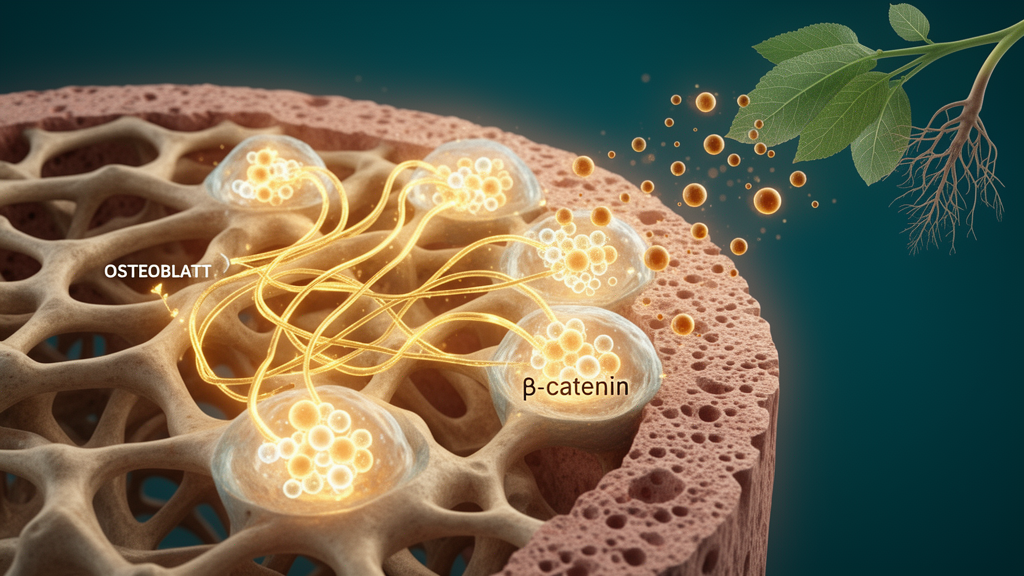
At the molecular center of the proposal sits the Wnt/β-catenin signaling pathway. The authors suggest it may serve as a crucial executor of the TCM concept of “Kidney governing bones,” acting as a master switch for osteogenic differentiation and as a hub that integrates energy metabolism with bone formation. Rather than a single linear pathway, they position Wnt as a “metabolic–transcriptional hub” through which multiple interventions could converge on osteoblast dysfunction.
The review then maps classes of TCM interventions onto this network, emphasizing the multi-component, multi-target character of the approach. Kidney-warming herbs, rich in flavonoids, are described as stabilizing β-catenin and enhancing mitochondrial function. Spleen-kidney tonifying herbs, containing glycosides and polysaccharides, are proposed to couple energy regulation with autophagy. Heat-clearing, dampness-resolving herbs, which supply alkaloids, are suggested to modulate inflammation via the gut-bone axis. The authors add that acupuncture and therapeutic exercises may further improve the metabolic milieu surrounding bone tissue.
Looking ahead, the authors call for future work on developing novel drugs that target metabolic pathways, establishing precise patient subtyping based on “pattern–metabolite profiles,” and building a robust evidence chain for clinical translation. Because the paper is a review that proposes a framework rather than reporting new clinical or laboratory results, its claims about specific herbs and mechanisms remain hypotheses to be tested. Readers should treat the described herb-class effects as proposed actions within the authors’ model, not as demonstrated treatment outcomes, until targeted experimental and clinical studies provide supporting data.
Subject of Research: A review of how traditional Chinese medicine may regulate osteoblast metabolic senescence in osteoporosis via Wnt/β-catenin signaling
Article Title: Advances in the regulation of osteoblast metabolic senescence and osteoporosis prevention by traditional Chinese medicine via the Wnt/β-catenin signaling network
Article References: Dong, J., Su, J., Yu, W., & Chen, T. (2026). Advances in the regulation of osteoblast metabolic senescence and osteoporosis prevention by traditional Chinese medicine via the Wnt/β-catenin signaling network. Beni-Suef University Journal of Basic and Applied Sciences, 15(1), Article 116. https://doi.org/10.1186/s43088-026-00846-8
Image Credits: AI Generated
DOI: 10.1186/s43088-026-00846-8
Keywords: osteoporosis, osteoblasts, Wnt/beta-catenin, metabolic senescence, traditional Chinese medicine, bone metabolism, gut-bone axis, autophagy, mitochondria, review, Advances, regulation
Cite Scienmag News
Beatrice Stafford. (October 27, 2026). Review frames Wnt/β-catenin as a metabolic hub linking traditional Chinese medicine to osteoporosis. Scienmag. https://scienmag.com/review-frames-wnt-%ce%b2-catenin-as-a-metabolic-hub-linking-traditional-chinese-medicine-to-osteoporosis/
Beatrice Stafford. "Review frames Wnt/β-catenin as a metabolic hub linking traditional Chinese medicine to osteoporosis." Scienmag, 27 October 2026, https://scienmag.com/review-frames-wnt-%ce%b2-catenin-as-a-metabolic-hub-linking-traditional-chinese-medicine-to-osteoporosis/. Accessed 28 October 2026.
Beatrice Stafford. "Review frames Wnt/β-catenin as a metabolic hub linking traditional Chinese medicine to osteoporosis." Scienmag. October 27, 2026. https://scienmag.com/review-frames-wnt-%ce%b2-catenin-as-a-metabolic-hub-linking-traditional-chinese-medicine-to-osteoporosis/