Sunday, November 1, 2026
Science
No Result
View All Result
  • Login
  • HOME
  • SCIENCE NEWS
  • CONTACT US
  • HOME
  • SCIENCE NEWS
  • CONTACT US
No Result
View All Result
Scienmag
No Result
View All Result
Home Science News Biology

Mapping Vegetation in Fine Detail Across the Americas

October 27, 2026
in Biology
Margaret Porter
By Margaret Porter Scienmag Editorial Profile - Biodiversity Science
Reading Time: 2 mins read
0
Mapping Vegetation in Fine Detail Across the Americas

Mapping Vegetation in Fine Detail Across the Americas

65
SHARES
587
VIEWS
Share on FacebookShare on Twitter
ADVERTISEMENT

Two ambitious mapping projects show how modern vegetation classification can be combined with land cover mapping to describe ecosystems in far more detail than conventional land cover products, according to a study published in Vegetation Classification and Survey.

Natural resource management and biodiversity conservation both depend on inventories of vegetation that span multiple management or political jurisdictions. Although remote sensing data and analytical tools have enabled maps of increasing spatial resolution and reliability, the authors note that there are limited examples where national or continental-scale maps represent vegetation at high thematic detail.

The study, led by Patrick J. Comer and colleagues, presents two case studies: a national mapping effort covering the United States and a continental effort spanning North and South America. Together, these studies cover conditions from subpolar to tropical latitudes of the Americas.

Both case studies used a supervised modeling approach based on the International Vegetation Classification (IVC) to produce maps with greater thematic detail. Georeferenced locations of vegetation types are used by machine learning algorithms to train a predictive model and generate a distribution map.

The United States case study draws on LANDFIRE, the Landscape Fire and Resource Management Planning Tools Project. According to the authors, it illustrates how a history of vegetation-based classification and the availability of key inputs can come together to generate standard map products covering more than 9.8 million square kilometers, which they describe as unsurpassed anywhere in the world in terms of spatial and thematic resolution.

That achievement comes with a clear constraint. Mapping at the thematic resolution of the IVC Group and finer requires very large and spatially balanced inputs of georeferenced samples. Even with extensive prior data collection efforts, the authors report that these samples remain a key limitation.

The second case study is a NatureServe effort for the Americas, an area encompassing 22 percent of the global land surface. The authors report that this project demonstrates methods and outputs suitable for worldwide application at continental scales.

The authors conclude that continued collection of the input data used in these case studies could enable mapping at these spatial and thematic resolutions around the globe. For conservation planners and land managers, the work suggests that bridging the gap between traditional land cover mapping and modern vegetation classification is technically feasible, provided that the underlying field-referenced sample data continue to grow.

Subject of Research: Integrating vegetation classification with land cover mapping at national and continental scales in the Americas.

Article Title: Integration of vegetation classification with land cover mapping: lessons from regional mapping efforts in the Americas

Article References: Comer, P. J., Hak, J. C., Dockter, D., & Smith, J. (2022). Integration of vegetation classification with land cover mapping: lessons from regional mapping efforts in the Americas. Vegetation Classification and Survey, 3, 29-43. https://doi.org/10.3897/vcs.67537

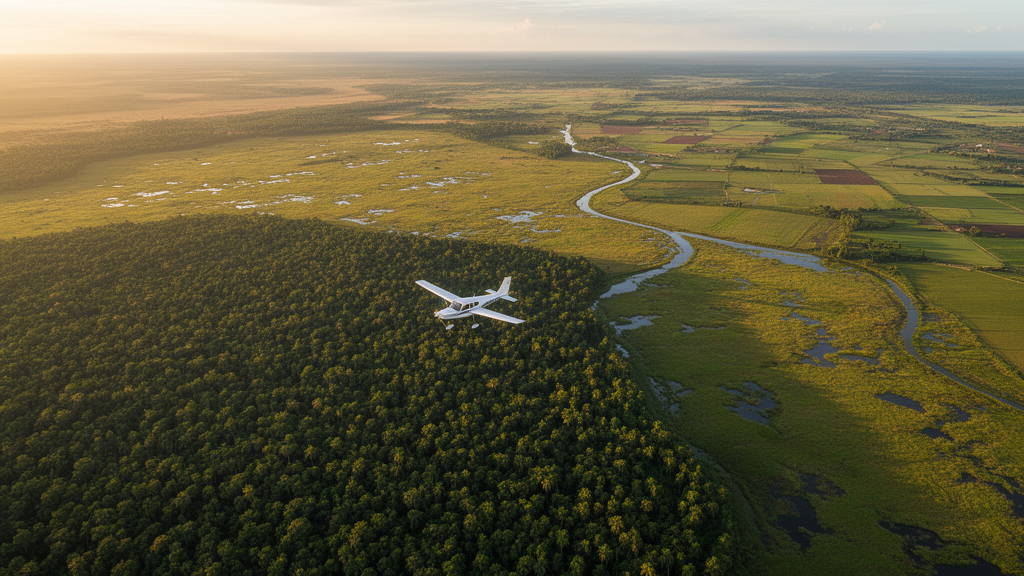
Image Credits: AI Generated

DOI: 10.3897/vcs.67537

Keywords: vegetation classification, land cover mapping, International Vegetation Classification, LANDFIRE, remote sensing, biodiversity conservation, machine learning, NatureServe, Americas, map accuracy, Integration, vegetation

Cite Scienmag News

Margaret Porter. (October 27, 2026). Mapping Vegetation in Fine Detail Across the Americas. Scienmag. https://scienmag.com/mapping-vegetation-in-fine-detail-across-the-americas/

Margaret Porter. "Mapping Vegetation in Fine Detail Across the Americas." Scienmag, 27 October 2026, https://scienmag.com/mapping-vegetation-in-fine-detail-across-the-americas/. Accessed 1 November 2026.

Margaret Porter. "Mapping Vegetation in Fine Detail Across the Americas." Scienmag. October 27, 2026. https://scienmag.com/mapping-vegetation-in-fine-detail-across-the-americas/


Tags: advanced ecosystem inventory techniquesAmericasBiodiversity Conservationbiodiversity conservation and natural resource managementcontinental scale vegetation mappinghigh-resolution vegetation dataintegrationInternational Vegetation ClassificationInternational Vegetation Classification (IVC)land cover and ecosystem mappingland cover and land use changeland-cover mappingLANDFIREMachine learningmap accuracyNatureServeremote sensingremote sensing for vegetationsupervised machine learning for vegetationtropical and subpolar vegetation mappingUS vegetation mapping projectsvegetationvegetation classificationVegetation classification and mapping
Share26Tweet16
Previous Post

New DNA Reference Library Identifies French Hoverflies With a Single Genetic Marker

Next Post

Italy’s Wetland Plants: A 70-Year Review Reveals 1,265 Studies and Big Gaps

Related Posts

Microbial Sources and Stress Shape the Hidden Endophytes of an Invasive Plant
Biology

Microbial Sources and Stress Shape the Hidden Endophytes of an Invasive Plant

October 30, 2026
Firebreaks Leave Lasting Scars in Grasslands While Wildfire Heals Fast
Biology

Firebreaks Leave Lasting Scars in Grasslands While Wildfire Heals Fast

October 30, 2026
Hidden Peptides in Non-Coding RNAs Reshape Cardiovascular Biology
Biology

Hidden Peptides in Non-Coding RNAs Reshape Cardiovascular Biology

October 30, 2026
Phage K Holin’s C-Terminal Region Shapes Antibacterial Activity, Study Finds
Biotechnology

Phage K Holin’s C-Terminal Region Shapes Antibacterial Activity, Study Finds

October 30, 2026
Computational screen flags five natural compounds that bind a tuberculosis virulence enzyme
Chemistry

Computational screen flags five natural compounds that bind a tuberculosis virulence enzyme

October 30, 2026
Antifungal liver injury study pinpoints KDR as shared hepatotoxicity target
Biology

Antifungal liver injury study pinpoints KDR as shared hepatotoxicity target

October 30, 2026
Next Post
Italy’s Wetland Plants: A 70-Year Review Reveals 1,265 Studies and Big Gaps

Italy's Wetland Plants: A 70-Year Review Reveals 1,265 Studies and Big Gaps

  • Mothers who receive childcare support from maternal grandparents show more optimized

    Mothers who receive childcare support from maternal grandparents show more parental warmth, finds NTU Singapore study

    27656 shares
    Share 11059 Tweet 6912
  • University of Seville Breaks 120-Year-Old Mystery, Revises a Key Einstein Concept

    1061 shares
    Share 424 Tweet 265
  • Bee body mass, pathogens and local climate influence heat tolerance

    682 shares
    Share 273 Tweet 171
  • Researchers record first-ever images and data of a shark experiencing a boat strike

    546 shares
    Share 218 Tweet 137
  • Groundbreaking Clinical Trial Reveals Lubiprostone Enhances Kidney Function

    531 shares
    Share 212 Tweet 133
Science

Embark on a thrilling journey of discovery with Scienmag.com—your ultimate source for cutting-edge breakthroughs. Immerse yourself in a world where curiosity knows no limits and tomorrow’s possibilities become today’s reality!

RECENT NEWS

  • Trademarks Meet Patents in New Method to Spot Technology Opportunities
  • Reddit self-declarations offer auditable labels for demographic inference
  • Scots pine needles map trace element pollution in Polish industrial town
  • Dual-blockchain scheme secures vehicle handovers without pre-shared keys

Categories

  • Agriculture
  • Anthropology
  • Archaeology
  • Athmospheric
  • Biology
  • Biotechnology
  • Blog
  • Bussines
  • Cancer
  • Chemistry
  • Climate
  • Earth Science
  • Editorial Policy
  • Marine
  • Mathematics
  • Medicine
  • Pediatry
  • Policy
  • Psychology & Psychiatry
  • Science Education
  • Science News
  • Social Science
  • Space
  • Technology and Engineering

Subscribe to Blog via Email

Enter your email address to subscribe to this blog and receive notifications of new posts by email.

Join 5,150 other subscribers

© 2025 Scienmag - Science Magazine

Welcome Back!

Login to your account below

Forgotten Password?

Retrieve your password

Please enter your username or email address to reset your password.

Log In
No Result
View All Result
  • HOME
  • SCIENCE NEWS
  • CONTACT US

© 2025 Scienmag - Science Magazine

Discover more from Science

Subscribe now to keep reading and get access to the full archive.

Continue reading