


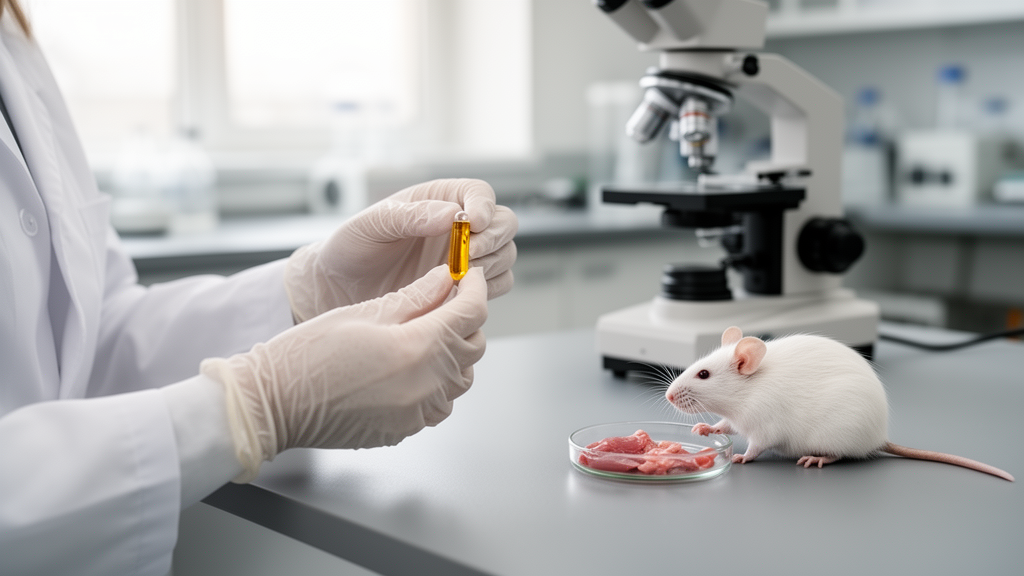
Researchers in China report that pantethine, a widely available nutritional supplement derived from vitamin B5, can curb the overactive immune cells that drive psoriasis, preventing the disease in mice and easing symptoms in a small group of patients. The study, scheduled for publication on October 27 in the Journal of Experimental Medicine, points to a metabolic switch inside dendritic cells as a potential new target for autoimmune inflammation.
Dendritic cells are specialized sentinels of the immune system. They engulf foreign material, present fragments of it to activate highly specific T cells, and secrete signaling molecules that recruit other immune cells and promote inflammation.
The team, co-led by Wei-Na Zhang of the State Key Laboratory of Biomedical Analysis in Beijing together with Qing Xia, Ai-Ling Li, and Tao Zhou, and by Cheng-Xin Li of The First Medical Center of Chinese PLA General Hospital, began from an observation about metabolism. “Emerging evidence highlights that metabolic pathways and their associated metabolites play vital roles in regulating immune cell function and autoimmune progression,” Zhang said, noting that therapeutic strategies targeting metabolism in inflammatory diseases remain underexplored.
The researchers found that metabolic enzymes known as Vanins are elevated in the dendritic cells of patients with psoriasis and several other autoimmune diseases. When the team depleted these enzymes, dendritic cell activation was inhibited and the cells lost much of their ability to activate T cells. Moreover, treating mice with a drug that inhibits Vanins prevented the animals from developing psoriasis-like disease, implicating the enzymes as an upstream driver of the inflammatory cascade.
The biochemistry behind this effect centers on a single metabolite. Vanin enzymes convert pantethine into vitamin B5, an essential nutrient required for cellular energy production. Pantethine itself is sold as a supplement, often taken to lower blood cholesterol because it inhibits cholesterol synthesis. That connection proved significant: cholesterol can promote the activation of dendritic cells, and high blood cholesterol is a major risk factor for the development of psoriasis.
Working through the pathway, the researchers determined that increased Vanin activity in dendritic cells depletes pantethine levels, which in turn drives increased cholesterol synthesis and hyperactivation of the cells. Replenishing pantethine reversed the process, lowering cholesterol accumulation and suppressing dendritic cell activation. “We found that pantethine administration effectively alleviated psoriasis in mice, suggesting that insufficient pantethine levels may be the crucial contributor to hyperactivation of dendritic cells and autoimmune inflammation following the up-regulation of Vanins,” Zhang said.
To translate the mouse findings into the clinic, the team launched a small investigator-initiated trial in 24 human psoriasis patients. Over the course of 12 weeks, the patients who received the additional pantethine showed improved symptoms, and the benefit was particularly evident in those who had elevated blood cholesterol levels at the start of the study, consistent with the proposed cholesterol-linked mechanism.
Consistent with this, patients prescribed pantethine capsules in addition to topical ointments showed a marked improvement in symptoms after three months of treatment. The researchers caution, however, that the trial was small and designed to test feasibility rather than to prove the mechanism in humans. “Our investigator-initiated clinical trial demonstrated encouraging therapeutic efficacy of pantethine as an adjunctive therapy in psoriasis, but these findings should be interpreted as proof-of-concept for clinical feasibility rather than direct mechanistic validation,” Zhang said.
Beyond psoriasis, the team argues that the pathway they have mapped, which they describe as the Vanin-pantethine-cholesterol axis, may govern dendritic cell activation more broadly and could provide a foundation for therapeutic strategies targeting several dendritic cell–mediated autoimmune diseases.
The study, “Vanin-pantethine metabolic axis shapes dendritic cell function and affects inflammatory disorder progression,” by Cao and colleagues, is set to appear in the Journal of Experimental Medicine, published by Rockefeller University Press, with the DOI 10.1084/jem.20252558.
Subject of Research: The Vanin-pantethine-cholesterol metabolic axis in dendritic cell activation and its role in psoriasis
Article Title: Researchers identify common nutritional supplement as potential treatment for psoriasis
Article References: Researchers identify common nutritional supplement as potential treatment for psoriasis. Original publication (Bibliographic details unavailable.)
Image Credits: AI Generated
DOI: Not provided
Keywords: pantethine, psoriasis, dendritic cells, Vanin enzymes, vitamin B5, autoimmune disease, cholesterol metabolism, immunology, Journal of Experimental Medicine, clinical trial, T cells, inflammation
Cite Scienmag News
Ophelia Keating. (October 27, 2026). Pantethine supplement shows promise against psoriasis in mice and small trial. Scienmag. https://scienmag.com/pantethine-supplement-shows-promise-against-psoriasis-in-mice-and-small-trial/
Ophelia Keating. "Pantethine supplement shows promise against psoriasis in mice and small trial." Scienmag, 27 October 2026, https://scienmag.com/pantethine-supplement-shows-promise-against-psoriasis-in-mice-and-small-trial/. Accessed 27 October 2026.
Ophelia Keating. "Pantethine supplement shows promise against psoriasis in mice and small trial." Scienmag. October 27, 2026. https://scienmag.com/pantethine-supplement-shows-promise-against-psoriasis-in-mice-and-small-trial/


