


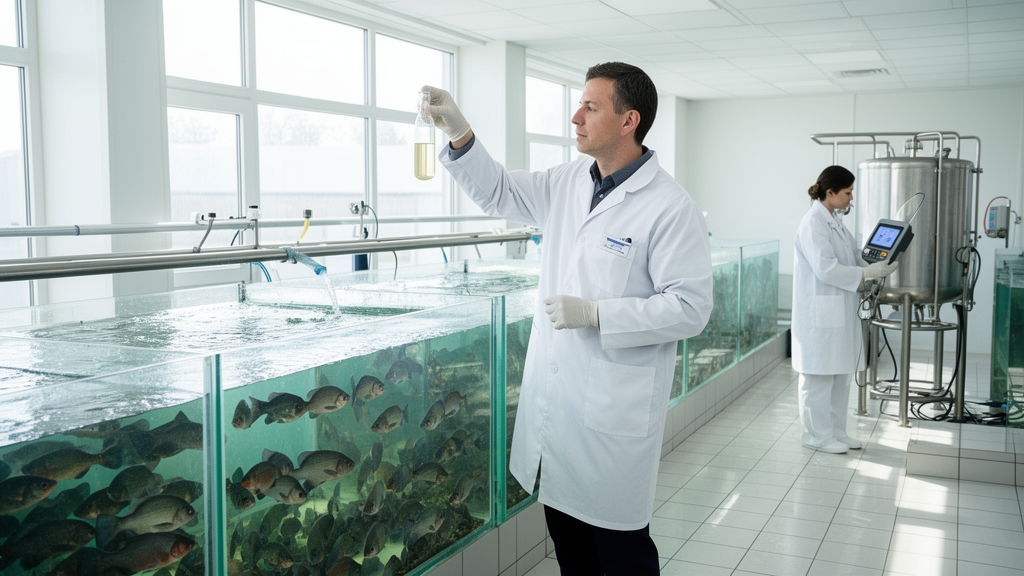
Aquaculture has become one of the fastest-growing sources of animal protein for a human population that keeps expanding, and with that growth has come an intensification of farming practices that demands effective and environmentally responsible health management. For years, the industry’s answer has been probiotics: live microorganisms that, when administered in adequate amounts, confer a health benefit on the host. But a new review published in Advanced Science argues that probiotics, despite decades of research and commercial enthusiasm, have delivered results that remain controversial in fish farming, and that the field’s future may lie with postbiotics, preparations of inactivated microorganisms and their components.
The review, which critically assessed literature published up to and including March 2026 using PubMed, Web of Science, and Scopus, develops a conceptual framework explaining the transition from probiotics to postbiotics through the lens of environmental robustness, formulation standardization, and precision microbial interventions. Its central claim is not that probiotics have failed, but that their benefits are not universal and not guaranteed. Variability in strain performance, host response, environmental conditions, and product quality, the authors argue, calls for a more critical and evidence-based approach to aquatic animal health management.
One of the core problems the review identifies is biological. Fish are extraordinarily diverse in habitat, diet, anatomy, and physiology, and their gut microbiota reflect that diversity. The intestinal microbiota of fish, which have co-evolved with their hosts, play critical roles in nutrient digestion, immune system development, and pathogen resistance. Gut communities are dominated by the phyla Proteobacteria, Firmicutes, Bacteroidetes, and Actinobacteria, with common genera including Aeromonas, Pseudomonas, Clostridium, lactobacilli, and Bifidobacterium. Herbivorous fish tend to show higher gut microbial diversity than carnivorous, omnivorous, or planktivorous species, and are enriched in polysaccharide-degrading bacteria and carbohydrate metabolism pathways, while carnivores harbor more protease-producing bacteria and amino acid metabolism pathways. Herbivorous fish lack endogenous cellulase enzymes and rely on gut microbes to degrade plant cell walls.
Yet the importance of diet is context-dependent. A comprehensive study of 227 wild fish species found that host habitat, whether freshwater or seawater, was the primary determinant of gut microbiota composition, outweighing host taxonomy and trophic level. A large-scale survey across the Yellow River in China, covering 24 fish species over 1,500 kilometers, found that although diet significantly influenced gut microbiota, it explained only a small fraction of the variation, between 0.8 and 5 percent, while geographical distance accounted for 26.6 percent and host evolutionary history 9.8 percent. Host phylogeny matters too: a metagenomic analysis of 903 samples from 121 wild freshwater fish species in southwest China found that host phylogeny explained 22.28 percent of gut alpha diversity, with significant phylosymbiosis, meaning microbiota composition correlates positively with host phylogenetic distance.
Anatomy adds another layer of complexity. Relative intestinal length shapes microbial communities: among cyprinid species, fish with similar relative gut lengths harbor similar gut microbial communities, and species with shorter intestines are dominated by Proteobacteria with fewer Firmicutes, while longer intestines favor taxa such as Clostridium and Romboutsia. The presence or absence of a stomach matters as well. A stomach creates an acidic foregut that filters environmental microbes, whereas stomachless fish allow direct microbial input from the environment, making their gut microbiota more susceptible to ecological selection and dispersal. This reduced microbial barrier may make agastric fish more responsive to dietary interventions such as probiotics and prebiotics.
Environmental factors compound the challenge. Salinity is one of the most fundamental gradients shaping fish gut microbiota, with freshwater communities often enriched in Aeromonas, Mycoplasma, Clostridium, and Cetobacterium, while marine fish show higher abundances of Vibrio, Pseudoalteromonas, Paracoccus, and Photobacterium. Temperature acts as a master regulator: in Nile tilapia, warming of 2 degrees Celsius causes transient, recoverable changes, whereas 8 degrees of warming leads to persistent dysbiosis. In rainbow trout, acute heat stress reduces diversity and suppresses beneficial microorganisms like lactobacilli. Even the transition from wild to captive environments profoundly reshapes the microbial ecosystem, with wild fish generally exhibiting higher gut microbial diversity than captive counterparts, though exceptions exist where nutrient-rich aquaculture systems increase diversity.
Against this backdrop of biological and environmental variability, the review argues that live probiotics face inherent constraints. Probiotic properties are often strictly strain-specific, and a given strain may act in some animal species but not in others, or act differently depending on the age and gender of the host. Most lactic acid bacteria are not fully active at temperatures below 20 degrees Celsius, which raises the question of how such strains could function as probiotics in aquaculture systems where temperatures fall below that threshold. Live cultures must also survive feed processing: high temperatures and pressure during pelletization can reduce probiotic activity or cause degradation. The review notes that many commercial products lack rigorous genomic, in vitro, and in vivo validation, and that claims of growth stimulation, immune enhancement, or increased disease resistance are often based on limited or inadequately designed studies.
There are safety concerns as well. Horizontal gene transfer is a serious issue, since aquatic ecosystems act as major reservoirs of antimicrobial resistance determinants, and biofilms in aquaculture systems facilitate gene exchange between coexisting bacteria. Some commercially produced probiotics for aquaculture have been reported to contain virulence and antibiotic resistance genes. Probiotics, as living microorganisms, inevitably alter the structure and abundance of key bacterial groups in the surrounding water and host-associated microbiota, and even short-term administration can alter microbial diversity and genetic interactions within resident communities. Opportunistic pathogenicity is another concern: some Bacillus and Enterococcus species possess virulence factors capable of causing disease under favorable conditions, and case reports from aquaculture and human studies show that even traditionally safe strains can cause bacteremia or systemic infection when host immunity is compromised.
Postbiotics, as defined by the International Scientific Association for Probiotics and Prebiotics in its 2021 consensus, are preparations containing inactivated microorganisms and or their components that confer a health benefit to the host. Importantly, purified metabolites and vaccines are not considered postbiotics. The term gained popularity before clear definitional boundaries were established, and the review acknowledges persistent terminological inconsistency, with some authors using postbiotics to mean cell-free metabolic products and others to mean preparations of inactivated microbial cells. The authors adopt the ISAPP definition because it links the term to a specific type of preparation, requires demonstration of efficacy in the target form or stage, and promotes reproducible standardization of production and dosage.
The practical advantages are considerable. Postbiotics do not require the preservation of viable cells during processing, making them less vulnerable to the high temperatures used in feed extrusion, pelleting, drying, and storage. Their biological activity does not depend on survival, multiplication, or colonization by living microorganisms, so their effects are less dependent on colonization success in a highly variable intestinal ecosystem. The absence of viable cells removes risks of proliferation in the host or environment, reversion to virulence, and viable-cell-mediated transfer of antimicrobial resistance determinants. Experimental evidence cited in the review includes reduced mortality during Yersinia ruckeri infection in rainbow trout, increased leukocyte, lysozyme, and immunoglobulin activity in tilapia, IgM increases of up to 37 percent in Atlantic salmon, and improved survival after Vibrio parahaemolyticus infection in white shrimp treated with Pediococcus pentosaceus PP4012.
But the review is equally clear about limitations. Postbiotic composition is not inherently fixed: it depends on the producer strain, fermentation conditions, growth stage at harvest, inactivation protocol, and formulation, so each strain and process configuration requires separate validation. Components differ in stability, with proteinaceous molecules such as bacteriocins and enzymes vulnerable to degradation, while cell wall structures like peptidoglycan and teichoic acids preserve integrity longer. The evidence base in aquaculture remains less extensive than for probiotics, with many studies limited to specific host species, short experimental periods, and narrow environmental conditions. Molecular mechanisms remain incompletely characterized, although recent work has identified pathways involving Toll-like receptors, MyD88, MAPK, and NF-κB signaling. The term postbiotic is not officially regulated in Europe or the United States, leaving manufacturers to market heterogeneous mixtures under the same label.
The authors conclude that postbiotics are a safer, more stable, and more manageable alternative to probiotics, but not a universally superior replacement or a silver bullet. They propose that postbiotics represent a conceptual shift from administering living microorganisms toward engineering reproducible microbial functions, and they hypothesize that the benefits of aquatic host-derived probiotics may stem from a characteristic postbiotic fingerprint of multiple bioactive components rather than a single metabolite. Looking forward, they advocate precision postbiotics tailored to developmental stage-specific challenges such as larval immunization and mucus barrier protection, quality control built on modular biomarker panels rather than a single universal marker, and complementary strategies in which postbiotics are used alongside probiotics, bacteriophages, and functional feeds within an integrated One Health framework for sustainable aquaculture.
Subject of Research: The potential of postbiotics as a safer and more standardized alternative to probiotics for health management in aquaculture
Article Title: Beyond Probiotics: Postbiotics for Healthy Aquaculture
Article References: Chikindas, M. L., Xu, D., Popov, I. V., Carneiro, K. O., Elova, N. A., Bekmurodova, G. A., Amirsaidova, D. A., Pepoyan, A., Miralimova, S. M., Mitrokhin, O. V., Sichel, L. S., Tagg, J., & Todorov, S. D. (2026). Beyond Probiotics: Postbiotics for Healthy Aquaculture. Advanced Science, 13(58), Article e77737. https://doi.org/10.1002/advs.77737
Image Credits: AI Generated
DOI: 10.1002/advs.77737
Keywords: aquaculture, postbiotics, probiotics, fish microbiota, gut microbiome, feed production, antimicrobial resistance, ISAPP definition, quorum sensing, One Health, fish health management, standardization
Cite Scienmag News
Morgan Morrow. (October 27, 2026). Postbiotics May Outperform Probiotics in Aquaculture, Review Finds. Scienmag. https://scienmag.com/postbiotics-may-outperform-probiotics-in-aquaculture-review-finds/
Morgan Morrow. "Postbiotics May Outperform Probiotics in Aquaculture, Review Finds." Scienmag, 27 October 2026, https://scienmag.com/postbiotics-may-outperform-probiotics-in-aquaculture-review-finds/. Accessed 27 October 2026.
Morgan Morrow. "Postbiotics May Outperform Probiotics in Aquaculture, Review Finds." Scienmag. October 27, 2026. https://scienmag.com/postbiotics-may-outperform-probiotics-in-aquaculture-review-finds/


