


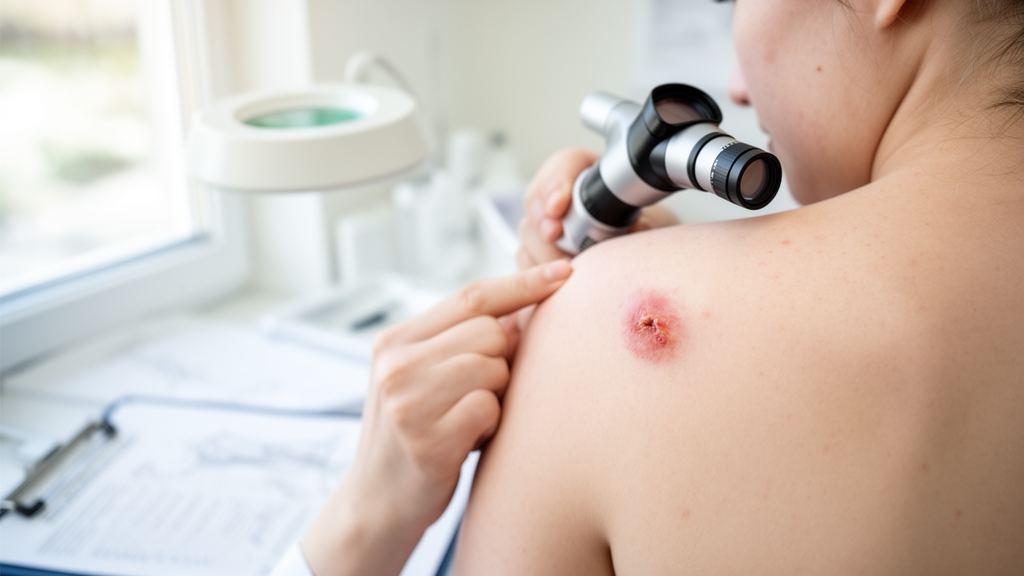
People who survive one cancer often face a question that haunts oncology clinics: will another, entirely different tumor appear years later? A new comprehensive review published in Archives of Dermatological Research examines that question for one of the least-studied corners of cancer medicine, rare tumors of the skin. The analysis, led by Tejas P. Joshi and colleagues, synthesizes population-based and institutional studies of subsequent primary malignancies, the term for new cancers that arise after a first primary cancer diagnosis, in patients who had been diagnosed with rare cutaneous tumors ranging from cutaneous lymphomas to sweat gland carcinomas and soft tissue sarcomas of the skin.
The review’s central message is that the skin can act as a kind of sentinel. For several of the rare cutaneous malignancies examined, the appearance of the skin tumor appears to coincide with a measurably elevated risk of a second, biologically distinct cancer elsewhere in the body. Because these skin tumors themselves often carry a modest disease-specific mortality, the authors argue that subsequent malignancies may be the dominant threat to long-term survival in many of these patients, shaping overall survival more than the original diagnosis does.
The evidence base for the review came from a systematic search of PubMed/MEDLINE from database inception to January 2025. The authors included studies with at least 50 patients that compared the incidence of subsequent primary malignancies after a rare cutaneous malignancy against a control population, and they excluded studies reporting only crude percentages without a reference group. Because basal cell and squamous cell carcinomas are so common, studies limited to subsequent keratinocyte malignancies were excluded, and melanoma-associated risk was left out because it has been reviewed extensively elsewhere. The tumors covered included cutaneous T-cell and B-cell lymphomas, Merkel cell carcinoma, extramammary Paget’s disease, adnexal carcinomas, dermatofibrosarcoma protuberans, pleomorphic dermal sarcoma, cutaneous leiomyosarcoma, Kaposi’s sarcoma, and several other rare entities.
Some of the strongest signals emerged from mycosis fungoides, the most prevalent form of cutaneous T-cell lymphoma. Drawing on the SEER-18 registry for 2000 to 2015, one recent study of 6,742 patients reported elevated standardized incidence ratios for subsequent colon, female breast, lung, prostate, and renal cancers, along with markedly elevated risks of subsequent melanoma and of both Hodgkin and non-Hodgkin lymphoma. An earlier SEER analysis had found a relative risk of 1.7 for any subsequent cancer among mycosis fungoides and Sezary syndrome patients, with particularly high risks for colon cancer, lung cancer, and non-Hodgkin lymphoma. International studies paint a mixed picture: an Israeli analysis found elevated risks of lung cancer, acute leukemia, and Hodgkin lymphoma, a Dutch study of 1,024 patients found increased lifelong risk of Hodgkin disease and melanoma but not other solid tumors, and a Danish study of 448 patients detected only an increased risk of subsequent non-Hodgkin lymphoma.
Explanations for these associations remain hypotheses rather than established mechanisms. For the melanoma link in mycosis fungoides, the review notes that psoralen plus ultraviolet A phototherapy, particularly more than 250 sessions, has been associated with melanoma, while the risk connected to narrowband ultraviolet B remains unclear. Other proposed mechanisms include loss of the CDKN2A gene, which has been detected in both mycosis fungoides and melanoma, and shared immune recognition markers. Environmental exposures such as halogenated hydrocarbons may contribute, and although topical nitrogen mustard was long suspected, a recent population-based study found that treatment with mechlorethamine did not appear to increase subsequent malignancy risk. A recent meta-analysis found elevated bladder and lung cancer risk in cutaneous T-cell lymphoma, prompting speculation about targeted screening, but the review emphasizes that no professional guidelines currently exist and that patients should maintain age-appropriate cancer screening and consistent primary care follow-up.
Merkel cell carcinoma, an aggressive neuroendocrine skin cancer, has also been studied extensively. A SEER analysis of 1,306 patients diagnosed from 1986 to 2002 found increased rates of subsequent salivary gland, biliary, and non-Hodgkin lymphoma diagnoses, while a more recent SEER study of 6,146 patients from 2000 to 2018 reported elevated risks of subsequent oropharyngeal, renal, liver, pancreatic, thyroid, hematologic, and melanoma diagnoses. International registry studies from Australia, Scandinavia, Finland, and Israel confirmed elevated risks of subsequent melanoma, head and neck cancers, laryngeal cancer, or hematologic malignancies, with the Finnish and Israeli studies finding no elevated risk of solid organ malignancies, a difference the authors suggest could reflect differing regional mechanisms or simply insufficient statistical power. The review also highlights immunosuppression as a plausible common driver, noting that roughly 8 percent of Merkel cell carcinomas arise in immunosuppressed patients, and that Merkel cell polyomavirus DNA has been detected in various solid organs including the brain, lung, stomach, and heart.
Extramammary Paget’s disease stands out as the one entity for which formal screening guidance now exists. SEER-based analyses have documented a 54 percent increased incidence of subsequent malignancies overall, with markedly elevated risks of vulvar, vaginal, colorectal, scrotal, bladder, breast, genital tract, and hematologic cancers in various subgroups, and a persistently elevated risk of subsequent prostate cancer among males that lasted ten years after diagnosis, suggesting the effect is not due to surveillance alone. A stage-stratified analysis showed that even patients with in situ disease faced elevated risks of bladder, renal, and melanoma diagnoses. Recent guidelines now recommend risk-stratified workups, including colonoscopy, CT chest/abdomen/pelvis, urine cytology, cystoscopy, mammography, and pelvic ultrasound depending on disease location and risk level, though the review cautions that shared decision-making remains essential given the potential for incidental findings.
The rarer entities produced intriguing but preliminary signals. A SEER-based study of 213 patients with digital papillary adenocarcinoma found increased risks of subsequent breast cancer among females and lung cancer among males, possibly connected to BRAF V600E polymorphisms present in all three tumor types. A study of 351 hidradenocarcinoma cases found elevated rates of subsequent rectal malignancies and mesothelioma. In 451 patients with cutaneous adenoid cystic carcinoma, researchers identified increased risks of subsequent salivary gland tumors, melanoma, and chronic myeloid leukemia. Among 3,749 dermatofibrosarcoma protuberans patients, subsequent female breast cancer and melanoma risks were elevated, and a later analysis of 7,791 patients added vulvar, kidney, brain, and thyroid cancers, myeloma, and Kaposi’s sarcoma, with the thyroid risk persisting ten years after diagnosis. Notably, over 90 percent of dermatofibrosarcoma protuberans tumors harbor a characteristic translocation involving the COL1A1 and PDGFB genes, and PDGFB overexpression has been detected in breast cancer, glioblastoma, melanoma, and thyroid cancer, offering a possible molecular thread. Radiotherapy also emerged as a recurring theme, with patients who received radiation showing elevated risks of renal, colon, and thyroid cancers and acute myeloid leukemia in cutaneous leiomyosarcoma studies, malignancies known to follow radiation exposure.
Kaposi’s sarcoma provided the review’s most striking temporal story. In an AIDS-associated cohort, the excess absolute risk of subsequent malignancies fell sharply from 178 to 68 per 10,000 person-years after the advent of highly active antiretroviral therapy, driven largely by a drop in non-Hodgkin lymphoma. Yet anal cancer rates remained persistently elevated across both eras, and oropharyngeal cancer risk nearly doubled, from 10.6 to 20.4 per 10,000 person-years. By contrast, non-AIDS-associated Kaposi’s sarcoma, along with classical Kaposi’s sarcoma cohorts from Italy and the Nordic countries, showed no increased risk of subsequent malignancies. The authors point to these patterns as evidence that shared risk factors, including immunosuppression and oncogenic viral exposures, underlie the associations, and they suggest that targeted public health interventions such as HPV vaccination and age-appropriate cancer screening may matter more than indiscriminate surveillance imaging.
The review is candid about its limits. The authors note that the evidence suffers from small sample sizes, retrospective designs, confounding variables including immunosuppression, viral coinfections, and behavioral risk factors, and inconsistent reporting of absolute and relative risks. They explicitly decline to propose immediate changes to clinical practice, arguing that modest relative risk increases may not translate into meaningful absolute risk elevations that justify routine screening beyond standard population guidelines, and that the harms of intensified surveillance, including cost, radiation exposure, false positives, and downstream invasive testing, must be weighed carefully. Instead, the work is framed as a hypothesis-generating survey intended to catalyze larger, prospective, multi-institutional studies that quantify absolute risk, clarify causality, and test whether earlier detection of subsequent malignancies actually improves patient-centered outcomes. For now, the review fills a genuine gap in the literature, mapping which rare skin cancers carry signals of second cancer risk and which do not, and setting the agenda for the research needed before those signals can become screening recommendations.
Subject of Research: Subsequent primary malignancy risk following rare cutaneous tumor diagnoses
Article Title: Risk of subsequent primary malignancies after diagnosis of rare cutaneous tumors
Article References: Joshi, T. P., Perez-Stable, C., Merritt, A., Needum, A. D., DiNello, A., & Garcia, N. (2026). Risk of subsequent primary malignancies after diagnosis of rare cutaneous tumors. Archives of Dermatological Research, 318(1), 544. https://doi.org/10.1007/s00403-026-04978-w
Image Credits: AI Generated
DOI: 10.1007/s00403-026-04978-w
Keywords: subsequent primary malignancies, rare cutaneous tumors, mycosis fungoides, Merkel cell carcinoma, extramammary Paget disease, Kaposi sarcoma, dermatofibrosarcoma protuberans, cutaneous T-cell lymphoma, SEER registry, cancer surveillance, dermatologic oncology, epidemiology
Cite Scienmag News
Nathaniel Bowman. (October 27, 2026). Rare Skin Cancers May Signal Hidden Risks of Second Cancers Later in Life. Scienmag. https://scienmag.com/rare-skin-cancers-may-signal-hidden-risks-of-second-cancers-later-in-life/
Nathaniel Bowman. "Rare Skin Cancers May Signal Hidden Risks of Second Cancers Later in Life." Scienmag, 27 October 2026, https://scienmag.com/rare-skin-cancers-may-signal-hidden-risks-of-second-cancers-later-in-life/. Accessed 27 October 2026.
Nathaniel Bowman. "Rare Skin Cancers May Signal Hidden Risks of Second Cancers Later in Life." Scienmag. October 27, 2026. https://scienmag.com/rare-skin-cancers-may-signal-hidden-risks-of-second-cancers-later-in-life/


