

Tuesday, October 27, 2026
Science
No Result
View All Result
  • Login
  • HOME
  • SCIENCE NEWS
  • CONTACT US
  • HOME
  • SCIENCE NEWS
  • CONTACT US
No Result
View All Result
Scienmag
No Result
View All Result
Home Science News

Why Young Shoppers Still Hesitate to Buy Upcycled Fashion

October 27, 2026
in Science News
Sloane Callahan
By Sloane Callahan Scienmag Editorial Profile - Climate Mitigation
Reading Time: 3 mins read
0
Why Young Shoppers Still Hesitate to Buy Upcycled Fashion

Why Young Shoppers Still Hesitate to Buy Upcycled Fashion

65
SHARES
587
VIEWS
Share on FacebookShare on Twitter
ADVERTISEMENT

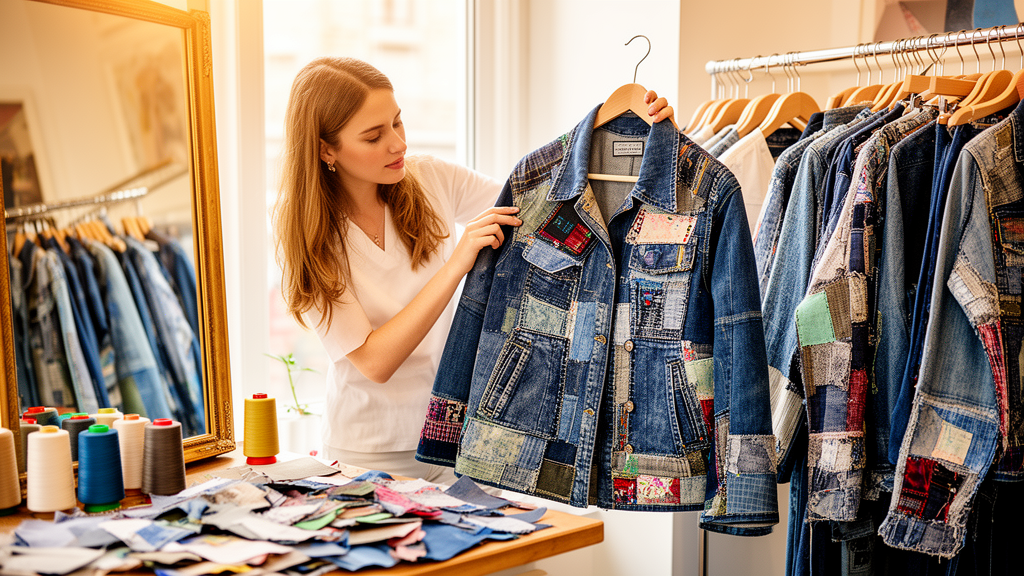
The global fashion industry is under mounting environmental pressure, and circular-economy models such as upcycling are increasingly promoted as a way out of the take-make-dispose cycle. Upcycling takes post-consumption surplus materials and creatively transforms them into products of higher value, turning potential waste into desirable apparel. Yet a puzzling disconnect persists: awareness of the ecological damage caused by fast fashion keeps rising, but this awareness has not translated into a corresponding fall in demand for cheap, disposable clothing.

That disconnect is sharpest among the very consumers who might be expected to lead the change. Today's younger cohorts are digital natives with high levels of social self-expression and strong environmental awareness, but they remain difficult to engage with upcycled apparel. Adoption and purchase intentions for upcycled fashion stay limited even as sustainability messaging saturates their social feeds, a contradiction that motivated a new study from researchers at the Faculty of Management Studies, University of Delhi, and Fore School of Management, New Delhi.

The research, published in the journal Frontiers in Sustainability in the Circular Economy section, set out to fill critical gaps in understanding what drives purchase intention for upcycled fashion among young, urban, tech-savvy consumers. Rather than treating green-minded shoppers as a single bloc, the authors built their analysis on the Theory of Consumption Value, examining five distinct customer values: functional, social, emotional, conditional and epistemic. To test how these values translate into intent, the team collected structured survey responses from 477 participants and analyzed the data using Structural Equation Modelling, a statistical technique that allows researchers to estimate relationships between multiple latent constructs simultaneously.

This approach made it possible to assess how each of the five consumption values contributes to a shopper's stated intention to purchase upcycled fashion, rather than examining each driver in isolation. The study also introduced a second layer of analysis: the moderating influence of narrative competence. To test this, they used Process Macro, a widely applied computational tool for probing moderation effects in survey-based models.

By combining the consumption-value framework with narrative competence in a single structure, the authors propose what they call a unified Consumer Value-Narrative competence model for studying purchase intention in the upcycled fashion context. The authors report that the outcomes offer valuable insights for retailers seeking to enhance customers' purchase intention and contribute substantially to the existing literature on upcycled fashion. As with any survey-based intention study, the findings reflect stated intentions among the sampled population rather than observed purchases, and the model's generalizability beyond young, urban, tech-savvy consumers remains an open question.

Still, the work marks a step toward explaining one of sustainable fashion's most stubborn puzzles: why a generation fluent in environmental values has been so slow to embrace clothes made from what others throw away.

Subject of Research: Consumer purchase intention for upcycled fashion among young urban consumers

Article Title: Breaching take-make-dispose cycle: “Beauty in the Flawed”- a study of customers' intent to purchase upcycled fashion

Article References: Mehta, A., Arora, H., Kumar, S., & Singla, S. (2026). Breaching take-make-dispose cycle: “Beauty in the Flawed”- a study of customers' intent to purchase upcycled fashion. Frontiers in Sustainability, 7, 1963614. https://doi.org/10.3389/frsus.2026.1963614

Image Credits: AI Generated

DOI: 10.3389/frsus.2026.1963614

Keywords: upcycled fashion, circular economy, purchase intention, Theory of Consumption Value, narrative competence, sustainability, fast fashion, structural equation modelling, consumer behavior, textile waste, Breaching, take-make-dispose

Cite Scienmag News

Sloane Callahan. (October 27, 2026). Why Young Shoppers Still Hesitate to Buy Upcycled Fashion. Scienmag. https://scienmag.com/why-young-shoppers-still-hesitate-to-buy-upcycled-fashion/

Sloane Callahan. "Why Young Shoppers Still Hesitate to Buy Upcycled Fashion." Scienmag, 27 October 2026, https://scienmag.com/why-young-shoppers-still-hesitate-to-buy-upcycled-fashion/. Accessed 27 October 2026.

Sloane Callahan. "Why Young Shoppers Still Hesitate to Buy Upcycled Fashion." Scienmag. October 27, 2026. https://scienmag.com/why-young-shoppers-still-hesitate-to-buy-upcycled-fashion/


Tags: barriers to upcycled clothing adoptionBreachingchallenges in promoting eco-friendly clothing among young shoppersCircular economycircular economy in fashion industryconsumer behaviorconsumer perceptions of upcycled appareldigital natives and eco-friendly fashion choicesfactors influencing purchase intentions for sustainable fashionfast fashionfast fashion environmental impactimpact of sustainability messaging on young consumersnarrative competencepurchase intentionrole of social media in sustainable fashion awarenesssocial self-expression and fashion sustainabilitystructural equation modellingSustainabilitytake-make-disposetextile wasteTheory of Consumption Valueupcycled fashionUpcycled fashion consumer behavioryouth environmental awareness and sustainable clothing
Share26Tweet16
Previous Post

Research report: Contrasting petroleum hydrocarbon contamination across active, retired and reference wetlands in the Liao River estuary

Next Post

Nickel Nanoparticles Boost CO2 Dissolution in Seawater, With an AI Model Pinpointing the Sweet Spot

Related Posts

Nickel Nanoparticles Boost CO2 Dissolution in Seawater, With an AI Model Pinpointing the Sweet Spot
Science News

Nickel Nanoparticles Boost CO2 Dissolution in Seawater, With an AI Model Pinpointing the Sweet Spot

October 27, 2026
Research report: Contrasting petroleum hydrocarbon contamination across active, retired and reference wetlands in the Liao River estuary
Earth Science

Research report: Contrasting petroleum hydrocarbon contamination across active, retired and reference wetlands in the Liao River estuary

October 27, 2026
Rural telestroke network in Germany handles far more than stroke, two-year study shows
Science News

Rural telestroke network in Germany handles far more than stroke, two-year study shows

October 27, 2026
Fatigue Reshapes Badminton Lunge Mechanics, With Backhand Steps Loading the Ankle Most
Science News

Fatigue Reshapes Badminton Lunge Mechanics, With Backhand Steps Loading the Ankle Most

October 27, 2026
Drinking During Endurance Exercise Cools the Body but May Not Speed You Up
Science News

Drinking During Endurance Exercise Cools the Body but May Not Speed You Up

October 27, 2026
Neonatal testicular torsion: Doppler flow and contralateral fixation need careful interpretation
Science News

Neonatal testicular torsion: Doppler flow and contralateral fixation need careful interpretation

October 27, 2026
Next Post
Nickel Nanoparticles Boost CO2 Dissolution in Seawater, With an AI Model Pinpointing the Sweet Spot

Nickel Nanoparticles Boost CO2 Dissolution in Seawater, With an AI Model Pinpointing the Sweet Spot

  • Mothers who receive childcare support from maternal grandparents show more optimized

    Mothers who receive childcare support from maternal grandparents show more parental warmth, finds NTU Singapore study

    27656 shares
    Share 11059 Tweet 6912
  • University of Seville Breaks 120-Year-Old Mystery, Revises a Key Einstein Concept

    1061 shares
    Share 424 Tweet 265
  • Bee body mass, pathogens and local climate influence heat tolerance

    682 shares
    Share 273 Tweet 171
  • Researchers record first-ever images and data of a shark experiencing a boat strike

    546 shares
    Share 218 Tweet 137
  • Groundbreaking Clinical Trial Reveals Lubiprostone Enhances Kidney Function

    531 shares
    Share 212 Tweet 133
Science

Embark on a thrilling journey of discovery with Scienmag.com—your ultimate source for cutting-edge breakthroughs. Immerse yourself in a world where curiosity knows no limits and tomorrow’s possibilities become today’s reality!

RECENT NEWS

  • Nickel Nanoparticles Boost CO2 Dissolution in Seawater, With an AI Model Pinpointing the Sweet Spot
  • Why Young Shoppers Still Hesitate to Buy Upcycled Fashion
  • Research report: Contrasting petroleum hydrocarbon contamination across active, retired and reference wetlands in the Liao River estuary
  • Rural telestroke network in Germany handles far more than stroke, two-year study shows

Categories

  • Agriculture
  • Anthropology
  • Archaeology
  • Athmospheric
  • Biology
  • Biotechnology
  • Blog
  • Bussines
  • Cancer
  • Chemistry
  • Climate
  • Earth Science
  • Editorial Policy
  • Marine
  • Mathematics
  • Medicine
  • Pediatry
  • Policy
  • Psychology & Psychiatry
  • Science Education
  • Science News
  • Social Science
  • Space
  • Technology and Engineering

Subscribe to Blog via Email

Enter your email address to subscribe to this blog and receive notifications of new posts by email.

Join 5,151 other subscribers

© 2025 Scienmag - Science Magazine

Welcome Back!

Login to your account below

Forgotten Password?

Retrieve your password

Please enter your username or email address to reset your password.

Log In
No Result
View All Result
  • HOME
  • SCIENCE NEWS
  • CONTACT US

© 2025 Scienmag - Science Magazine

Discover more from Science

Subscribe now to keep reading and get access to the full archive.

Continue reading